
Last updated:
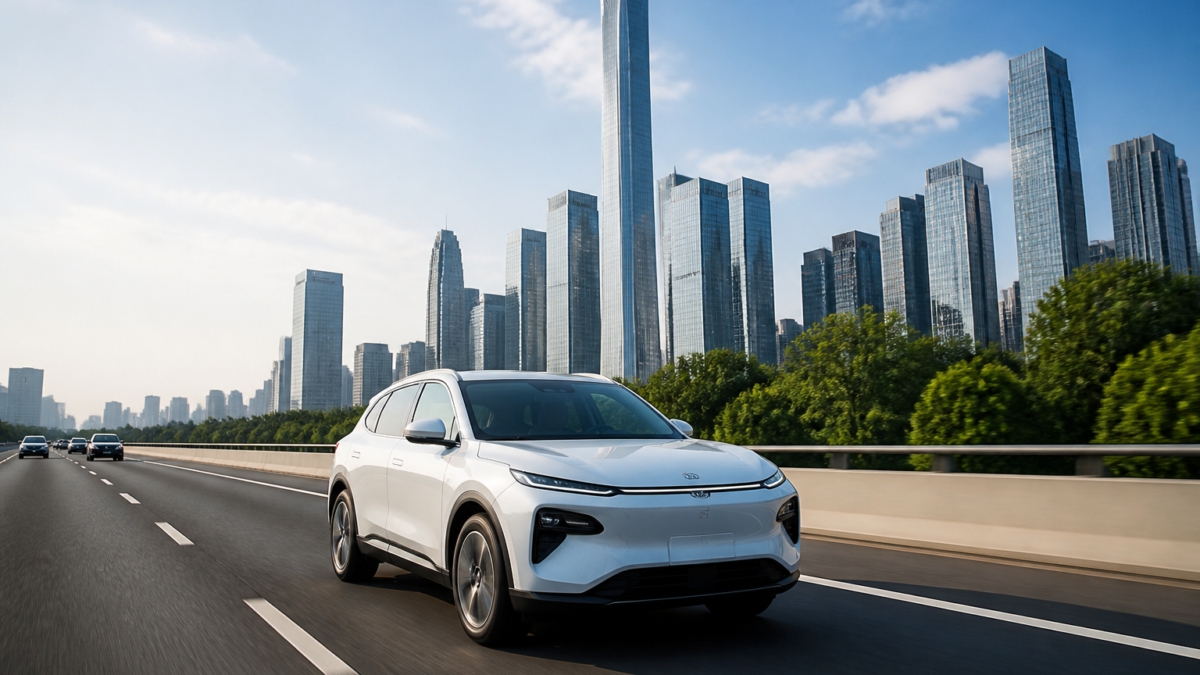
China is intensifying its push to lead the global race in connected and autonomous new energy vehicles (NEVs), underpinned by a flurry of regulatory and strategic moves in 2026. New standards mandate safety and interoperability for advanced driver assistance and semi-autonomous systems, while a multi-agency development plan sets ambitious goals for the industry through 2030. The result: an ecosystem aiming to elevate domestic industry, grow exports, and put China at the forefront of automotive innovation—even as true self-driving cars remain some distance from mass deployment. For automakers, suppliers, and technology firms, the shifting landscape presents expansive opportunities alongside new compliance and coordination demands.
China’s 15th Five-Year Plan for Intelligent Connected NEVs: What’s New?
In September 2026, China’s Ministry of Industry and Information Technology (MIIT) and eight other departments unveiled a strategic plan for the intelligent connected NEV industry covering the 2026–2030 period. This plan aims to consolidate China’s extensive vehicle supply chains, elevate technical standards, and foster local champions who can win at home and abroad. It emphasizes “integrated development” of electrification, connectivity, and automation—bringing together vehicle tech, networked infrastructure, product approval, and commercial testing into a cohesive policy approach. The plan also highlights the need for cross-industry coordination and a boost in R&D for key automotive AI and chip technologies, with an eye toward making China a global auto power by 2030.[1]
Mandatory Safety Standards for Autonomous and Assisted Driving
Mid-2026 saw MIIT rolling out mandatory national standards targeting two core areas: autonomous driving safety for Levels 3 and 4, and combined driver assistance systems for lower levels of automation. The first standard, effective July 1, 2027, sets lifecycle safety, simulation, real-world testing, and human-machine interaction requirements for Level 3/4 systems (excluding automated parking). The second, effective January 1, 2027, addresses functionality, data recording, user interaction, and highway navigation for combined assisted driving. Together, these standards establish a regulatory foundation for the next generation of connected and automated NEVs—requiring extensive industry compliance and third-party validation.[2] [3]
| Milestone | Target/Effective Date | Source |
|---|---|---|
| 15th Five-Year Industry Plan Released | September 2026 | [1] |
| Combined Driver Assistance Standard Effective | January 1, 2027 | [3] |
| Autonomous Driving System Safety Standard Effective | July 1, 2027 | [2] |
| Penetration of L2 Automated Driving Functions | 70% by mid-2026 | [1] |
| Level 3 (L3) Commercialization | Accelerated, mid-2026 | [1] |
Widespread Adoption of L2 and Commercial-Scale L3 Automation
China’s push to enhance NEV intelligence is evident in the rapid market uptake of increasingly sophisticated features. As of 2026, Level 2 (L2) combined driver-assistance systems—those capable of automated lane-keeping, adaptive cruise, and limited navigation—had reached 70% market penetration. Navigation-assisted (NOA) features now appear in over 30% of new models. More notably, Level 3 automation, which permits conditional hands-off driving in certain settings, is moving from test-pilot phase to large-scale commercial use. This transition signals not just technological progress, but regulatory confidence and a significant shift toward greater industry-wide integration of advanced software and connectivity.[1]
Vehicle-Road-Cloud Integration: Aspirations and Limits
One core pillar of China’s NEV strategy is “vehicle-road-cloud” integration—a paradigm where information from vehicles, road infrastructure, and cloud platforms is pooled for comprehensive traffic management and enhanced autonomous capability. Vehicles receive data from roadside sensors and the cloud, extending their awareness beyond line-of-sight. In practice, this can improve safety in urban environments and support traffic efficiency by harnessing coordinated, real-time information on hazards, congestion, and signal changes. However, as of 2026, implementation remains fragmented and pilot-driven, varying significantly by city and region. Cities are rolling out intelligent roadside units, high-precision mapping, and cloud-edge architecture, but nationwide unification of standards and connectivity is still underway.[4] [5]
- Elements of Vehicle-Road-Cloud Integration:
- Vehicle: Onboard cameras, radar, lidar, and computing for local perception.
- Road: Intelligent signals, roadside sensors, digital mapping, V2X (vehicle-to-everything) communications.
- Cloud: Centralized or edge platforms coordinating data sharing, high-level traffic management, and fleet services.
Standardization: Making Digital Mobility Safe and Scalable
Safety and compatibility are the backbone of China’s connected NEV policy. The new mandatory standards cover: system safety across the lifecycle, user training, simulation and physical testing, functional and data security, and human-machine interface design. For companies, compliance means rigorous new procedures for documentation, testing, and reporting. For consumers, consistent standards help demystify claims about automated driving and clarify the limits of driver assistance—even as most vehicles on the road still require active human supervision. Crucially, these frameworks facilitate scaling from small pilots to national deployment without losing track of reliability or public trust.[2]
Pilot Programs and Early Deployment: Where Do Things Stand?
From 2024 to 2026, MIIT spearheaded city-based pilot programs to trial vehicle-road-cloud networks, intelligent road infrastructure, and coordinated urban mobility. These efforts supported the installation of high-precision maps, thousands of intelligent roadside units, and restricted-access test environments for higher-level autonomous driving. Despite notable progress, infrastructure fragmentation and city-by-city variability remain challenges. As of mid-2026, coordinated platforms were forming, but true national integration and standardization are still in the works. Accurate, up-to-date figures for total pilot cities and test mileage are not currently reported, underlining the evolving nature of these efforts.[5]
Market Impact: What This Means for Automakers, Suppliers and Technology Developers
The evolving landscape means:
- Automakers: Clearer pathways to winning regulatory approval, running pilots, and differentiating via advanced driver-assist or L3 features. New mandates call for bigger investments in algorithm development, sensor fusion, and centralized architectures.
- Component and Sensor Suppliers: Accelerating demand for lidar, radar, chips, networking modules, and secure onboard electronics.
- Tech and Cloud Providers: More opportunities in HD mapping, V2X communication, data analytics, cybersecurity, and urban traffic management frameworks.
- Municipal Partners: Urban governments are pivotal for infrastructure, local regulations, and citizen engagement around pilot projects and commercial rollouts.
Checklist: Readiness for China’s Connected Autonomous NEV Ecosystem
- Compliance with the latest MIIT safety standards for automated driving
- Integration with road and V2X infrastructure (where pilots exist)
- Scalable, standardized software platform capable of OTA updates
- Secure, privacy-compliant handling of vehicle and location data
- Ability to support both Chinese and international automotive standards
- Transparent user information on feature limitations and safe operation
Critical Considerations and Cautions
Despite extraordinary progress, true fully autonomous (Level 4+) passenger cars are not yet generally available in China. L3 is seeing expanding commercial trials, but only in well-defined operational domains and under strict regulatory oversight. Any suggestion that self-driving vehicles are “universally available” is premature. Further, pilot infrastructure remains uneven across the country, and much depends on iterative feedback from current workflow and live data.
FAQs: China’s Connected and Autonomous NEV Push
Is China now leading the world in autonomous NEVs?
China is among the global leaders in connected NEVs, with high-level adoption of L2/L3 features and rapid progress in standards and road-cloud pilots. However, U.S. and European firms remain highly competitive in software and urban robotaxi pilots.[1]
Will all new Chinese vehicles have full self-driving functionality soon?
No. As of late 2026, most adoption is for L2/L3 driven functions, with true L4 autonomy limited to pilots. Commercial availability of unrestricted, fully self-driving cars is not projected in the near term.[1]
What changes for international companies selling into China’s NEV market?
Foreign OEMs and suppliers must align with China’s latest standards on automated driving systems, cybersecurity, and connectivity—collaborating with local cities where pilots are conducted to ensure interoperability.[2]
What is the scope of “vehicle-road-cloud” pilots?
The pilots are deployed in select urban areas, focused on integrating intelligent infrastructure, vehicles, and cloud data platforms. Coverage, standards, and technical architectures vary by pilot city.[4]
How do the new standards affect consumer safety?
Mandatory standards set by MIIT enforce specific safety, testing, and user-interface requirements that enhance transparency and require clearer consumer information regarding system limits and handover conditions.[2]
How does China’s approach differ from that in the U.S.?
China’s model emphasizes rapid standard-setting, city-wide pilots closely coordinated by central and local government, and tight cross-industry integration. The U.S. landscape is more fragmented, with varied state-level regulations, more open testing, and private-sector-led trials.
Are international standards and China’s standards compatible?
China is working to harmonize many aspects with global practices, but local technical, data, and certification rules still present challenges for seamless international compatibility.
Conclusion: The Road Ahead for China’s NEVs
China’s 2026 policy surge marks a critical turning point in the evolution of its NEV, connected vehicle, and automation ecosystem. By releasing robust safety standards and charting a clear multiyear industry plan, China is positioning its automakers, suppliers, and technology firms to lead in both domestic and international markets. The shift from loosely coordinated pilots to a more regulated and unified framework may spur innovation, reduce redundancy, and enhance safety. Still, full realization of these ambitions depends on addressing the current patchwork state of road-cloud infrastructure and the persistent gap between assisted driving and true autonomy. Global stakeholders should watch closely—China’s evolving model may shape not just its own roads, but the broader trajectory of connected mobility worldwide.

Leave a Reply