
Last updated:
Introduction: Rethinking Natural Gas in a Grid-Modernizing Era
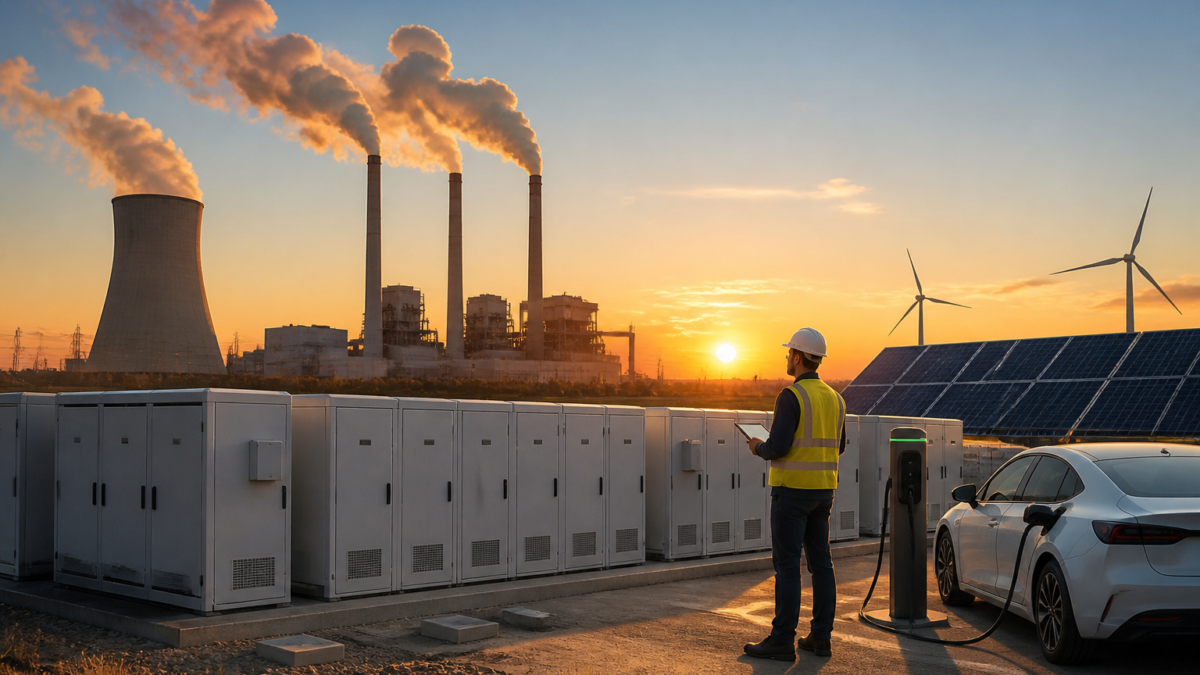
The urgent quest for sustainable energy has placed natural gas power plants under a critical spotlight. For decades, these plants have provided the backbone of grid reliability, delivering baseload power and rapid response to changing demand. However, the evolution of advanced battery energy storage systems (BESS), grid-scale distributed energy resources (DERs), and developments in grid intelligence have begun to challenge the assumption that natural gas plants are essential. Pioneered by innovators like Viridi—who are rolling out advanced storage solutions across major U.S. markets—these technologies deliver new levels of grid flexibility, resilience, and carbon reduction. This article explores why batteries, grid solutions, and DER integration, rather than additional natural gas capacity, now anchor the future of reliable clean energy.
Key Shifts: Batteries and DERs Empowering the Grid
- Viridi’s Leadership: Strategic partnerships—including with Oak Ridge National Laboratory (ORNL)—and nationwide commercial deployments position Viridi at the forefront of grid-resilient storage innovation [source].
- DERs and BESS: Battery energy storage systems like Potentia-Viridi provide dispatchable backup for intermittent renewables, directly supporting California’s mandate to phase down natural gas reliance [source].
- VPPs: Virtual power plants (VPPs)—though not directly implemented by Viridi—aggregate distributed resources to meet grid demand, transforming how energy is managed [source].
From Natural Gas Baseline to Battery-Powered Reliability
Historically, natural gas plants filled reliability gaps, ensuring the grid could withstand demand spikes or renewable intermittency. But with expanding battery deployments, the paradigm is shifting. Viridi’s rapidly scaling installation of RPSLinkEX storage units at over 100 Budderfly-managed commercial sites demonstrates how real-world applications already support grid stabilization and energy optimization [source]. These battery systems absorb excess generation when renewables are abundant, then discharge during high demand or outages—covering roles once reserved for flexible thermal plants.
This approach is particularly evident in California, where the Potentia-Viridi Battery Energy Storage System (BESS) won state approval in May 2026. This project is designed to reduce the need for traditional peaker plants and stabilize the grid as increasing numbers of renewables come online [source].
How Battery Energy Storage Systems Work
Battery energy storage systems are modular devices—often built from lithium-ion cells—capable of rapidly charging and discharging large amounts of electricity. Viridi’s RPS150 and RPS1200 units are containerized for scalable deployment, with advanced safety and real-time monitoring capabilities. These systems are designed to be fail-safe and easily integrated into existing sites, including telecom towers, manufacturing facilities, and retail locations [source].
| Feature | Natural Gas Plant | Battery Energy Storage System (BESS) |
|---|---|---|
| Response Time | Minutes | Milliseconds–seconds |
| Carbon Emissions | Significant | Zero (during discharge) |
| Fuel Required | Natural Gas | No fuel; stores excess grid power |
| Use Case | Baseload or Peak Demand | Peak Shaving, Backup, Grid Balancing |
| Scalability | Site-limited, complex permitting | Modular, rapid deployment |
Distributed Energy Resources: Beyond Storage Alone
While Viridi specializes in storage—not generation—its platforms are central to harnessing distributed energy resources (DERs). DERs encompass small-scale electricity sources such as rooftop solar, small wind, and industrial backup generators, as well as batteries. Their aggregate impact becomes transformative when integrated for coordinated grid response. Although Viridi does not manufacture wind or solar components, its battery solutions directly facilitate the uptake and reliability of these resources—supporting renewable penetration and lowering grid carbon intensity [source].
Virtual Power Plants (VPPs): Industry Model and Context
Virtual power plants (VPPs) aggregate many distributed resources (including BESS, renewables, and responsive loads) into a coordinated system that performs like a utility-scale power plant. VPPs can deliver grid services, shift or reduce load, and optimize real-time supply-demand balance [source]. While Viridi does not directly operate VPPs as of 2026, its battery technologies are compatible with and potentially integral to broader VPP networks being deployed by utilities and technology companies.
The Role of Advanced Analytics and Control Systems
One of the most significant advances in modern storage is the combination of battery hardware with cloud-connected analytics and monitoring. Viridi’s systems, for example, feature real-time remote diagnostics via ViSTA, rapid system updates, and FirstNet-enabled connectivity—empowering asset owners to optimize energy usage, performance, and safety [source]. While the company does employ AI-enabled analytics, claims regarding deep algorithmic grid management should be generalized unless future specific developments are published.
- Checklist: What To Consider in BESS Deployment
- Assess site infrastructure and energy demand variability
- Verify local regulatory environment (permitting, incentives)
- Choose scalable, modular BESS for future upgrades
- Insist on advanced safety features and real-time monitoring
- Plan system integration with on-site renewable generation if desired
- Align with qualified maintenance and rapid-response partners
Industry Trajectory: The Growing Role of Battery Storage
Sector-wide, expert analysis and market trends highlight the pivotal transition: as BESS and DERs are rapidly scaled, the demand for new natural gas power plants diminishes. The California Energy Commission’s approval of Potentia-Viridi’s BESS exemplifies official support for technologies that directly replace peaker gas generation, stabilize the grid, and open space for further solar and wind deployment [source]. Partnerships like Viridi’s with ORNL and Budderfly illustrate cross-sector alliances needed to accelerate national energy transition [source].
| Step | Action |
|---|---|
| 1 | Identify priority grid regions with peaking challenges or renewables integration issues |
| 2 | Deploy modular BESS at utility and commercial sites |
| 3 | Leverage real-time analytics for dynamic power dispatch |
| 4 | Expand VPP capabilities via aggregation of BESS and DERs |
| 5 | Coordinate with regulators (e.g., state energy commissions) for streamlined integration |
| 6 | Educate facility owners and communities on reliability and economic benefits |
FAQs: Grid Modernization, Storage, and the Decline of Gas Plants
- Does battery storage fully replace the need for natural gas power plants?
- While BESS can replace many functions of natural gas peaker plants—like rapid balancing and reserve capacity—they may not yet fully substitute for all large centralized power needs. However, the trend is for growth in battery deployments to steadily reduce the requirement for new gas infrastructure [source].
- What is a virtual power plant, and is Viridi operating them?
- A virtual power plant (VPP) aggregates multiple BESS, renewables, and flexible loads to provide coordinated grid support remotely. As of 2026, Viridi specializes in BESS and grid integration but is not known to directly operate VPPs; rather, its products are compatible with VPP platforms [source].
- How do distributed energy resources (DERs) enhance grid stability?
- DERs, such as behind-the-meter batteries and rooftop solar, add redundancy and flexibility. When properly aggregated and managed, they mitigate peak load, smooth supply intermittency, and reduce grid stress—especially alongside advanced storage [source].
- What are the regulatory trends for BESS integration?
- States like California are streamlining permitting and supporting financial incentives for BESS. The Potentia-Viridi project’s approval in 2026 marked a clear path for deployment, signaling wider policy momentum [source].
- How do companies like Viridi ensure grid reliability during outages?
- Viridi’s battery systems are engineered for fail-safe operation and rapid switchover during outages, leveraging real-time diagnostics, redundant safety protocols, and seamless integration into existing grid assets [source].
- Can BESS reduce carbon emissions directly?
- Yes, by charging with surplus renewable energy and discharging during fossil generation peaks, BESS reduce the grid’s lifetime emissions intensity [source].
- What are key factors influencing BESS costs?
- BESS costs vary by capacity size, chemistry, installation site, regulatory compliance, and desired safety/monitoring features. Cost trends are generally downward as manufacturing scales and technology improves.
Conclusion: Is the Grid Ready to Move Beyond Natural Gas?
The progressing shift toward advanced battery storage, distributed energy resource integration, and digital grid management is actively challenging the long-standing dependency on natural gas plants for reliability. Viridi’s leadership—supported by landmark projects like the Potentia-Viridi BESS (California) and strategic research at Oak Ridge National Laboratory—demonstrates that storage-driven solutions can already meet many grid demands once dominated by fossil fuels. While natural gas remains a part of the transitional landscape, expanding BESS and DER deployment is a key strategy for modern grids to increase resilience, reduce carbon, and open participation in energy markets. Ongoing regulatory support and rapid technological advances make the pathway to a cleaner, smarter, gas-optional grid more attainable each year.
Context Reference: Original Publisher











Leave a Reply