
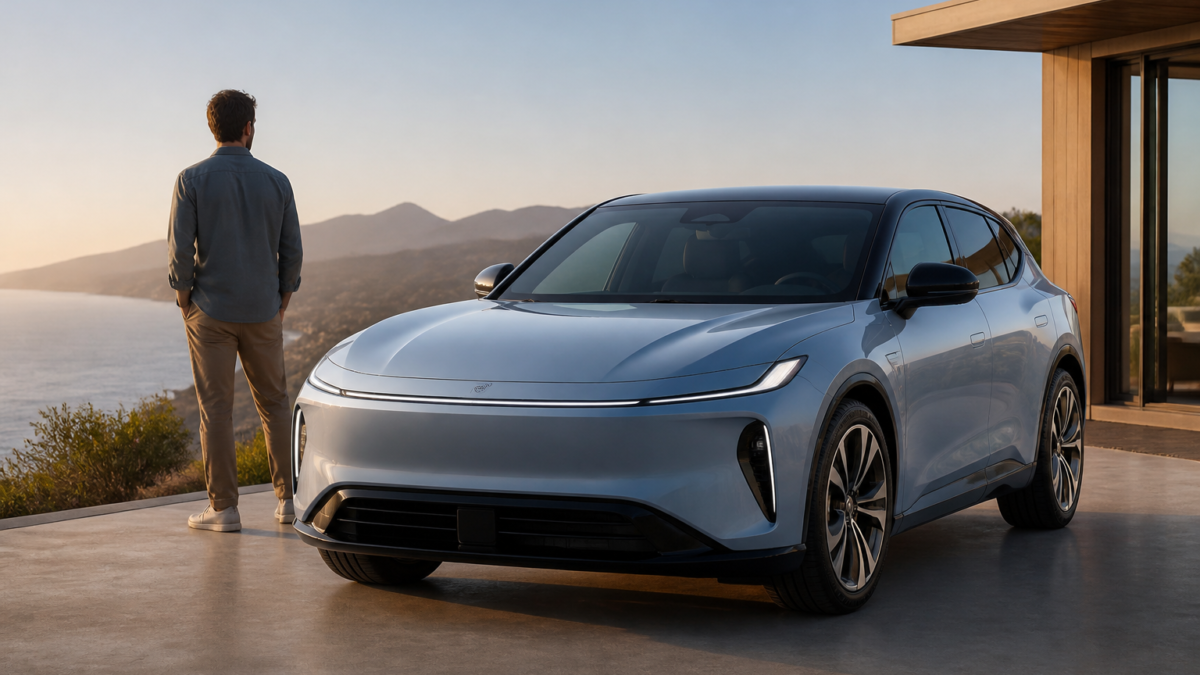
The Buick Electra L7 is not simply a rumored future Buick. SAIC-GM officially launched the sedan in China in September 2025, positioning it as the first model in Buick’s newer Electra new-energy vehicle family for that market. However, it is important for U.S. readers to understand the model’s status: the Electra L7 was developed and launched for China, and there is no confirmed U.S. sales announcement in the information currently available.
The car is also different from a conventional battery-electric vehicle. Its primary drive comes from electric motors, but its extended-range powertrain includes a gasoline engine that generates electricity for the battery and motors. That design can provide electric driving for shorter trips while reducing dependence on public charging during long-distance travel.
Buick Electra L7 at a glance
- Market status: Officially launched and sold in China through SAIC-GM.
- Body style: Five-seat, medium-to-large fastback sedan.
- Powertrain: Extended-range electric vehicle, or EREV, with all-wheel drive.
- Electric range: Reported at 302 kilometers, or about 188 miles, under China’s CLTC test cycle.
- Combined range: Reported at up to 1,400 kilometers, or about 870 miles, using the Chinese test cycle and a full fuel tank.
- Charging claim: Up to 350 kilometers of claimed range added in 10 minutes under specified high-power charging conditions.
- Power: A reported combined 374 kilowatts, equivalent to approximately 502 horsepower.
- China launch pricing: SAIC-GM announced introductory prices from RMB 169,900 to RMB 215,900, depending on variant.
These figures should not be treated as direct predictions of U.S. EPA range or charging performance. China’s CLTC testing procedure generally produces higher range numbers than the EPA cycle used for vehicles sold in the United States. Real-world results can also vary with weather, speed, traffic, cargo, tire pressure, battery temperature and accessory use.
What kind of vehicle is the Electra L7?
The Electra L7 uses an extended-range electric vehicle layout. Unlike a traditional hybrid, the gasoline engine is not primarily responsible for mechanically driving the wheels. Instead, the electric motors provide propulsion while the 1.5-liter turbocharged engine acts as a generator or range extender when needed.
This arrangement gives the vehicle two operating advantages. For daily driving, the battery can provide an electric-focused experience with quiet acceleration and regenerative braking. For longer journeys, the engine can supply energy after the battery’s usable charge is depleted, reducing the need to plan every trip around fast-charging stations.
The system is particularly relevant in markets where drivers want electric driving but may face uneven charging access. It also explains why the Electra L7 should not be categorized as a pure battery-electric sedan, even though its wheels are driven by electric motors.
Range and charging: what the claims really mean
Early reports about the Electra L7 circulated claims of more than 700 kilometers of range and the ability to add roughly 450 kilometers in 10 minutes. Those figures were not sufficiently explained in the original article, which made them easy to misinterpret. Later published specifications described the EREV model with a claimed 302-kilometer pure-electric range and a 1,400-kilometer combined range under China’s CLTC cycle. Charging information reported by Buick and SAIC-GM sources described up to 350 kilometers of added range in 10 minutes rather than confirming the earlier 450-kilometer figure. ([carnewschina.com](https://carnewschina.com/2025/07/23/buick-electra-l7-erev-more-specs-revealed-1400km-comprehensive-range-does-0-to-100-in-5-9s/))
Charging performance depends on more than the vehicle’s battery. The charger, charging station, battery temperature, state of charge and electrical connection all affect how quickly energy can be added. Maximum charging rates are usually achieved only during part of a charging session, while charging speed tapers as the battery approaches a high state of charge.
The reported battery is a 40.2-kilowatt-hour lithium-iron-phosphate, or LFP, pack. LFP batteries are widely used in electric vehicles because of their durability and material characteristics, although energy density, cold-weather performance and charging behavior can differ from other battery chemistries. The Electra L7’s reported charging system uses a 900-volt architecture and 6C charging capability, but U.S. buyers should not assume that the vehicle would use the same connector, charging network compatibility or software configuration if it were ever adapted for another market. ([carnewschina.com](https://carnewschina.com/2025/07/23/buick-electra-l7-erev-more-specs-revealed-1400km-comprehensive-range-does-0-to-100-in-5-9s/))
Performance and drivetrain specifications
The reported EREV configuration uses two electric motors. The front motor produces 122 kilowatts, while the rear motor is rated at 252 kilowatts. Together, the system is reported to produce 374 kilowatts, or about 502 horsepower, with all-wheel drive. The gasoline range extender is a 1.5-liter turbocharged engine rated at 115 kilowatts. ([carnewschina.com](https://carnewschina.com/2025/07/17/china-made-buick-electra-l7-erev-unveiled-with-502-hp/))
Published Chinese-market specifications also list a 0-to-100-kilometer-per-hour time of approximately 5.9 seconds and a top speed of 200 kilometers per hour. Those numbers are manufacturer or market-report figures, not independent U.S. road-test results. Acceleration can vary by trim, battery state of charge, software settings and road conditions.
Because the car uses a range extender, its long-distance fuel economy and total operating cost will depend on how often it is charged. A driver who regularly plugs in may use the electric range for most local trips. Someone who rarely charges could operate it more like a gasoline-assisted hybrid, with different efficiency and emissions results.
Size, design and cabin technology
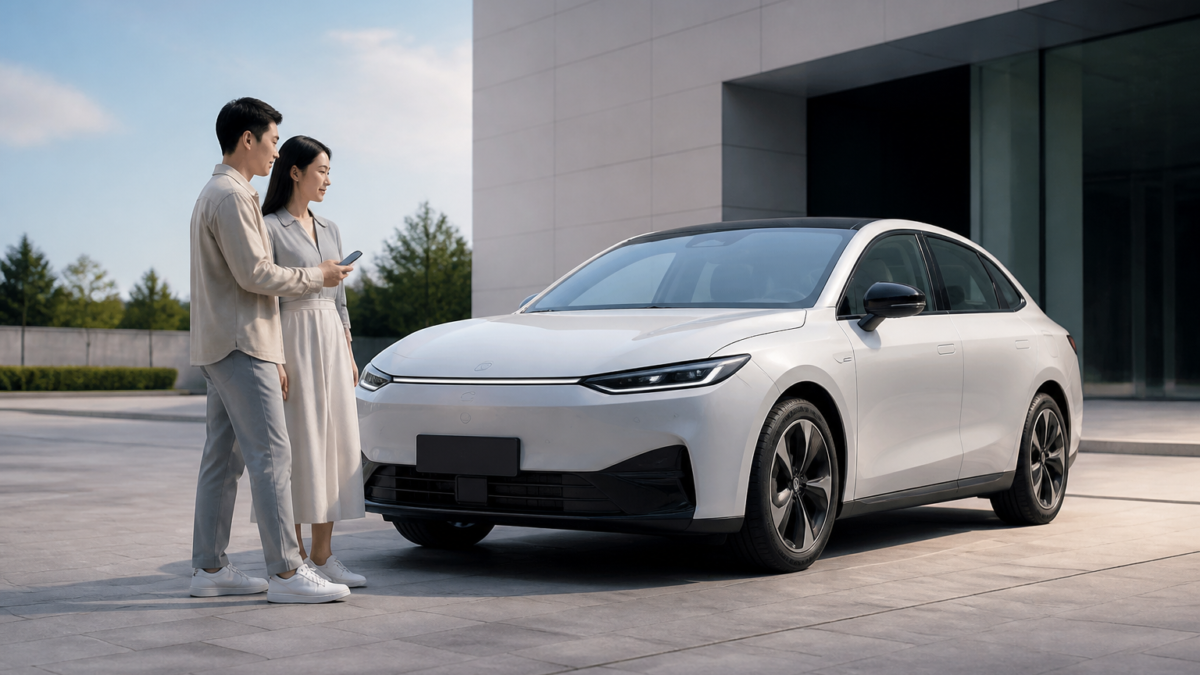
The Electra L7 is a large sedan measuring approximately 5,032 millimeters long, 1,952 millimeters wide and 1,500 millimeters high, with a 3,000-millimeter wheelbase. In U.S. terms, that places it closer in overall footprint to a large premium sedan than to a compact electric car. Reported curb weight ranges from about 2,105 to 2,140 kilograms, depending on configuration. ([carnewschina.com](https://carnewschina.com/2025/07/17/china-made-buick-electra-l7-erev-unveiled-with-502-hp/))
Its exterior uses a fastback profile, concealed door handles, a full-width rear light design and aerodynamic styling intended to support efficiency. The design may appeal to shoppers who want a sedan with a more modern silhouette than a traditional three-box car, although cargo space, rear visibility and loading practicality would need to be evaluated in person.
Technology is another major part of the vehicle’s positioning. Reports describe a lidar sensor, ultrasonic sensors and a Momenta-assisted driving system. These systems are intended to support driver-assistance functions, but they do not make the vehicle autonomous. Drivers remain responsible for monitoring the road and following local laws. Equipment, feature names and permitted functions can also vary by market and software version. ([carnewschina.com](https://carnewschina.com/2025/07/17/china-made-buick-electra-l7-erev-unveiled-with-502-hp/))
Price and availability
SAIC-GM announced the Electra L7 in five Chinese-market variants with limited-time introductory pricing from RMB 169,900 to RMB 215,900. Currency conversions published by media outlets are only approximations because exchange rates change, and a Chinese sticker price does not represent the final cost of importing, certifying, registering or servicing a vehicle in the United States. ([news.gm.com.cn](https://news.gm.com.cn/en/home.detail.print.html/content/Pages/news/cn/en/2025/sep/0928-buick.html?utm_source=openai))
For American shoppers, the most important availability detail is that the Electra L7 was described as a China-only model developed by SAIC-GM for the Chinese market. Buick has not confirmed a U.S. launch, U.S. pricing, EPA certification, American warranty coverage or compatibility with the charging infrastructure used by U.S. drivers in the information reviewed for this article. ([carnewschina.com](https://carnewschina.com/2025/07/17/china-made-buick-electra-l7-erev-unveiled-with-502-hp/))
That means online articles describing the Electra L7 as an upcoming American Buick should be read cautiously unless they cite a formal Buick or General Motors announcement. A vehicle can be officially launched in China without being approved, imported or sold through Buick dealerships in the United States.
How the Electra L7 compares with a conventional EV
A pure battery-electric sedan has no gasoline engine, which can simplify the drivetrain and eliminate tailpipe emissions during operation. Its main limitation for some drivers is the need to recharge on longer trips. The Electra L7’s EREV layout attempts to address that concern by adding a fuel-powered generator.
The tradeoff is additional mechanical complexity, fuel consumption and tailpipe emissions. The L7 also carries both a battery system and an internal-combustion engine, which can increase weight compared with a similarly sized pure EV. As a result, the best choice depends on driving habits rather than headline range alone.
For a U.S. buyer, useful comparison questions would include: How often can the vehicle be charged at home? Are long highway trips common? Is a public fast-charging network convenient along regular routes? Would a gasoline backup provide meaningful peace of mind? Those practical questions are more useful than comparing CLTC and EPA figures as if they were identical measurements.
What remains unconfirmed for U.S. consumers?
- Whether Buick will sell the Electra L7 in the United States.
- Whether the EREV version or a separate battery-electric version would be considered for export.
- U.S. EPA range, energy-consumption and emissions ratings.
- U.S. charging-port compatibility and access to local charging networks.
- American pricing, warranty coverage, service support and replacement-parts availability.
- Which driver-assistance features would be legally and technically available outside China.
Bottom line
The Buick Electra L7 is a confirmed China-market model, not merely a design study, but it should not currently be presented as a confirmed U.S. Buick. Its most distinctive feature is the combination of electric propulsion, all-wheel drive and a gasoline range extender. Reported specifications include a 302-kilometer CLTC electric range, up to 1,400 kilometers of combined CLTC range, a 40.2-kWh LFP battery and rapid-charging capability under high-power conditions.
For American readers, the Electra L7 is best understood as an example of how Buick and SAIC-GM are developing region-specific electrified vehicles for China. Its technology may influence future Buick products, but until General Motors announces U.S. certification and sales plans, availability, pricing and ownership expectations remain unconfirmed.
Frequently asked questions
Is the Buick Electra L7 a fully electric vehicle?
The launched L7 EREV uses electric motors for propulsion but also includes a gasoline engine that works as a range extender. It is therefore an extended-range electric vehicle rather than a pure battery-electric vehicle.
How far can the Buick Electra L7 travel?
Published Chinese-market figures list about 302 kilometers of CLTC electric range and up to 1,400 kilometers of combined CLTC range. These are not EPA ratings and should not be used as direct estimates of U.S. driving range.
Can Americans buy the Buick Electra L7?
There is no confirmed U.S. retail launch in the information reviewed for this article. The model was introduced for China through SAIC-GM, so American shoppers should wait for an official Buick or General Motors announcement before treating it as a U.S.-bound vehicle.
What is the Buick Electra L7 price?
SAIC-GM announced Chinese introductory prices ranging from RMB 169,900 to RMB 215,900 across five variants. Those prices cannot be directly converted into a U.S. retail price.




Leave a Reply