
Last updated:
Key Takeaways
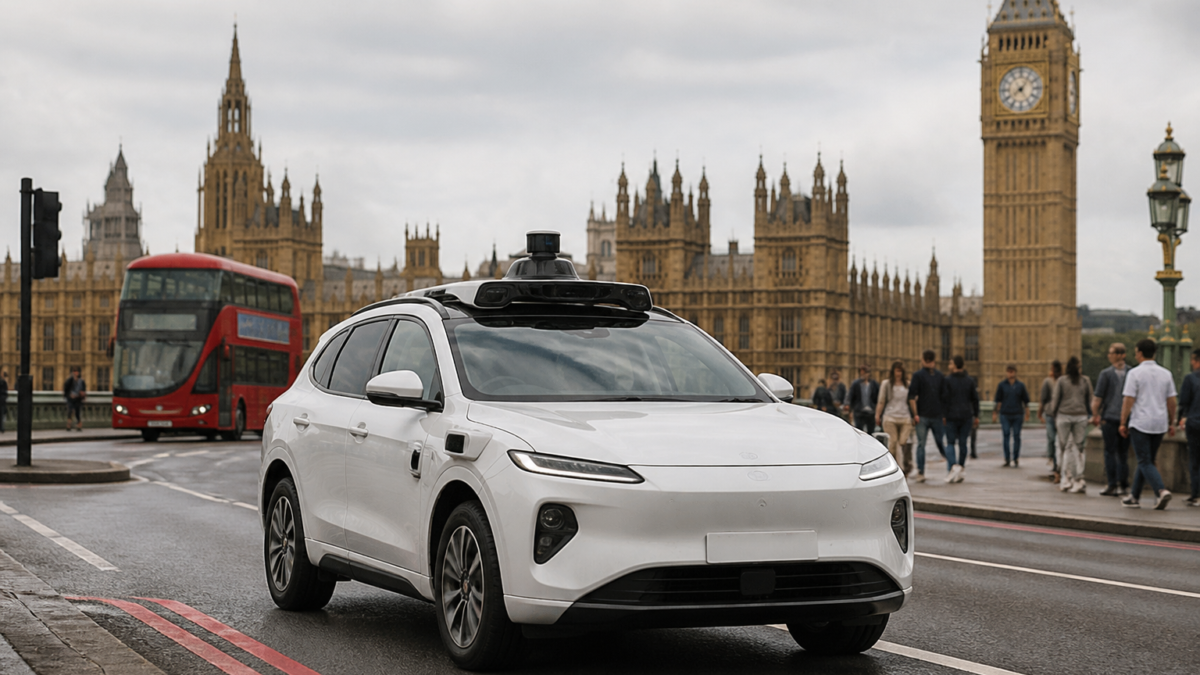
- Baidu’s Apollo Go began RT6 robotaxi road-testing in London’s Borough of Brent on July 28, 2026, with safety drivers aboard and in partnership with Freenow by Lyft.[1]
- While previous statements referenced Uber, only Freenow by Lyft has confirmed active involvement in the current London testing.
- This initiative follows Baidu Apollo Go’s fully driverless trial in Hong Kong in July 2026—the world’s first such operation in a right-hand-drive market.[2]
- Public robotaxi rides in London are planned for 2027, subject to regulatory approval.[1]
The Core News Story: London’s First Apollo Go Robotaxi Tests
Baidu’s Apollo Go, in collaboration with Freenow by Lyft, officially commenced real-world robotaxi trials in London on July 28, 2026. The testing—conducted in the dynamic and complex urban environment of Brent—marks a significant step for autonomous vehicle (AV) integration outside of Asia. Baidu’s sixth-generation RT6 vehicles are equipped with advanced autonomous systems and are currently operated with safety drivers on board to monitor performance and collect data for ongoing optimization.[1]
The partnership between Baidu and Lyft was crafted in 2025 specifically to accelerate AV rollout in Europe. Under this agreement, Baidu supplies the Apollo Go RT6 vehicles and its autonomous driving software, while Lyft’s Freenow brings valuable local operational and regulatory expertise. Despite past announcements involving Uber for UK trials, only Freenow by Lyft has been confirmed as an active participant in London at this stage.[1]
Background: Apollo Go’s Driverless Milestone in Hong Kong
Just days before the London launch, Baidu’s Apollo Go made headlines by securing Hong Kong’s first-ever fully driverless permit on July 23, 2026, from the city’s Transport Department.
Testing commenced on July 27 on Airport Island, marking the first fully driverless (SAE Level 4) robotaxi deployment in any right-hand-drive market globally. This milestone underscores Baidu Apollo Go’s technological advancement and sets a precedent for autonomous vehicle regulations in complex, regulated jurisdictions.[2]
How Apollo Go’s London Trials Work
The London trials use Baidu’s RT6 robotaxis equipped with cutting-edge sensors, LiDAR, AI-powered planning systems, and high-definition mapping. For now, human operators are present in each vehicle to supervise and intervene if necessary. Data on traffic interactions, sensor performance, and user feedback is being collected to refine the autonomous systems and ensure compliance with UK regulations and safety standards.[1]
Baidu’s partnership with Freenow by Lyft facilitates smooth test operations by leveraging Freenow’s operational network and regulatory know-how. These tests provide valuable insights to inform local policymakers and regulators about the practical realities and requirements of safe AV integration.
Baidu & Lyft Partnership: Europe’s AV Push
The Baidu-Lyft alliance aims to establish a scalable autonomous mobility offering in Europe. While Baidu focuses on vehicle technology and automation, Freenow by Lyft delivers operational efficiency, rideshare aggregation, and established connections with local authorities. This synergy is designed to ensure a faster, more compliant expansion as they look toward cities like Berlin and further UK markets.
| Aspect | London (Brent) Trial | Hong Kong Trial |
|---|---|---|
| Testing Start | July 28, 2026 | July 27, 2026 |
| Operator Onboard | Yes (Safety driver) | No (Level 4 fully driverless) |
| AV Partnership | Baidu & Freenow by Lyft | Baidu (direct, with regulatory oversight) |
| Market Orientation | Right-hand drive | Right-hand drive |
| Public Rides | Planned for 2027, pending approval | Pilot basis, limited to specific routes |
Public Availability: What to Expect in 2027
Pending regulatory approval, public passengers are expected to access Baidu’s Apollo Go robotaxis through the Freenow app by 2027. Routes, pricing, and operational protocols are yet to be finalized, as authorities will closely scrutinize the data and safety records from the current trials.[1]
Main Challenges Facing London’s Robotaxi Rollout
- Regulatory Approval: UK laws require stringent AV performance and safety validation before public use is authorized.
- Urban Complexity: London’s dense and unpredictable traffic environment poses significant technical hurdles for autonomous systems.
- Public Perception & Trust: Acceptance hinges on demonstrating safety, reliability, and value to both riders and regulators.
- Integration with Transport Network: Coordination with established public and private mobility options remains a logistical and strategic priority.
FAQs: Baidu Apollo Go Robotaxi Testing in London
- 1. Is Uber involved in the current London robotaxi testing?
- No; although previous announcements indicated Uber might be a partner, active on-road testing has only been confirmed with Freenow by Lyft.[1]
- 2. When can the public use Apollo Go robotaxis in London?
- Public rides are planned for 2027, conditional upon regulatory approval and continued successful trials.[1]
- 3. What is unique about the Hong Kong trial?
- It was the world’s first fully driverless robotaxi operation in a right-hand-drive market and required no safety driver, unlike London’s current trials.[2]
- 4. Where are the tests being run in London?
- Initial road testing is happening in the Borough of Brent, a diverse area selected for its challenging real-world driving conditions.[1]
- 5. What safety measures are in place during tests?
- Each vehicle has a trained safety driver, extensive sensor monitoring, and immediate override capabilities for maximum safety compliance.
- 6. How does Baidu’s technology compare with other AV providers?
- Baidu’s RT6 AV features next-gen sensors, LiDAR, and city-scale HD mapping. Its Hong Kong trial’s regulatory success positions it as a global AV leader.
- 7. Will the service be integrated into Freenow’s app?
- Yes, once public service launches, rides will be booked through the Freenow app, pending regulatory clearance and successful field trials.[1]
Checklist: What Riders and Regulators Should Know
- AV testing in London currently includes only Freenow by Lyft as a confirmed partner.
- No public rides offered before 2027; all current trips are with trained operators.
- Hong Kong was the first right-hand-drive market with a fully driverless robotaxi trial.
- Trials produce operational and safety data crucial for regulatory approval.
- Baidu and Freenow by Lyft are committed to transparency and collaboration with UK authorities.
Conclusion
Baidu Apollo Go’s London debut represents a decisive advance for urban mobility innovation in Europe. Partnering with Freenow by Lyft, Baidu is testing its sophisticated RT6 robotaxis in real London conditions, gathering valuable insights for future deployment. The milestone follows on the heels of a world-first in Hong Kong, where Apollo Go led the way for fully driverless services in a right-hand-drive context. While public rides in London remain slated for 2027—pending stringent regulatory sign-off—the groundwork is being laid for a broader autonomous transport future that blends cutting-edge technology with trusted local partnerships. As the trials progress, the industry’s focus will be on how these autonomous services perform, scale, and earn trust among both city authorities and riders.[1]
Context Reference: Original Publisher













Leave a Reply