
Last updated:
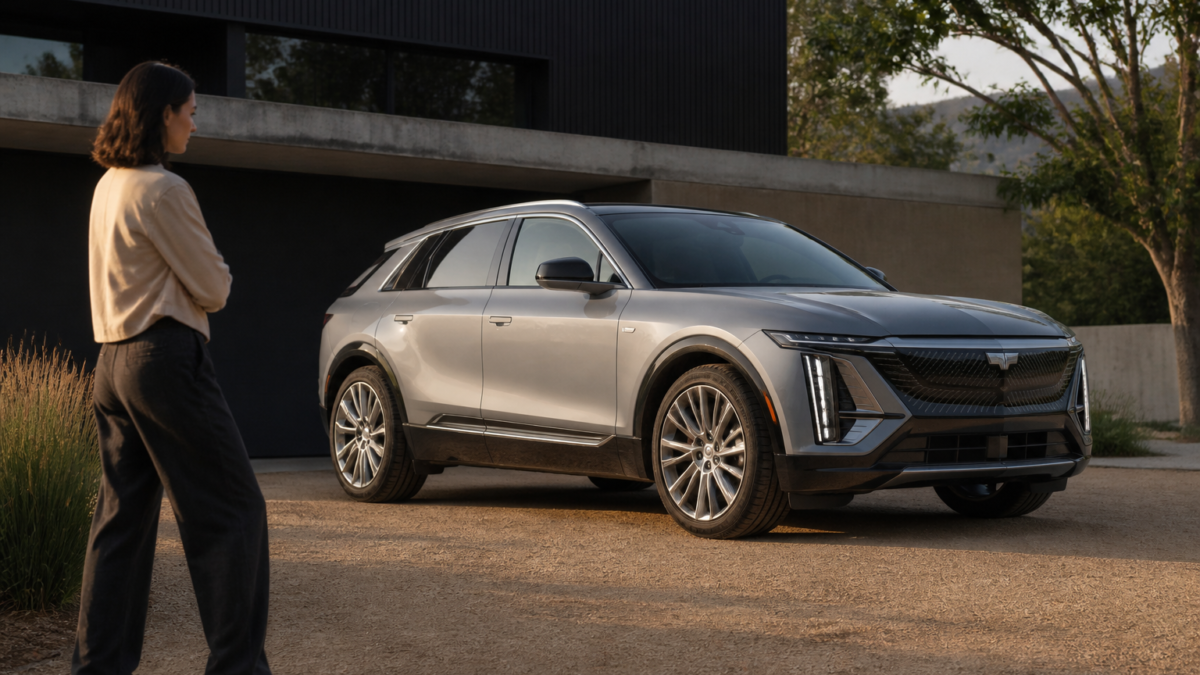
The 2027 Cadillac Lyriq delivers a measured update to Cadillac’s flagship electric SUV, focusing on practical upgrades—most notably the addition of a standard North American Charging Standard (NACS) port—rather than dramatic changes to battery architecture or powertrain performance. While some early speculation hinted at a sweeping battery overhaul, the reality is more evolutionary: the Lyriq continues on General Motors’ Ultium BEV3 platform, offers the same EPA-estimated range as before, and modestly raises prices across model lines. The package is topped off by familiar technology features, evolutionary interior tweaks, and the introduction of a performance-focused Lyriq-V for buyers seeking extra horsepower.
For potential buyers, the key questions often revolve around pricing, charging flexibility, range, and what’s genuinely different for 2027. This guide provides a detailed look at the official trim lineup, charging details, owner-relevant caveats, and practical reasons someone might upgrade—or not—from an earlier Lyriq. We also clarify how the published MSRP compares to last year’s rates and highlight factors that will shape out-the-door purchase costs. Read on for a clear-eyed summary of what actually changed and what remains the same for Cadillac’s luxury EV crossover as of September 2026.
2027 Cadillac Lyriq Pricing and Trim Structure
The 2027 Lyriq’s manufacturer-advertised MSRPs are only about $200 higher than matching 2026 trims—a meaningful but modest bump in a competitive EV market. The price increases apply mainly to the base (non-V) trims and do not reflect out-the-door costs, which also include destination charges, taxes, options, and dealer fees.[1] Official starting prices from Cadillac’s U.S. site are:
| Trim | Drivetrain | MSRP* |
|---|---|---|
| Luxury | RWD | $59,400 |
| Sport | RWD | $59,900 |
| Premium Luxury | RWD | $63,400 |
| Premium Sport | RWD | $63,900 |
| Signature Luxury | RWD | $66,800 |
| Signature Sport | RWD | $67,300 |
| Lyriq-V | AWD | $78,700 |
*MSRP excludes destination, taxes, registration, dealer fees, and optional equipment. Higher trims and AWD configurations push base pricing further. For purchase planning, always get an itemized quote from your dealer and review the actual build and VIN for exact features and price.[2]
What’s Actually New for 2027?
The headline improvement for the 2027 Lyriq is its built-in NACS (North American Charging Standard) port, which enables direct charging at Tesla Superchargers and other NACS-compatible stations—no external adapter needed. This marks a significant advance in public charging flexibility, lining up Cadillac with GM’s broader commitment to making NACS standard across all 2027 EVs.[3]
Other aspects of the Lyriq see evolutionary rather than revolutionary change. The foundational Ultium BEV3 platform and 102 kWh battery pack remain unchanged. Interior upgrades, refinement of available features, and subtle trim-line feature updates round out the year’s changes. Core technology tools and most luxury features carry over from the previous model year.[4]
Range, Battery, and Charging: Key Specs
Despite early rumors, there is no dramatic battery upgrade for 2027—Cadillac’s published specs confirm the retention of the 102 kWh Ultium battery with the following EPA-estimated ranges:
- Rear-Wheel Drive (RWD): Up to 326 miles
- All-Wheel Drive (AWD): Up to 319 miles (303 miles with 19.2 kW onboard charging option)
These figures are standardized estimates—the actual range in daily use depends on factors like weather, driving habits, terrain, payload, and battery age.[4]
Charging Details:
- DC Fast Charging (public): Up to 190 kW, adding approximately 86 miles of range in 10 minutes under optimal conditions (real-world rates may be lower).
- AC Onboard Charger: 11.5 kW standard; 19.2 kW available on higher trims for faster home charging—provided compatible home wiring and equipment.
- Native NACS Port: Standard, eliminating the need for adapters at compatible public fast-charge stations.
Cadillac Lyriq Trim Comparison Guide
| Trim | Drive Type | Range (EPA) | Horsepower | Base MSRP* |
|---|---|---|---|---|
| Luxury | RWD | 326 miles | 365 hp | $59,400 |
| Sport | RWD/AWD | 319–326 miles† | 365 hp (RWD) | $59,900 |
| Premium Luxury | RWD/AWD | Up to 319 miles | 365 hp (RWD) / 515 hp (AWD) | $63,400 |
| Premium Sport | RWD/AWD | Up to 319 miles | 365 hp (RWD) / 515 hp (AWD) | $63,900 |
| Signature Luxury | RWD/AWD | Up to 319 miles | 365 hp (RWD) / 515 hp (AWD) | $66,800 |
| Signature Sport | RWD/AWD | Up to 319 miles | 365 hp (RWD) / 515 hp (AWD) | $67,300 |
| Lyriq-V | AWD | 285 miles | 615 hp | $78,700 |
*Excludes destination, taxes, and options.
†Depends on drivetrain and charging module selected.
Power, Performance, and the 2027 Lyriq-V
The standard Lyriq provides a refined drive, prioritizing comfort and technology. RWD models deliver 365 horsepower, while AWD trims (with optional configurations) climb to 515 horsepower with 450 lb-ft of torque. The high-output Lyriq-V stands apart, boasting:
- Dual-motor AWD
- Up to 615 hp (Velocity Max) and 650 lb-ft torque
- Performance features: launch control, adaptive chassis, performance brakes
- EPA range: 285 miles
Buyers focused on acceleration should remember that AWD and large performance wheels may reduce range and ride comfort. The Lyriq-V is tuned for drivers seeking top-tier power, and its price premium reflects those upgrades.[4]
Charging Experience and NACS Transition
Switching to the NACS port is the most meaningful practical change in the 2027 Lyriq. This connector, originating with Tesla, is widely adopted and is becoming the North American charging reference. Owners benefit from:
- Direct access to expanding NACS public charging networks—including Tesla Superchargers where permitted
- No separate adapter needed for NACS stations
- Compatibility with most planned future chargers in the U.S. EV ecosystem
Caveats remain. Not every public charger will be immediately compatible—users should confirm compatibility and function with Cadillac’s charging locator tools and separate charging networks. Always check hardware, app requirements, and account activation before long road trips.[3]
Interior, Technology, and Equipment Changes
The Lyriq’s technology-rich cabin continues to feature a 33-inch curved Horizon Display, Google built-in, wireless charging, 5G capability, wireless smartphone integration, and Super Cruise hands-free driver assistance (where supported). Standard and optional features by trim include:
- 23-speaker AKG audio (Premium trims and above)
- Heated/ventilated/massaging front seats, rear camera mirror, power liftgate (varies by trim)
- Signature trims offer additional luxury features: tri-zone climate, heated rear seats, larger wheels
The vehicle offers Vehicle-to-Home (V2H) compatibility as a future-ready feature, but V2H requires extra equipment and may not be immediate upon delivery—check installer and local utility requirements.
Warranty, Maintenance, and Incentive Questions
- Warranty: Cadillac covers Lyriq with a limited bumper-to-bumper warranty and an extended electric propulsion battery warranty. Always check your specific paperwork for details and region-specific limits.
- Maintenance: While electric, the Lyriq still requires regular inspections of brakes, tires, suspension, and cabin air filters. Ask your dealer about EV-specific service locations and any included maintenance.
- Incentives: EV incentives—incentive eligibility changes frequently and depends on federal/state/local law, buyer profile, and vehicle configuration. Consult tax professionals and official websites for the latest guidance about federal clean vehicle credits or local rebates.
Verify recall and safety updates through the National Highway Traffic Safety Administration and Cadillac’s VIN lookup before finalizing a purchase.
What to Consider Before Buying
- Finalize the EPA range for your specific trim, drivetrain, wheels, and options.
- Calculate the total purchase price (including all fees and options) rather than just base MSRP.
- Assess home charging needs: Is 11.5 kW enough, or do you need 19.2 kW? Is your home equipped for the max charging rate?
- Compare real-world charging coverage on your regular travel routes with NACS and legacy networks.
- Review available inventory: If a 2026 Lyriq with desired features is discounted, the savings may outweigh the modest improvements for 2027.
Frequently Asked Questions
How much does the 2027 Cadillac Lyriq cost?
As of September 2026, base MSRP for the Lyriq Luxury trim starts at $59,400. Higher trims and options increase the price. Destination fee, taxes, and dealer costs are extra. A written itemized quote is recommended.[2]
Does the 2027 Lyriq come with a NACS charging port?
Yes. Every 2027 Cadillac Lyriq now includes a factory-installed NACS charge port, giving direct access to compatible Tesla Superchargers and other NACS networks.[3]
What is the EPA-estimated range for the 2027 Lyriq?
The EPA estimate for RWD models is up to 326 miles per charge; AWD configurations drop slightly to 319 miles, or 303 miles if equipped with the 19.2 kW charge module. These are estimates; real-world range will vary.[4]
Has the Lyriq’s battery changed for 2027?
No. The Lyriq retains its proven Ultium BEV3 platform with a 102 kWh battery. There is no new battery design or chemistry upgrade announced for 2027.[4]
Which trims get 19.2 kW AC charging?
The faster 19.2 kW onboard AC charging module is available only on certain higher trims; check the configurator to confirm feature and price compatibility for your preferred configuration.[2]
What is the Lyriq-V’s performance spec?
The Lyriq-V offers up to 615 horsepower, 650 lb-ft torque, AWD, and an EPA range of 285 miles. Performance features include adaptive chassis tuning, performance brakes, and launch control.[4]
Is the 2027 Lyriq eligible for U.S. tax credits?
Eligibility depends on the latest federal and state regulations, buyer’s tax status, purchase price, and manufacturing details. Always consult a current IRS or Department of Energy resource and a tax professional before making assumptions.
Conclusion: Is the 2027 Cadillac Lyriq Right for You?
The 2027 Cadillac Lyriq stands as an appealing luxury EV for buyers wanting solid range, Tesla-compatible charging from the factory, and modern comfort/tech. Its limited but real improvements over 2026—most significantly the native NACS port—will matter most to those frequently using public fast chargers. Price increases are minor compared to the continuing luxury and technology value in each trim.
However, if you already own a recent Lyriq or see a heavily discounted 2026 version with your preferred specs, the incentive to jump to 2027 is not overwhelming. Assess your home charging setup, real pricing including options and fees, and the practicality of the driving range for your region. As always, demand full written documentation of warranty, incentives, recall status, and build sheet before committing. The Lyriq’s competitive edge for 2027 is practical charging integration and sustained luxury, rather than headline-grabbing reinvention of the core EV formula.





Leave a Reply