
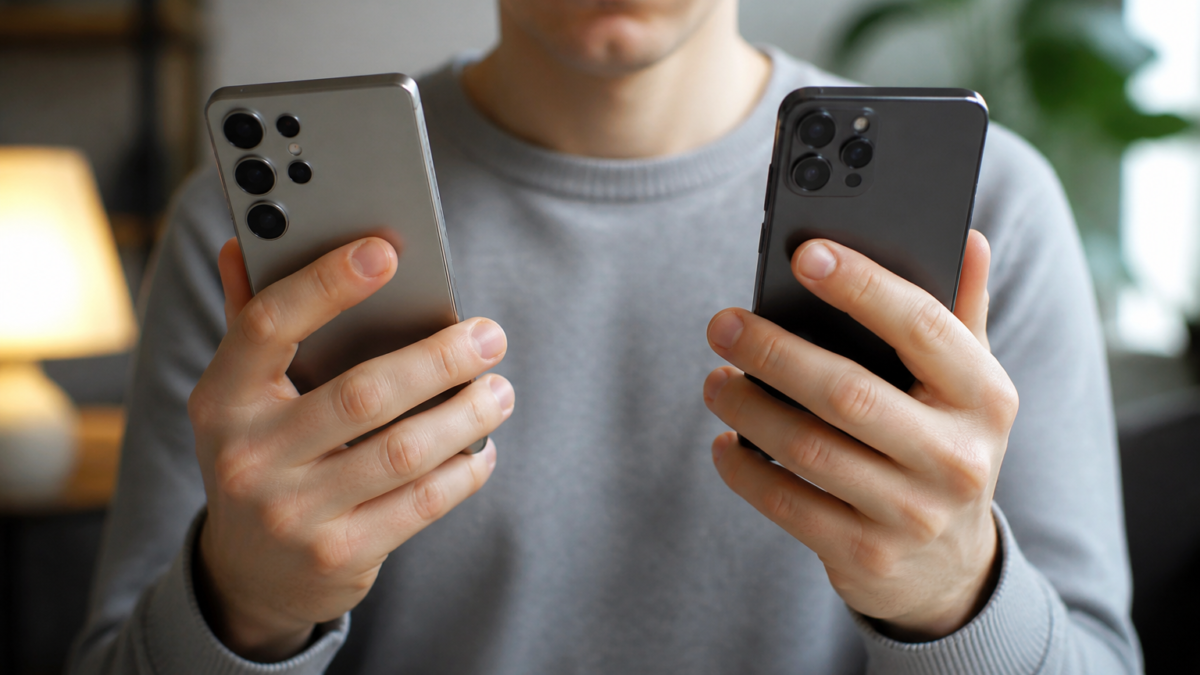
The ongoing competition between Samsung and Apple continues to shape the smartphone world. By 2026, both brands boast highly refined devices and mature ecosystems, each catering to distinctive user priorities. While much attention is given to each company’s newest flagship release, it’s the core philosophies, interface differences, and cross-device experiences that most affect day-to-day user satisfaction. Many prospective buyers are less concerned with model-year prestige and more interested in tangible features—customization, build quality, camera prowess, and how seamlessly their phone interacts with other tech in their lives. This article draws on verified, up-to-date research to demystify the key distinctions and guide your decision in the modern smartphone landscape.
Design and Build Quality: Premium Materials and Sensible Evolution
While both Apple and Samsung set industry benchmarks for design, their flagship devices offer distinct takes on aesthetics and durability. Past leaders like the Samsung Galaxy S21 Ultra and the iPhone 13 Pro showcase each company’s signature style. Samsung pioneered the Contour Cut Camera housing, blending the camera module into the metal chassis, alongside a 6.8-inch Dynamic AMOLED 2X display protected by Corning Gorilla Glass Victus—a combination praised for both style and ruggedness [1]. The S21 Ultra’s support for the S Pen and advanced camera hardware also set it apart in 2021’s landscape, and its influence still echoes in later Samsung flagships.
Meanwhile, Apple’s iPhone 13 Pro utilized a Ceramic Shield front, textured matte glass rear, and a stainless steel frame, combining minimalist design language with arguably superior drop and scratch protection [2]. While both the S21 Ultra and iPhone 13 Pro are now legacy models, their standards for build, materials, and design choices remain hallmarks for current iterations.
Operating System & User Interface: Customization vs. Simplicity
The software experience is where the Samsung–Apple divide is starkest. Samsung’s One UI, layered atop Android, provides powerful customization options. By 2026, One UI 8.5 brought features like a resizable, repositioned Quick Panel, smarter file sharing, and enhanced AI assistants; shortly afterward, One UI 9 (on Android 17) introduced advanced homescreen personalization—such as docks with unique backgrounds and multifinger gesture controls via Home Up module [3][4]. AI-generated wallpapers, customizable lock screen widgets, and improved quick panel accessibility arrived with One UI 6 [5]. These elements combine to offer sophisticated, user-driven device personalization.
Apple’s iOS, in contrast, continues its reputation for streamlined, secure, and consistent user experience. While recent documentation doesn’t cite major customization advancements as of 2026, iOS is lauded for simplicity and stability, particularly benefitting users fully invested in the Apple ecosystem. Both approaches cater distinctly to different user philosophies: Samsung invites tinkerers; Apple’s strength is predictable ease-of-use.
Performance: How Do Their Chips Stack Up?
Processor speed and efficiency remain a major factor. The A15 Bionic chip, introduced in the iPhone 13 family, is a 64-bit ARM-based SoC with 6-core CPU architecture. Geekbench 7 results from September 2026 still show this chip achieving ~2033 single-core and ~5055 multi-core scores in iPhone 13 devices—a performance level that, while surpassed by newer models, underscores Apple’s advantage in per-core processing since 2021 [6][7].
For Samsung, the specific 2026 chipset comparisons are less clear due to limited public benchmarks, but the company has traditionally split between Exynos and Snapdragon processors by region. Galaxy S21 Ultra’s SoC powered robust multitasking, gaming, and camera processing in its heyday, but without fresh benchmark data, only historical context can be given for current models. Still, top-tier Samsung devices remain industry-competitive, especially in multi-core and graphics tasks.
Camera Technology: Creative Control and Video Power
| Model | Main Camera Highlights | Video Recording |
|---|---|---|
| Samsung Galaxy S21 Ultra | 108 MP primary sensor, 3× and 10× optical zoom, up to 100× digital zoom | UHD 8K at 24 fps |
| Apple iPhone 13 Pro | 12 MP triple array, larger sensor for low-light, ProRAW, Cinematic Mode | 4K ProRes (256 GB+), Cinematic 1080p |
Samsung’s reputation for pushing photography boundaries is exemplified by the Galaxy S21 Ultra’s impressive array of lenses, with true 3× and 10× optical zoom, and up to 100× digital zoom, all supporting 8K video capture [8]. Apple’s iPhone 13 Pro, in turn, leverages its A15 Bionic’s ML horsepower for advanced computational photography—including ProRes video, Cinematic Mode (shifting focus in real time), and improved sensor tech. Notably, 4K ProRes is only available on 256 GB and higher models [9]. Apple’s video pipeline also stays ahead for content creators who value ready-to-edit file formats and software support.
Ecosystem and Integration: Cross-Device Convenience
In 2026, both companies anchor mature ecosystems, but with different strengths. Samsung’s Galaxy platform now encompasses smartphones, Galaxy Tab tablets, Galaxy Book laptops, Galaxy Watch, Buds, SmartThings, and beyond, all with services like QuickShare, Multi-Control, and Link to Windows for easy sharing, continuity, and remote access [10]. Users move fluidly between phone, PC, TV, wearables, and even “DeX” desktop mode, benefiting those who pair their phone with Windows. Community feedback notes Samsung’s relative flexibility in mixed-device environments, making it attractive to users who aren’t all-in on a single brand [11].
Apple counters with AirDrop, iCloud, Handoff, Universal Clipboard, AirPlay, FaceTime, and seamless pairing with Macs, iPads, Apple Watch, AirPods, and Apple TV [12]. Video reviews and user commentary highlight Apple’s unmatched speed in rolling out critical software updates across devices, as well as polished interplay within its tightly controlled universe [13]. For those fully invested in Apple hardware, the ecosystem “just works”—but it’s more closed to third-party device integration.
Price and Value: A Broad Spectrum (But Check for Current Prices)
As of this writing, fresh price data for new and legacy Samsung and Apple models is not available from primary sources. Historically, Samsung covers a wider spread of midrange and entry options, while Apple emphasizes flagship quality and brand consistency throughout its line. Buyers are encouraged to compare local and online pricing for the most up-to-date information, and to consider features (such as display quality, storage, camera needs, and OS updates) against their real-world usage patterns, rather than presuming one brand is universally “cheaper” or “more expensive.”
At-a-Glance: Samsung vs. Apple Features Checklist
| Feature | Samsung (S21 Ultra era) | Apple (iPhone 13 Pro era) |
|---|---|---|
| Display | 6.8″ Dynamic AMOLED 2X, 120Hz, 1500 nits | 6.1″ or 6.7″ Super Retina XDR, ProMotion, up to 120Hz (Pro) |
| Build Materials | Gorilla Glass Victus, aluminum/metal, S Pen support | Ceramic Shield, textured glass, stainless steel |
| Camera | 108MP, 10x optical zoom, 8K video | 12MP triple, ProRAW/ProRes, Cinematic Mode, 4K |
| Customization | One UI – high, extensive options | iOS – lower, but stable |
| Ecosystem | Wide, flexible, Windows integration | Tightly-knit, Apple services focus |
| Performance (2026 bench) | – | A15 single ~2033, multi ~5055 (Geekbench 7) |
FAQs: Your Samsung vs. Apple Smartphone Questions Answered
- Which brand offers more customization?
- Samsung smartphones with One UI (especially versions 8.5 and beyond) provide far greater customization than iPhones. Users can personalize themes, resize Quick Panels, create AI-generated wallpapers, and arrange their home screen extensively [3].
- Which phone is better for photography?
- It depends on your preferences: Samsung’s S21 Ultra excels at zoom and versatility, while Apple’s iPhone 13 Pro delivers superb computational photography, Cinematic Mode, and easy-to-edit ProRes video [8][9].
- What ecosystem is more beginner-friendly?
- Apple’s ecosystem is often considered easier for beginners due to consistent design language and seamless cross-device pairing. However, Samsung’s ecosystem is friendlier for those who mix brands, especially with Windows PCs [12].
- Does Samsung update its phones as quickly as Apple?
- No—Apple maintains a lead in pushing software updates quickly across supported iPhones. Samsung is improving, but update speed still slightly trails Apple [13].
- Can I use an iPhone or Samsung with other brands of devices?
- Samsung phones often work better with third-party or Windows devices, supporting features like Link to Windows and broad Bluetooth compatibility. Apple devices shine within the Apple ecosystem but are more restrictive with non-Apple hardware [11].
- Are Samsung phones more affordable than iPhones in 2026?
- Current, direct price comparisons aren’t available from verified sources as of September 2026. Generally, Samsung offers more models across a wider price range, but always check with your local retailer for the latest information.
- Which is better for long-term support?
- Apple typically offers longer, more consistent iOS support for older models. Samsung has improved update policies, but Apple remains slightly ahead for longevity and predictable upgrades [13].
Conclusion: Picking Your Smartphone Titan in 2026
The Samsung vs. Apple debate isn’t merely about specs—it’s about experience and ecosystem fit. Samsung is the leader in customization, interoperability, and choice across price points, suiting users who want more control or regularly pair with non-Samsung (especially Windows) devices. Apple, meanwhile, appeals to those who want minimal fuss, top-tier security, and unmatched device integration within its own expanding product family.
Ultimately, your ideal choice depends on how much you value personalizing your device and mixing tech brands versus desiring a harmonious, streamlined environment. There’s no singular winner—both brands are smartphone titans because they continually innovate in their distinctive visions. Before buying, assess your reliance on ecosystem features, customization needs, and planned device investments for the years ahead, then try both platforms if possible to see which truly fits your lifestyle.







Leave a Reply