
Last updated:
If your iPhone suddenly starts taking blurry photos, don’t panic or rush to service—most issues have simple, safe fixes that you can try at home. Blurriness is often caused by common problems such as smudged lenses, cases or accessories obstructing the camera, or scenarios like low light and motion blur. Sometimes, a software hiccup or outdated iOS is to blame. Apple and independent repair experts both recommend starting with the basics: cleaning the lens, removing accessories, and restarting the phone. These steps resolve a large proportion of cases without risk. This guide walks you through proven solutions step by step, so you can restore sharp images quickly and know when it’s time to consult service professionals.[1]
Understanding Why Your iPhone Camera Is Blurry
Blurry photos on your iPhone often have straightforward causes:
- Dirty or smudged lens: Fingerprints or lint cloud the lens, producing haze in photos.[1]
- Case, accessory, or magnet blocking the camera: Cases, lens covers, magnetic mounts, or protective films can physically block or distort the camera area.[1]
- Improper focusing or camera shake: If you haven’t tapped to focus or if your hands moved in low light, the resulting photo may blur.[3]
- Software issues or outdated iOS: Rare but worth testing, as software glitches can affect the camera’s performance.[1]
Less often, hardware defects or damage cause ongoing blur even after basic fixes.
Step-by-Step Fixes for a Blurry iPhone Camera
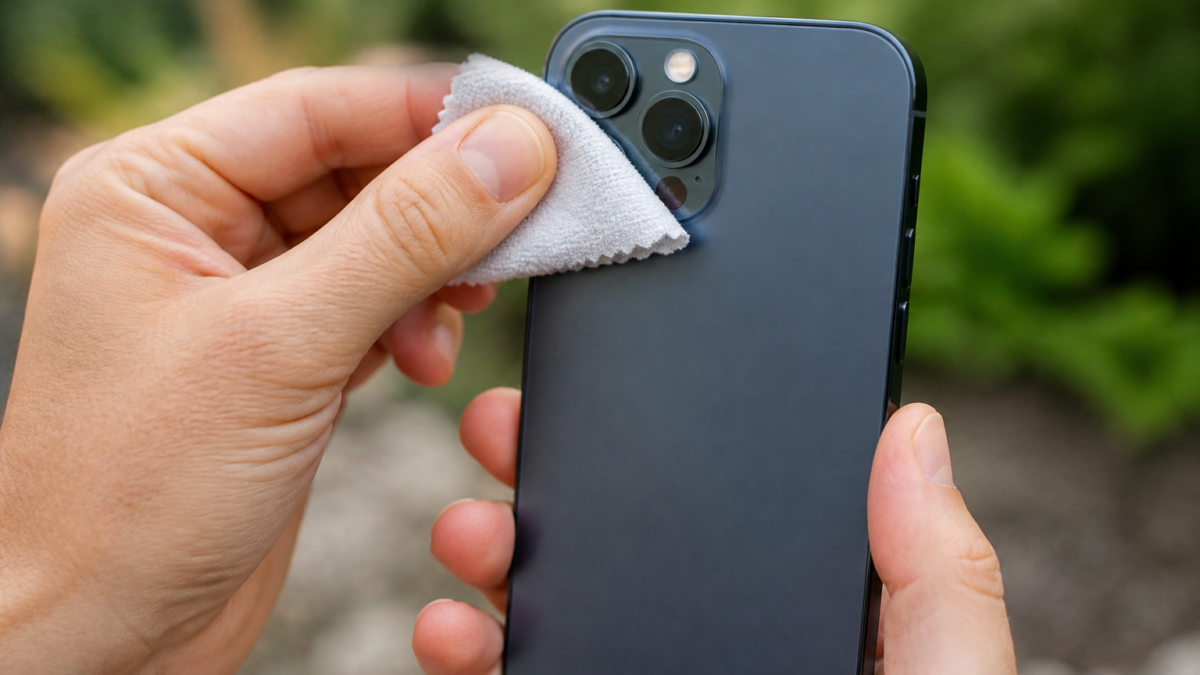
- Clean both front and rear lenses. Use a soft microfiber cloth, gently wiping the lenses. Avoid abrasive materials and ensure no debris is pushed into the lens housing.[1]
- Remove cases and accessories. Take off any case, lens cover, or accessory, especially those with magnets or metal rings. Retest the camera in a neutral state.[1]
- Improve lighting and distance. Photos in dim environments or too close to the subject are prone to motion blur. Move to brighter areas and maintain a reasonable distance when focusing.[3]
- Tap to focus. In the Camera app, tap your subject on-screen before taking the photo. This prompts the iPhone to focus correctly. (Explicitly noted by iFixit as effective.)[3]
- Restart your iPhone. Hold the power button and slide to turn off, then turn back on. This clears any temporary camera or software issue.[1]
- Update iOS. Install the latest available iPhone software under Settings > General > Software Update. Updates often resolve bugs and include camera improvements.[1]
- Test both cameras and try other apps. Check whether both front and rear cameras are blurry. Open a different camera-using app (like Instagram, FaceTime, or Notes). If only one camera or only one app is blurry, you’ve narrowed the problem.[1], [3]
Comparison Table: Normal Blur vs. Camera Issue
| Type of Blur | When It Is Normal | When to Suspect a Hardware Problem |
|---|---|---|
| Motion Blur | Low-light scenes, moving subjects, shaky hands | Visible in every photo, even in bright light with steady hands |
| Focus Error | Not tapping to focus, subjects too close | Never sharp, even with careful focus and clean lens |
| Haze/Smudge | After touching lens, exposure to dust or oil | Blur/haze persists after careful cleaning |
| Accessory Interference | Photo clears up when case/lens/cover removed | Blurry regardless of accessories attached |
When Blurry Photos Are Normal & When They’re Not
Not every blurry iPhone photo means damage or malfunction. Motion blur from a moving subject, low-light fuzziness, and wrong tap focus are common—even with a healthy camera. Try placing your iPhone on a steady surface or using burst mode for action shots. However, if photos remain blurry after cleaning lenses, removing accessories, restarting, and updating, you might be facing a hardware issue or need professional help.[1]
Safe Steps Before Resetting or Seeking Repair
Apple recommends updating iOS and restarting before considering service. Avoid full resets or erasing your device unless you’re instructed to do so by a professional—these steps risk data loss and are not the first-line solutions. If you proceed to more invasive troubleshooting, back up your device data beforehand. Most everyday blurriness issues resolve without these advanced steps.[1]
Quick iPhone Blurry Camera Checklist
- Are both lenses clean and free of smudges?
- Have you removed your case or any accessory that could block the camera?
- Does blurry image persist in both good lighting and low light?
- Did you tap the screen to focus before taking the photo?
- Have you restarted your iPhone?
- Has iOS been updated to the latest version?
- Is the blur seen on both front and rear cameras, or only in one app?
- If all steps fail: Is it time to contact Apple or a certified repair provider?
Frequently Asked Questions (FAQ)
Why is my iPhone camera blurry all of a sudden?
Common causes include a dirty lens, something blocking the camera (case, accessory), motion blur, low light, or a temporary software glitch. Cleaning lenses and restarting usually help.[1]
Should I reset my iPhone if the camera is blurry?
Do not reset right away. Try cleaning, removing accessories, restarting, and updating iOS first. A reset risks data loss and is not the first recommended step.[1]
Can my iPhone case make the camera blurry?
Yes. Cases, screen protectors, and magnetic mounts can partially block lenses or affect focus. Remove them and retest the camera.[1]
When should I get my iPhone camera serviced?
If blurriness persists after cleaning, removing accessories, restarting, and updating, you may need professional service.[1]
How do I check if the problem is with just one camera or app?
Switch between the front and rear cameras and try using the camera in several apps. If only one camera or app is affected, this may point to a specific hardware or software issue.
Can software updates fix a blurry camera?
Yes. Apple periodically releases camera-related fixes in software updates. Always check for and install the latest updates if you have ongoing camera issues.[1]
Is it normal for photos to blur in low light or with movement?
Yes, iPhones (like all cameras) can experience blur in dim conditions or when the camera or subject moves too quickly. This doesn’t mean there is a hardware issue.
Conclusion: Restore Your iPhone’s Camera Clarity
iPhone blurry camera issues are usually resolved with simple steps: cleaning the lens, removing obstructive accessories, tapping to focus, restarting the device, and updating iOS. These actions address nearly all non-hardware causes reported in Apple’s official guidance. Complex troubleshooting, resets, or repairs are rarely necessary unless every camera and app remains blurry after these basics. If so, contact Apple or a licensed technician for help. Taking prompt, methodical steps can save you time, frustration, and unnecessary expenses.[1]
Further Resources
- Apple Support: If the camera or flash on your iPhone, iPad, or iPod touch isn’t working
- iFixit: iPhone Blurry Camera Troubleshooting
Editorial note: This article was prepared using only official public sources as of September 2026. Interfaces, policies, and hardware specifications may change; always confirm details on the official Apple website before seeking service or performing advanced troubleshooting.





Leave a Reply