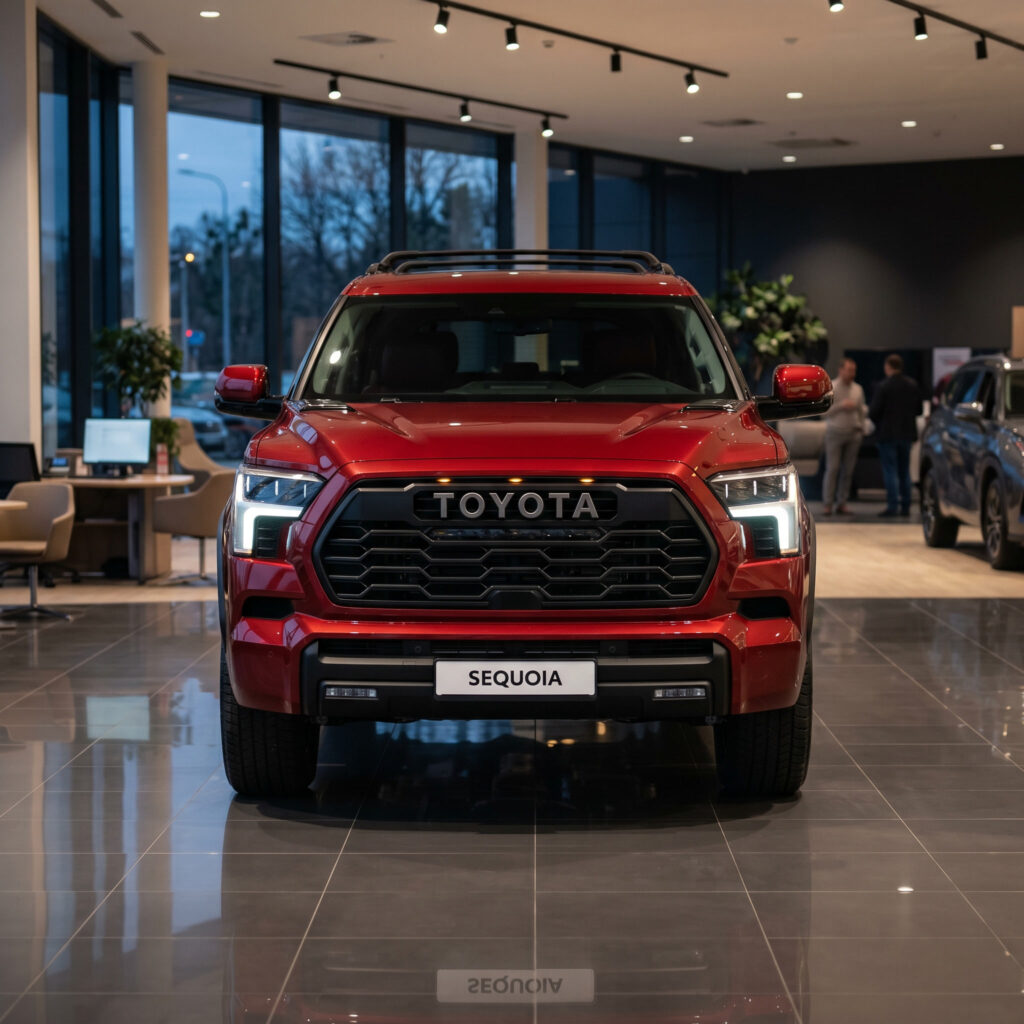
The Toyota Sequoia is one of Toyota’s largest and most capable SUVs, designed for drivers who need more space, more power, and more confidence than a smaller crossover can offer. For families, road-trip lovers, outdoor travelers, and drivers who regularly tow trailers or boats, the Sequoia stands as Toyota’s full-size SUV option with three-row seating, strong hybrid performance, and a premium-feeling cabin.
Unlike compact SUVs that focus mainly on city driving, the Toyota Sequoia is built around a larger mission. It is made for people who want a vehicle that can carry passengers, handle long-distance travel, support towing needs, and still offer modern comfort features. That makes it a serious option for buyers comparing large SUVs in the U.S. market.
One of the biggest talking points around the modern Toyota Sequoia is its hybrid powertrain. Instead of using a traditional V8 engine like many older full-size SUVs, the Sequoia uses Toyota’s i-FORCE MAX hybrid system. This setup combines a twin-turbo V6 engine with electric motor assistance, giving the SUV strong torque, smooth acceleration, and better efficiency than many people might expect from a vehicle of this size.
What Is the Toyota Sequoia?
The Toyota Sequoia is a full-size, three-row SUV positioned above Toyota’s smaller SUVs such as the RAV4, Highlander, and Grand Highlander. It is built for buyers who need serious passenger space, strong towing ability, and a more rugged SUV platform.
For many shoppers, the Sequoia becomes interesting because it blends three important things: family usability, towing strength, and Toyota’s reputation for long-term dependability. It is not a small city crossover. It is a large SUV for people who need real space and capability.
The Sequoia is often considered by buyers who are also looking at vehicles like the Chevrolet Tahoe, GMC Yukon, Ford Expedition, Jeep Wagoneer, and Nissan Armada. But Toyota gives the Sequoia its own identity by making hybrid power standard across the lineup.
Why the Toyota Sequoia Gets Attention
The Toyota Sequoia gets attention for several reasons. First, it carries the Toyota name, which many buyers associate with reliability and long ownership life. Second, it has a strong hybrid powertrain that delivers serious horsepower and torque. Third, it offers the size and confidence that many families want from a full-size SUV.
Another reason people search for the Toyota Sequoia is its balance between everyday comfort and heavy-duty usefulness. It can be used for school runs, family trips, weekend travel, outdoor adventures, and towing. For buyers who do not want a pickup truck but still need truck-like strength, the Sequoia can make sense.
Toyota Sequoia Performance and Engine
The modern Toyota Sequoia comes with Toyota’s i-FORCE MAX hybrid powertrain. This system uses a twin-turbocharged V6 engine paired with an electric motor and a 10-speed automatic transmission. The result is strong acceleration and impressive torque delivery.
According to Toyota’s official 2026 Sequoia brochure, the i-FORCE MAX powertrain produces 437 horsepower and 583 lb-ft of torque. That torque number is especially important because torque helps when towing, merging onto highways, climbing hills, or moving a large SUV with passengers and cargo.
The hybrid system is not only about saving fuel. In the Sequoia, it is also used to improve power delivery. The electric motor helps provide quick response at lower speeds, while the turbocharged engine keeps the SUV moving confidently at highway speeds.
For drivers coming from an older V8 SUV, the Sequoia may feel different, but it still provides the kind of strength people expect from a full-size SUV.
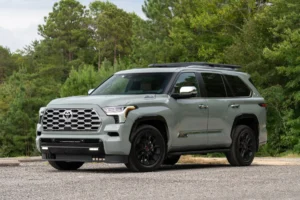
Toyota Sequoia Towing Capacity
Towing is one of the main reasons people consider the Toyota Sequoia. Many buyers in this category need an SUV that can pull a camper, small boat, utility trailer, or recreational equipment.
Toyota lists the 2026 Sequoia with towing capacity of up to 9,500 lbs when properly equipped. This makes it a practical option for buyers who want a family SUV that can also handle serious weekend towing.
The Sequoia also offers towing-focused features depending on trim and package. These may include trailer backup assistance, tow technology features, integrated trailer brake control, and camera support. These features can make towing less stressful, especially for drivers who do not tow every day.
However, buyers should always check the exact towing rating for the specific trim, drivetrain, and configuration they are considering. Towing capacity can vary depending on equipment, passengers, cargo, and options.
Interior and Comfort
Inside, the Toyota Sequoia is designed to feel spacious, practical, and premium. Since it is a full-size SUV, cabin space is one of its strongest selling points. It offers three rows of seating, making it useful for larger families or anyone who regularly carries multiple passengers.
The front seats are designed for comfort on long drives, while the second row can offer generous passenger room. Depending on trim, buyers may find features like heated and ventilated seats, leather-trimmed upholstery, premium materials, and upgraded interior finishes.
Higher trims such as Platinum, 1794 Edition, and Capstone focus more on luxury. These trims may appeal to buyers who want a large SUV with a more upscale cabin rather than a purely rugged utility vehicle.
The Sequoia’s interior also includes modern technology features such as a digital driver display, large infotainment screen options, smartphone connectivity, navigation availability, and multiple charging points. For families, these features matter because passengers often need entertainment, device charging, and comfort during long trips.
Cargo Space and Practicality
The Toyota Sequoia is built to carry people and gear, but buyers should look carefully at cargo needs. Like many three-row SUVs, cargo space is most limited when all three rows are in use. Folding the rear seats can create more usable storage space for luggage, sports equipment, camping gear, or shopping.
For families that often travel with all seats occupied, cargo planning becomes important. A roof box or trailer may be useful for long road trips when the third row is regularly used.
Still, the Sequoia is practical for many everyday needs. It offers enough space for family errands, weekend travel, school activities, and outdoor gear. Its large body and flexible seating make it more versatile than most midsize SUVs.
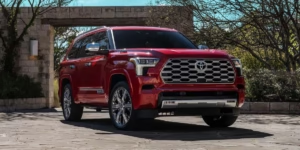
Toyota Sequoia Trims
The Toyota Sequoia lineup usually includes several trims, giving buyers different choices based on budget, comfort, and driving style.
SR5
The SR5 is the entry point into the Sequoia lineup. It is often the best fit for buyers who want the core Sequoia experience without paying for the most expensive luxury features. It still offers strong hybrid performance, three-row seating, and important technology and safety features.
Limited
The Limited trim adds more comfort and convenience. It may be a good middle-ground choice for families who want a better-equipped SUV without moving into the highest trims.
Platinum
The Platinum trim focuses more on premium comfort. Buyers may choose it for upgraded materials, more advanced convenience features, and a more refined cabin experience.
TRD Pro
The TRD Pro is the off-road-focused version of the Sequoia. It is designed for buyers who want a more rugged look and better trail capability. It may include off-road suspension features, all-terrain tires, skid plates, and Toyota’s TRD styling.
1794 Edition
The 1794 Edition gives the Sequoia a more premium, western-inspired personality. It is often aimed at buyers who want a luxury-style SUV with a unique interior theme.
Capstone
The Capstone is usually the most premium Sequoia trim. It is designed for buyers who want the highest level of comfort, upscale materials, and luxury-focused features.
Toyota Sequoia Fuel Economy
For a full-size SUV, fuel economy is an important topic. The Sequoia’s hybrid system is designed to improve efficiency compared with many traditional large SUVs, but it is still a big and heavy vehicle. Buyers should not expect compact SUV fuel economy.
The benefit of the hybrid system is that it can help improve everyday driving efficiency while also providing strong torque. This is especially useful in stop-and-go driving, city use, and situations where electric motor assistance can reduce engine strain.
Fuel economy may vary depending on trim, drivetrain, driving habits, road conditions, and how often the vehicle is used for towing. Drivers who tow frequently or drive aggressively will usually see lower real-world mileage.
Safety and Driver Assistance
Safety is an important part of the Toyota Sequoia’s appeal. Toyota typically includes a strong set of driver-assistance features across its modern SUV lineup. These systems are designed to help with everyday driving, highway travel, lane awareness, collision prevention, and parking confidence.
Common safety-related features may include adaptive cruise control, lane departure alert, automatic emergency braking, blind-spot monitoring, rear cross-traffic alert, parking support, and camera-based assistance depending on trim and package.
For families, these features add peace of mind. A large SUV can feel easier to manage when it has good visibility, parking sensors, cameras, and driver-assistance systems.
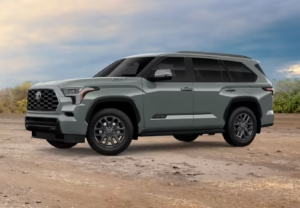
Who Should Consider the Toyota Sequoia?
The Toyota Sequoia is a strong match for buyers who need a large SUV with real capability. It may be a good fit for:
Families who need three rows of seating
Drivers who regularly take long road trips
People who tow trailers, campers, boats, or outdoor gear
Buyers who want Toyota reliability in a full-size SUV
Drivers who prefer a hybrid powertrain with strong torque
SUV shoppers who want something larger than a Highlander or Grand Highlander
The Sequoia may not be the best choice for buyers who only need a small city vehicle, want maximum fuel efficiency, or rarely use extra passenger and cargo space. For those drivers, a smaller Toyota SUV may be easier to park, cheaper to buy, and more efficient.
Toyota Sequoia vs Smaller Toyota SUVs
Compared with the Toyota Highlander or Grand Highlander, the Sequoia is larger, stronger, and more capable for towing. It feels more truck-like and is better suited for buyers who need serious space and strength.
The Highlander is easier to drive in cities and usually more affordable. The Grand Highlander offers more family space than the standard Highlander but still does not match the Sequoia’s towing strength and full-size SUV presence.
So the decision depends on buyer needs. If the main goal is school runs, fuel efficiency, and easy parking, a smaller SUV may be better. If the goal is towing, road trips, large-family comfort, and full-size strength, the Sequoia becomes more attractive.
Toyota Sequoia vs Chevrolet Tahoe
The Chevrolet Tahoe is one of the Sequoia’s strongest competitors. Both are large three-row SUVs aimed at families and drivers who need space and towing ability.
The Tahoe offers a wide range of trims and engine choices, while the Sequoia focuses on standard hybrid power. Buyers who want a traditional American full-size SUV may look closely at the Tahoe. Buyers who prefer Toyota’s hybrid system and brand reputation may lean toward the Sequoia.
The Tahoe may offer advantages in certain cargo-space situations, while the Sequoia stands out with its powerful hybrid torque and Toyota identity.
Toyota Sequoia vs Ford Expedition
The Ford Expedition is another major competitor. It offers strong turbocharged engine performance, a spacious cabin, and serious towing ability. For buyers comparing the Sequoia and Expedition, the decision often comes down to brand preference, interior layout, towing needs, and technology features.
The Sequoia’s hybrid powertrain gives it a unique advantage, while the Expedition is known for its roomy interior and strong full-size SUV capability.
Toyota Sequoia Pros
The Toyota Sequoia has several strong advantages. It offers powerful hybrid performance, strong towing capacity, three-row seating, Toyota brand trust, and a wide trim lineup. It also has a bold design that gives it strong road presence.
The hybrid system is one of its biggest strengths because it provides both power and efficiency benefits. The high torque output makes the Sequoia feel confident when accelerating or towing.
Toyota Sequoia Cons
Like any vehicle, the Sequoia has some drawbacks. It is large, which means parking and city driving may be more challenging. It can also be expensive, especially in higher trims. Fuel economy is better than some older large SUVs, but it is still not close to smaller hybrid crossovers.
Cargo space behind the third row may also be a consideration for families who travel with all seats in use. Buyers should check the interior layout carefully before deciding.
Is the Toyota Sequoia Good for Families?
Yes, the Toyota Sequoia can be a very good family SUV, especially for families that need space, comfort, safety features, and towing ability. It is well-suited for road trips, outdoor travel, and daily use when a large vehicle is needed.
Families with young children may appreciate the high seating position, spacious cabin, and available comfort features. Families with teenagers may value the second-row and third-row passenger space.
However, families should consider parking space, fuel costs, and cargo needs before buying. The Sequoia is a large SUV, and it works best for buyers who will actually use its size and capability.
Is the Toyota Sequoia Good for Road Trips?
The Sequoia is a strong road-trip SUV. Its large cabin, comfortable seating, strong engine performance, and towing ability make it useful for long-distance travel. It can carry passengers and luggage while still feeling confident on highways.
Higher trims add more comfort features, which can make long trips more enjoyable. Features like ventilated seats, premium audio, advanced infotainment, and driver-assistance systems can improve the travel experience.
Is the Toyota Sequoia Good for Towing?
Yes, towing is one of the Sequoia’s biggest strengths. With up to 9,500 lbs of towing capacity when properly equipped, it can handle many common towing needs. This includes small campers, utility trailers, boats, and recreational equipment.
Buyers who plan to tow should choose the right configuration and consider available towing packages. They should also understand payload, tongue weight, trailer brakes, and local towing requirements.
Should You Buy a Toyota Sequoia?
The Toyota Sequoia is worth considering if you want a full-size SUV with strong hybrid power, three-row seating, serious towing capacity, and Toyota’s reputation for reliability. It is not the cheapest SUV, and it is not the easiest vehicle to park, but it offers a lot for buyers who need capability.
For families, travelers, and outdoor-focused drivers, the Sequoia can be a strong long-term vehicle. For buyers who only need basic transportation, it may be more SUV than necessary.
The best approach is to compare trims, check real dealer pricing, test drive the vehicle, and think honestly about how much space and towing capacity you need.
Frequently Asked Questions About the Toyota Sequoia
Is the Toyota Sequoia a hybrid?
Yes, the modern Toyota Sequoia uses Toyota’s i-FORCE MAX hybrid powertrain. This system combines a twin-turbo V6 engine with electric motor assistance.
How much horsepower does the Toyota Sequoia have?
The 2026 Toyota Sequoia’s i-FORCE MAX hybrid system is listed at 437 horsepower.
How much torque does the Toyota Sequoia have?
The 2026 Toyota Sequoia is listed at 583 lb-ft of torque, which helps with towing and acceleration.
How much can the Toyota Sequoia tow?
Toyota lists towing capacity of up to 9,500 lbs for the 2026 Sequoia when properly equipped.
Is the Toyota Sequoia good for families?
Yes, the Sequoia can be a good family SUV for buyers who need three rows, strong safety features, road-trip comfort, and towing capability.
Is the Toyota Sequoia better than the Toyota Highlander?
It depends on what you need. The Sequoia is larger, stronger, and better for towing. The Highlander is smaller, easier to drive, and usually more efficient.
Which Toyota Sequoia trim is best?
The best trim depends on budget and needs. SR5 is better for value, Limited is a balanced choice, TRD Pro is better for off-road style, and Capstone is better for luxury.
Is the Toyota Sequoia expensive?
The Sequoia is a full-size SUV, so it is more expensive than smaller Toyota SUVs. Higher trims can become significantly more expensive after options and fees.
Is the Toyota Sequoia good for long drives?
Yes, the Sequoia is well-suited for long drives because of its spacious cabin, strong performance, and available comfort features.
Who should avoid the Toyota Sequoia?
Drivers who want a small, low-cost, easy-to-park vehicle may not need the Sequoia. A smaller SUV or crossover may be a better fit.