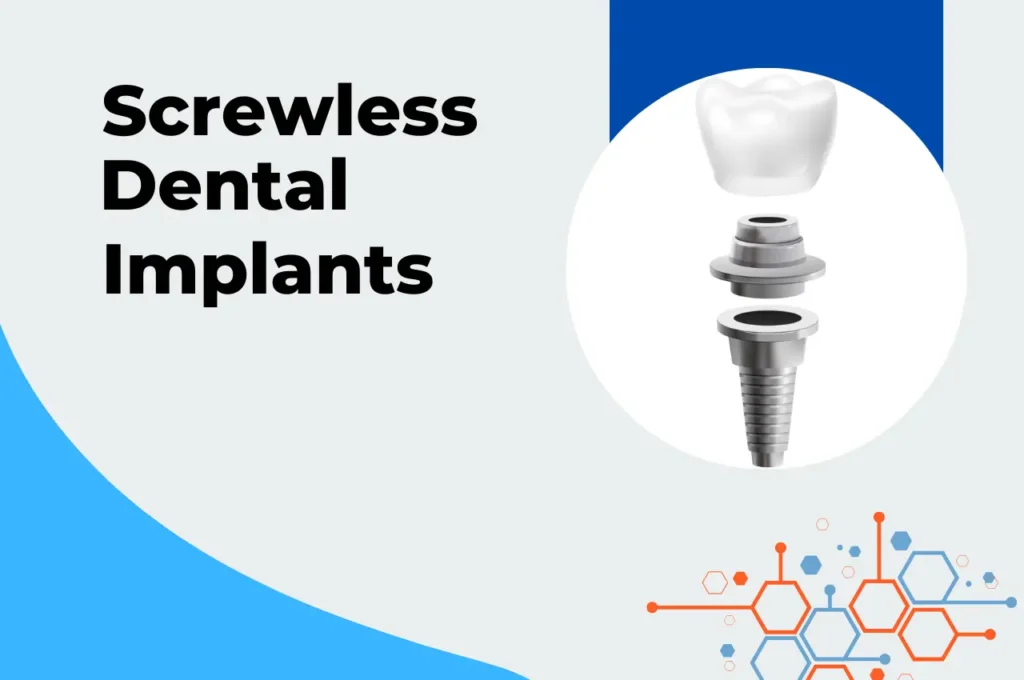
Screwless dental implants for seniors are becoming a topic of interest for older adults who want a natural-looking, stable, and comfortable way to replace missing teeth. Tooth loss can affect much more than appearance. It can change how a person chews, speaks, smiles, eats, and feels in social situations. For many seniors, missing teeth or loose dentures can also make everyday meals less enjoyable and may limit food choices.
Dental implants are one option for replacing missing teeth. They are designed to act as artificial tooth roots that support replacement teeth such as crowns, bridges, or dentures. In many cases, implants can feel more stable than removable dentures because they are anchored in the jawbone.
The phrase “screwless dental implants” can be confusing. Some people think it means the implant does not involve any screw-like part at all. In reality, most dental implants still include an implant post placed in the jawbone. What is often “screwless” is the way the visible replacement tooth, or crown, is attached above the implant. Instead of using a screw access hole through the crown, the dentist may attach the crown using dental cement or a screw-free connection design.
For seniors, this type of implant restoration may offer cosmetic and comfort benefits, but it is not right for everyone. The best option depends on oral health, bone strength, medical history, medications, budget, bite force, hygiene ability, and the dentist’s treatment plan.
This guide explains what screwless dental implants are, how they work, how they compare with traditional screw-retained implants, what seniors should consider, and what questions to ask before choosing treatment. This article is for general education only and should not replace advice from a licensed dentist, oral surgeon, periodontist, prosthodontist, or implant specialist.
What Are Screwless Dental Implants?
Screwless dental implants usually refer to implant restorations where the visible crown does not have a screw access hole. In many cases, these are cement-retained implant crowns. The implant post is placed in the jawbone, an abutment is attached, and the crown is bonded or cemented onto the abutment.
In a traditional screw-retained implant crown, a small screw passes through an opening in the crown to secure it to the implant or abutment. The dentist then covers the access hole with filling material. This design allows the crown to be removed more easily if repair is needed.
In a screwless or cement-retained design, there is usually no visible screw access hole on the chewing surface or front of the crown. This can create a cleaner appearance, especially for front teeth or areas where cosmetics are important.
Some newer implant systems may use different screw-free retention methods, but many patient-facing discussions use “screwless” to describe cement-retained crowns. Because terminology can vary, seniors should ask the dentist exactly what type of implant system and crown retention method is being recommended.
How Dental Implants Work
A dental implant usually has three main parts: the implant post, the abutment, and the replacement tooth.
The implant post is placed into the jawbone. It acts like an artificial root. Most implants are made from titanium or another biocompatible material.
The abutment is a connector that attaches to the implant post. It supports the crown, bridge, or denture.
The crown is the visible artificial tooth. It is shaped and colored to match the surrounding teeth as closely as possible.
After the implant post is placed, the jawbone needs time to heal around it. This process is called osseointegration. It helps the implant become stable. Once healing is complete, the final restoration can be attached.
In screwless implant restorations, the crown may be cemented to the abutment or attached using a screw-free design. The goal is to create a stable replacement tooth without a visible screw hole.
Why Seniors Consider Screwless Dental Implants
Seniors may consider screwless dental implants for several reasons. The most common reason is appearance. A screwless crown can look smooth and natural because there is no screw access hole that needs to be covered.
Another reason is comfort. A well-designed implant crown can feel stable and natural during chewing. For seniors who struggle with removable dentures, implants may help improve confidence while eating or speaking.
Some seniors also want a tooth replacement option that feels more permanent. Removable dentures can slip, rub, or require adhesive. Implant-supported teeth may provide more stability when properly planned and maintained.
However, screwless dental implants are not automatically better than other implant types. They are simply one design option. A dentist may recommend screw-retained, cement-retained, snap-in denture implants, fixed implant bridges, or another solution depending on the patient’s needs.
Screwless vs Screw-Retained Dental Implants
Understanding the difference between screwless and screw-retained implants can help seniors make better decisions.
Screw-Retained Implant Crowns
A screw-retained implant crown is held in place with a screw. The screw passes through a small opening in the crown. After tightening, the dentist covers the opening with tooth-colored material.
The main advantage is retrievability. If the crown needs repair, cleaning, or replacement, the dentist can often remove it more easily. This can be helpful if complications occur.
The possible downside is appearance. If the screw access hole is in a visible area or on a chewing surface, it may be less ideal cosmetically. Dentists can often make it look good, but the access hole is still part of the design.
Screwless or Cement-Retained Implant Crowns
A screwless implant crown is often cemented onto the abutment. There is no screw access hole through the crown, so the visible tooth may look more natural.
The main advantage is cosmetics. This can be especially helpful for front teeth or cases where screw access would appear in an undesirable location.
The possible downside is that cement-retained crowns can be harder to remove if needed. Also, excess cement around the implant can irritate the gum tissue if not carefully cleaned. This may increase the risk of inflammation around the implant.
Neither design is best for everyone. The decision depends on implant position, gum health, bite forces, cosmetic needs, maintenance needs, and dentist preference.
Are Screwless Dental Implants Really Screw-Free?
This is an important question. In many cases, the answer is no.
Most dental implants still involve an implant post that is screw-shaped and placed into the jawbone. The “screwless” part usually refers to the crown attachment method, not the entire implant system.
This matters because marketing language can be confusing. A person may believe a screwless dental implant means no surgery, no implant post, or no metal component. That is usually not accurate.
Seniors should ask clear questions:
Does the implant post go into the jawbone?
Is the crown cement-retained or attached another way?
Can the crown be removed later if needed?
What material is used?
What happens if the crown loosens or breaks?
Clear answers can prevent misunderstanding before treatment begins.
Who May Be a Good Candidate?
A good candidate for dental implants generally needs healthy enough gums, enough jawbone support, good oral hygiene habits, and overall health that allows healing after surgery. Age alone does not automatically prevent someone from getting dental implants. Many older adults can be candidates if their health and oral conditions are suitable.
A senior may be a possible candidate for screwless dental implants if they have one or more missing teeth, want a natural-looking fixed tooth replacement, have enough bone support, can maintain good oral hygiene, and are healthy enough for dental surgery.
However, candidacy must be evaluated by a dentist or implant specialist. The provider may use dental exams, X-rays, 3D scans, medical history review, and bite analysis before recommending treatment.
Health Factors Seniors Should Consider
For seniors, overall health is very important in dental implant planning. The FDA notes that overall health is an important factor in determining whether someone is a good candidate, how long healing may take, and how long the implant may stay in place.
Health factors that may affect implant planning include diabetes, gum disease, osteoporosis, smoking, immune system problems, cancer treatment history, dry mouth, blood thinners, heart conditions, and medications that affect bone healing.
This does not mean seniors with health conditions cannot get implants. It means the dental team must plan carefully and coordinate with medical providers when needed.
For example, a person with well-controlled diabetes may be considered differently from someone with uncontrolled blood sugar. A person taking certain osteoporosis medications may need special evaluation. A person who smokes may have a higher risk of healing problems.
Bone Health and Jawbone Support
Dental implants need bone support. When a tooth is missing for a long time, the jawbone in that area may shrink. This is called bone loss or bone resorption.
If there is not enough bone, the dentist may recommend bone grafting before or during implant placement. A bone graft adds material to help rebuild the area so it can support an implant.
Seniors who have worn dentures for many years may have more bone loss, especially if teeth were removed long ago. This does not always prevent implant treatment, but it may make planning more complex.
A 3D dental scan can help the provider measure bone height, width, and density. This helps determine whether an implant can be placed safely.
Gum Health and Implant Success
Healthy gums are important for dental implants. Gum disease can affect the tissues and bone that support teeth and implants. If gum disease is active, it should usually be treated before implant placement.
Implants can develop inflammation around them, known as peri-implant mucositis or peri-implantitis. Peri-implantitis can lead to bone loss around the implant and may threaten implant stability.
Seniors considering implants should be prepared for regular dental cleanings, home care, and follow-up visits. Implants are not “set and forget” devices. They need maintenance.
Benefits of Screwless Dental Implants for Seniors
Screwless dental implants may offer several benefits, depending on the case.
Natural Appearance
Because screwless crowns often do not have a visible screw access hole, they may look more like natural teeth. This can be useful for front teeth or highly visible smile areas.
Smooth Crown Surface
A crown without a screw access opening may have a smoother surface. This can improve appearance and may feel more natural to the tongue.
Stable Tooth Replacement
When properly placed and restored, dental implants can provide strong support for chewing and speaking.
No Removable Denture Movement
For seniors who dislike loose dentures, implant-supported teeth may feel more secure.
Better Confidence
Missing teeth or unstable dentures can affect confidence. A natural-looking fixed restoration may help some seniors feel more comfortable smiling and eating in public.
Custom Design
Implant crowns can be shaped and colored to match surrounding teeth, helping create a more natural result.
Possible Risks and Limitations
Screwless dental implants also have limitations. Seniors should understand these before deciding.
Cement-Related Problems
If a crown is cemented, extra cement may remain around the implant if not removed carefully. This can irritate the gum tissue and may contribute to inflammation.
Harder to Remove
A cement-retained crown can be harder to remove than a screw-retained crown. If repair is needed, removal may be more complicated.
Not Best for Every Implant Position
If the implant angle or gum shape is not ideal, a screwless design may not be the best choice.
Surgical Risks
Dental implants involve surgery. Risks may include infection, injury to nearby teeth or tissues, nerve injury, sinus problems for upper jaw implants, poor healing, implant failure, or pain.
Cost
Dental implants can be expensive, and insurance coverage may be limited.
Maintenance Needs
Implants need daily cleaning and regular dental visits. Poor hygiene can lead to complications.
Dental Implant Risks Seniors Should Know
Dental implants are widely used, but they are still medical devices and require proper evaluation. The FDA describes dental implants as surgically implanted devices used to restore chewing ability or appearance and advises patients to discuss treatment options, benefits, and risks with their dental provider.
Possible risks include infection, delayed healing, implant failure, damage to nearby structures, nerve-related symptoms, gum inflammation, bone loss around the implant, bite problems, and restoration complications.
Certain health conditions can increase risk. Poorly controlled diabetes, smoking, untreated gum disease, poor oral hygiene, and some medications may affect healing and long-term success.
This is why a full consultation is important before starting treatment.
The Step-by-Step Process
The screwless dental implant process is usually similar to other dental implant treatment, with the main difference being how the final crown is attached.
Step 1: Consultation
The dentist examines the mouth, reviews medical history, asks about goals, and discusses tooth replacement options. Seniors should bring a full medication list and information about medical conditions.
Step 2: Imaging and Planning
X-rays or 3D scans help the dentist evaluate bone support, nerves, sinuses, and implant position. Digital planning may be used to improve accuracy.
Step 3: Treatment Plan
The provider explains whether an implant is possible, whether bone grafting is needed, what type of restoration is recommended, how long treatment may take, and what it may cost.
Step 4: Tooth Removal, If Needed
If a damaged tooth is still present, it may need to be removed. Sometimes an implant can be placed the same day, but not always.
Step 5: Bone Grafting, If Needed
If bone support is low, bone grafting may be recommended. Healing time can vary.
Step 6: Implant Placement
The implant post is surgically placed into the jawbone. The area is allowed to heal.
Step 7: Healing and Osseointegration
The bone grows around the implant post. This can take several months depending on the patient and treatment plan.
Step 8: Abutment Placement
An abutment is attached to the implant. This connector supports the final crown.
Step 9: Crown Design
The dentist takes impressions or digital scans to design the crown. The crown is shaped and colored to match the bite and smile.
Step 10: Screwless Crown Attachment
If a cement-retained design is chosen, the crown is bonded or cemented onto the abutment. The dentist removes excess cement and checks the bite.
Step 11: Follow-Up and Maintenance
The dentist checks healing, bite, gum health, and implant stability. Long-term follow-up is important.
Healing Time for Seniors
Healing time varies. Some seniors heal quickly, while others need more time due to health conditions, medications, bone quality, or grafting needs.
A simple implant case may take several months from placement to final crown. If bone grafting, extractions, sinus lifts, or staged treatment are needed, the timeline may be longer.
Seniors should ask their dentist for a realistic timeline, not just the fastest possible option. Faster is not always better if bone healing or gum health needs more time.
Same-Day Implants and Seniors
Some clinics advertise same-day dental implants or teeth-in-a-day. In certain cases, temporary teeth can be attached on the same day as implant placement. However, not every senior is a candidate.
Same-day treatment requires careful planning, enough bone support, good implant stability, and controlled bite forces. The temporary tooth may need a soft-food diet while healing.
Seniors should be cautious with marketing claims. Same-day teeth may not mean the final permanent teeth are completed the same day. Ask exactly what is temporary, what is permanent, and what restrictions apply.
Cost of Screwless Dental Implants
The cost of screwless dental implants can vary widely. Factors include the number of missing teeth, type of implant, crown material, dentist expertise, location, imaging, sedation, bone grafting, extractions, temporary teeth, and follow-up care.
A single dental implant with a crown may cost thousands of dollars in many markets. Full-mouth implant treatment can cost much more. Prices vary by country, city, clinic, and case complexity.
Seniors should ask for a written treatment estimate that includes:
Consultation
X-rays or 3D scans
Tooth extraction
Bone grafting
Implant placement
Abutment
Crown
Temporary restoration
Sedation
Follow-up visits
Maintenance costs
Possible repair costs
A low advertised price may not include all parts of treatment. Always ask what is included.
Insurance, Medicare, and Payment Options
Dental implant coverage varies. In many places, standard dental insurance may cover part of the procedure or may not cover implants fully. Medicare coverage for dental implants is limited in many situations, though some Medicare Advantage plans may offer dental benefits depending on the plan.
Seniors should contact their insurance provider and dental office before treatment. Ask what is covered, what requires pre-authorization, what annual limits apply, and what out-of-pocket cost remains.
Some dental offices offer financing, payment plans, or staged treatment. Staging treatment may spread cost over time, but it may also lengthen the process.
Screwless Implants vs Dentures
Dentures are removable appliances that replace missing teeth. They are usually less expensive than implants and do not require implant surgery. However, dentures may move, rub, reduce chewing efficiency, or require adhesive.
Screwless dental implants are fixed restorations or part of an implant-supported plan. They may feel more stable and natural, but they cost more and require surgery.
For some seniors, dentures are the best choice. For others, implants are more comfortable. Some choose implant-supported dentures, which combine implant stability with a denture-style restoration.
Screwless Implants vs Implant-Supported Dentures
Implant-supported dentures use implants to hold a denture more securely. They may be removable snap-in dentures or fixed full-arch bridges.
Screwless single-tooth implants are usually used to replace individual missing teeth. Implant-supported dentures are used when many or all teeth are missing.
For seniors missing several teeth or all teeth, implant-supported dentures may be more practical than replacing each tooth individually. The best option depends on bone support, budget, oral health, and personal preference.
Are Screwless Dental Implants Painful?
Dental implant placement is usually done with local anesthesia, and sometimes sedation is used. Patients should not feel sharp pain during the procedure, though pressure or vibration may be felt.
After surgery, soreness, swelling, bruising, or mild bleeding may occur. Dentists usually provide aftercare instructions and pain-control recommendations.
Severe pain, worsening swelling, fever, pus, uncontrolled bleeding, numbness, or implant movement should be reported to the dental office promptly.
Eating After Dental Implant Surgery
After implant surgery, seniors may need to follow a soft-food diet for a period of time. This helps protect the surgical area and reduce pressure on the implant.
Soft foods may include eggs, yogurt, soup, mashed vegetables, smoothies, soft fish, oatmeal, and well-cooked pasta. Very hard, sticky, crunchy, or chewy foods may need to be avoided during healing.
If temporary teeth are placed, the dentist may still recommend avoiding heavy chewing until the implant integrates with the bone.
Maintenance and Cleaning
Dental implants require daily cleaning. Seniors should brush carefully, clean around the implant, and follow the dentist’s instructions for floss, interdental brushes, water flossers, or special implant cleaning tools.
Regular dental checkups are also important. The dentist or hygienist checks gum health, bite force, crown condition, and bone levels around the implant.
Even though implants cannot get cavities, the surrounding gum and bone can still become infected or inflamed. Good maintenance is essential for long-term success.
Warning Signs After Implant Treatment
Seniors should contact the dentist if they notice:
Persistent pain
Swelling that worsens
Bleeding that does not improve
Pus or bad taste
Loose crown
Loose implant
Difficulty chewing
Numbness or tingling
Gum recession around the implant
Bad breath with gum swelling
Fever
Bite feeling uneven
Early attention may help prevent bigger problems.
Questions Seniors Should Ask the Dentist
Before choosing screwless dental implants, seniors may want to ask:
What do you mean by screwless in my case?
Is this a cement-retained crown?
Will the implant post still be placed in the jawbone?
Why do you recommend this design instead of a screw-retained crown?
Can the crown be removed later if needed?
What are the risks of excess cement?
Am I a good candidate based on my health?
Do I need bone grafting?
How long will treatment take?
What will be temporary and what will be permanent?
What happens if the implant fails?
How much will the full treatment cost?
Does the price include the crown and abutment?
How often will I need maintenance visits?
What should I avoid during healing?
Pros and Cons Summary
Screwless dental implants may offer a natural appearance, smooth crown surface, and stable tooth replacement. They can be especially useful where cosmetic results matter.
However, they may be harder to remove, may involve cement-related risks, and are not ideal for every case. They also require surgery, healing time, good bone support, maintenance, and financial planning.
The best choice should be based on a full dental evaluation, not marketing language alone.
Who Should Consider Screwless Dental Implants?
Screwless dental implants may be worth considering for seniors who:
Want a natural-looking fixed tooth replacement
Have one or more missing teeth
Have enough jawbone support
Can maintain good oral hygiene
Are healthy enough for implant surgery
Want to avoid a visible screw access hole
Are willing to attend follow-up visits
Understand the cost and maintenance needs
Who May Need Another Option?
Another option may be better for seniors who:
Have severe untreated gum disease
Have uncontrolled medical conditions
Have very limited bone support without grafting
Smoke heavily and cannot reduce risk
Cannot maintain implant hygiene
Need a restoration that is easy to remove and repair
Have budget limits that make implants unrealistic
Prefer removable dentures
Need full-mouth replacement at lower cost
Final Thoughts
Screwless dental implants for seniors can be a helpful option for replacing missing teeth with a natural-looking and stable restoration. In many cases, “screwless” means the crown is cement-retained or attached without a visible screw access hole, while the implant post itself still anchors in the jawbone.
For seniors, the main benefits may include improved appearance, better chewing confidence, and a more natural-feeling replacement tooth. But implants require careful planning. Overall health, bone support, gum health, medications, hygiene ability, cost, and long-term maintenance all matter.
The best next step is a consultation with a qualified dental implant provider. Seniors should ask clear questions about the type of implant, crown attachment method, risks, cost, healing time, and maintenance. A good treatment plan should be personalized, realistic, and focused on long-term comfort and oral health.
Frequently Asked Questions About Screwless Dental Implants for Seniors
What are screwless dental implants?
Screwless dental implants usually refer to implant crowns that do not have a visible screw access hole. Many are cement-retained crowns placed over an implant abutment.
Are screwless implants really without screws?
Usually not completely. The implant post placed in the jawbone is often screw-shaped. “Screwless” commonly refers to how the crown is attached, not the entire implant system.
Are screwless dental implants good for seniors?
They may be good for some seniors, especially those who want a natural-looking fixed tooth replacement and are healthy enough for implant treatment. A dental evaluation is needed.
Are screwless implants better than screw-retained implants?
Not always. Screwless crowns may look more natural in some cases, but screw-retained crowns can be easier to remove for repair. The best choice depends on the case.
Do screwless dental implants hurt?
The procedure is usually done with local anesthesia, so sharp pain should be controlled during surgery. Some soreness or swelling after surgery is common.
How long do screwless dental implants take?
Treatment may take several months, especially if healing, bone grafting, or staged procedures are needed. The exact timeline depends on the patient’s case.
How much do screwless dental implants cost?
Cost varies by location, dentist, number of implants, imaging, surgery, abutment, crown, grafting, and follow-up care. Patients should request a full written estimate.
Can seniors with dentures get screwless implants?
Some seniors who wear dentures may be candidates for implants, but bone support and gum health must be evaluated. Implant-supported dentures may also be an option.
What are the risks of screwless dental implants?
Risks may include infection, poor healing, implant failure, gum inflammation, excess cement problems, nerve symptoms, bite issues, and cost-related concerns.
How do you clean screwless dental implants?
They should be brushed and cleaned daily with tools recommended by the dentist. Regular professional cleanings and implant checkups are also important.