
Late-stage dementia can be one of the most difficult phases for families, caregivers, and loved ones to understand. At this stage, dementia affects much more than memory. It can change communication, movement, eating, swallowing, sleep, behavior, body strength, infection risk, and the person’s ability to take part in daily life.
For many families, late-stage dementia feels emotionally overwhelming because the person may no longer act, speak, or respond in the same way they once did. They may need help with nearly every part of daily care. They may not recognize familiar people consistently. They may become less mobile, sleep more, eat less, or have trouble expressing pain or discomfort.
Understanding the signs and symptoms of late-stage dementia can help caregivers prepare, respond with compassion, and know when to seek medical support. This article explains common late-stage dementia symptoms, what they may look like in daily life, and what caregivers can do to support comfort, dignity, and safety.
This information is for general education only. Dementia symptoms can vary from person to person, and any new, sudden, severe, or concerning change should be discussed with a qualified healthcare professional.
What Is Late-Stage Dementia?
Late-stage dementia, sometimes called severe dementia or advanced dementia, is the later phase of a progressive dementia condition. Dementia is not one single disease. It is a group of symptoms that affect memory, thinking, reasoning, communication, and daily function. Alzheimer’s disease is the most common cause, but other types include vascular dementia, Lewy body dementia, frontotemporal dementia, and mixed dementia.
In early dementia, a person may forget names, appointments, words, or recent conversations. In middle-stage dementia, they may need more help with daily routines, safety, and decision-making. In late-stage dementia, the person often becomes highly dependent on others for personal care.
Late-stage dementia affects both the brain and the body. The person may have severe memory loss, limited speech, difficulty walking, swallowing problems, weight loss, incontinence, and higher risk of infections. Care often becomes focused on comfort, safety, nutrition, skin protection, communication, and quality of life.
Why Recognizing Late-Stage Symptoms Matters
Recognizing late-stage dementia symptoms matters because the person may not be able to explain what they feel. They may be unable to say they are hungry, thirsty, in pain, afraid, cold, tired, or unwell. Caregivers often need to notice changes in behavior, facial expression, movement, sleep, appetite, and breathing.
Understanding symptoms also helps families plan care. Late-stage dementia may require more support than one caregiver can safely provide alone. Some families may need home health care, nursing support, respite care, palliative care, hospice evaluation, or residential care.
Recognizing the signs does not mean giving up. It means adjusting care to match the person’s needs. The goal becomes comfort, dignity, safety, and emotional connection.
Severe Memory Loss
Severe memory loss is one of the most recognized signs of late-stage dementia. At this stage, the person may no longer remember recent events, familiar places, daily routines, or important personal details.
They may not recognize close family members consistently. Sometimes they may recognize a voice, touch, song, or emotional feeling even when they cannot remember a name. This can be painful for loved ones, but it does not mean the relationship has no meaning. Emotional memory and comfort can remain even when factual memory fades.
The person may also lose awareness of time and place. They may not understand where they are, what day it is, or why they need help. This can lead to fear, confusion, or resistance during care.

Limited or Lost Communication
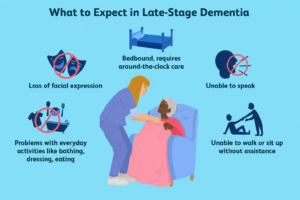
Communication often becomes very limited in late-stage dementia. A person may speak only a few words or phrases. Some may stop speaking almost completely. Others may repeat sounds, short words, or familiar expressions.
Even when speech is limited, the person may still communicate in other ways. They may use facial expressions, eye contact, hand movements, body posture, crying, restlessness, or changes in breathing. Caregivers often learn to understand these nonverbal signals over time.
A person who cannot speak clearly may still respond to gentle tone, music, familiar voices, touch, and calm presence. Speaking slowly, using simple words, and giving one message at a time can help.
For example, instead of saying, “Do you want to get ready now so we can change your clothes and then have lunch?” a caregiver may say, “It is time to change your shirt,” while showing the shirt.
Difficulty Recognizing Family and Friends
In late-stage dementia, the person may not recognize people they have known for many years. They may mistake a spouse for a parent, a child for a sibling, or a caregiver for a stranger. They may also become frightened when someone approaches because they do not understand who the person is.
This symptom can be heartbreaking for families. It is important to remember that the person is not choosing to forget. Dementia changes the brain’s ability to connect memories, names, faces, and relationships.
Caregivers can help by approaching calmly, saying their name, using a gentle tone, and avoiding testing the person’s memory. Instead of asking, “Do you know who I am?” it may be kinder to say, “Hi Mom, it’s Sarah. I’m here with you.”
Loss of Independence
Late-stage dementia usually brings major loss of independence. The person may need help with bathing, dressing, eating, toileting, walking, changing position, taking medication, and staying safe.
Daily care may become physically demanding. A caregiver may need to help the person move from bed to chair, prevent falls, manage incontinence, prepare soft foods, monitor skin, and watch for signs of infection.
This stage often requires a care team. Family members should not feel guilty if they need outside help. Professional caregivers, nurses, therapists, social workers, and palliative care providers can all support the person and the family.
Increased Need for Personal Care
Personal care becomes more involved in late-stage dementia. The person may not understand why bathing, changing clothes, brushing teeth, or toileting is needed. They may resist care because they feel confused, cold, embarrassed, or frightened.
Caregivers can make personal care easier by keeping routines calm and predictable. Warm towels, privacy, simple explanations, and a gentle pace can help. It may also help to do care at the time of day when the person is usually calmer.
Personal care is not only about hygiene. It is also about dignity. Speaking respectfully, covering the body when possible, and explaining each step can help preserve the person’s sense of safety.
Difficulty Walking or Standing
Mobility often declines in late-stage dementia. The person may walk slowly, shuffle, lose balance, or need help standing. Over time, they may become unable to walk without support or may become mostly bedbound or chairbound.
This happens because dementia can affect the brain’s control of movement, balance, coordination, and strength. Other health issues, such as arthritis, stroke, Parkinsonism, weakness, or medication side effects, may also contribute.
Reduced mobility increases the risk of falls, pressure injuries, stiffness, constipation, and infections. Caregivers may need support from physical therapists, occupational therapists, or nurses to learn safe transfer techniques and positioning.

Increased Risk of Falls
Falls are a serious concern in late-stage dementia. A person may try to stand without understanding their weakness. They may forget to use a walker. They may be unsteady, dizzy, or unable to judge distance.
Fall prevention may include removing clutter, improving lighting, using non-slip footwear, keeping frequently used items nearby, using proper mobility aids, and supervising movement. However, restraints or unsafe restrictions can create other risks and should be discussed with healthcare professionals.
A sudden increase in falls may signal infection, dehydration, medication problems, pain, or another medical change. It should be reported to a doctor.
Trouble Sitting Upright or Holding Posture
As dementia advances, some people have difficulty sitting upright or maintaining posture. They may lean to one side, slide down in a chair, or need pillows and supports to stay comfortable.
Poor posture can affect breathing, swallowing, eating, and skin health. It can also increase the risk of choking or pressure injuries.
Supportive seating, proper cushions, careful positioning, and regular movement can help. A healthcare professional can advise on equipment such as hospital beds, pressure-relief cushions, wheelchairs, or special chairs.
Eating Difficulties
Eating problems are common in late-stage dementia. The person may forget how to use utensils, not recognize food, lose interest in eating, become distracted, or refuse meals. They may also eat very slowly or need someone to feed them.
Appetite may decrease as the disease progresses. The person may prefer softer foods, sweeter foods, smaller meals, or familiar tastes. Some people open their mouth less, hold food in their mouth, or become tired during meals.
Caregivers can help by offering small portions, reducing distractions, using simple plates, giving enough time, and providing foods with suitable texture. If eating changes suddenly, a doctor should check for mouth pain, infection, constipation, medication effects, swallowing problems, or depression.
Swallowing Problems
Swallowing problems, also called dysphagia, can occur in late-stage dementia. The person may cough while eating, choke, drool, hold food in the mouth, take a long time to swallow, or develop a wet-sounding voice after drinking.
Swallowing problems can increase the risk of aspiration, which happens when food, fluid, or saliva enters the airway. This can lead to chest infections or aspiration pneumonia.
A speech-language therapist or healthcare professional may recommend texture changes, thickened fluids, safer eating positions, slower feeding, or swallowing strategies. Caregivers should avoid forcing food or drink if the person is coughing, choking, or too sleepy to swallow safely.
Weight Loss
Weight loss is common in late-stage dementia. It may happen because the person eats less, has swallowing problems, burns energy through restlessness, has infections, or experiences changes in the body’s ability to process food.
Weight loss can be distressing for families, especially when they worry the person is “starving.” In advanced dementia, reduced appetite can be part of the disease process. Still, any noticeable or sudden weight loss should be discussed with a healthcare provider.
Care may focus on comfort, preferred foods, small frequent meals, safe textures, hydration, and reducing distress around eating.
Dehydration Risk
People with late-stage dementia may not ask for drinks or may not recognize thirst. They may also have swallowing problems that make drinking harder. This can increase the risk of dehydration.
Signs of dehydration may include dry mouth, darker urine, fewer wet briefs, confusion, sleepiness, dizziness, constipation, or weakness. However, symptoms can be hard to recognize in someone who already has severe dementia.
Caregivers can offer small amounts of fluid often, use preferred drinks, provide foods with higher water content, and ask a healthcare professional about safe fluid textures if swallowing is a concern.
Bowel and Bladder Incontinence
Incontinence is common in late-stage dementia. The person may lose control of urine or stool, forget where the bathroom is, be unable to communicate the need to go, or be physically unable to reach the toilet in time.
Incontinence can affect dignity, skin health, comfort, and caregiver workload. A regular toileting schedule, easy clothing, absorbent products, gentle cleaning, barrier creams, and skin checks can help.
New or sudden incontinence may suggest a urinary tract infection, constipation, medication effect, or another health problem. It should be discussed with a healthcare professional.

Constipation
Constipation is common in people who are less mobile, eat less fiber, drink less fluid, or take certain medications. In late-stage dementia, constipation may cause discomfort, agitation, reduced appetite, or sleep changes.
Because the person may not be able to explain pain, constipation can be missed. Caregivers should watch bowel patterns and report concerns to a healthcare provider.
Regular fluids, movement as tolerated, fiber when appropriate, and doctor-recommended medications may help. Severe constipation or abdominal swelling needs medical advice.
Skin Problems and Pressure Injuries
People with late-stage dementia may spend more time sitting or lying down. This increases the risk of pressure injuries, sometimes called bedsores. These can develop when pressure reduces blood flow to the skin, especially over bony areas such as the hips, tailbone, heels, elbows, and shoulders.
Signs may include redness, darkened skin, warmth, swelling, open sores, or pain when touched. In people with darker skin tones, early pressure injury may appear as purple, blue, gray, or darker areas rather than redness.
Prevention includes changing position regularly, using pressure-relief cushions or mattresses, keeping skin clean and dry, managing incontinence, checking skin daily, and maintaining nutrition and hydration as much as possible.
Pressure injuries can become serious, so early medical guidance is important.
Higher Risk of Infections
Late-stage dementia can increase the risk of infections. Common infections include urinary tract infections, chest infections, pneumonia, skin infections, and mouth infections.
A person with late-stage dementia may not show typical symptoms. Instead of saying they have pain or burning, they may become more confused, sleepy, restless, weak, or less interested in food.
Fever, coughing, breathing changes, pain, sudden decline, strong-smelling urine, new agitation, or unusual sleepiness should be discussed with a healthcare professional.
Pneumonia and Breathing Problems
Pneumonia is a serious concern in late-stage dementia, especially when swallowing problems are present. Aspiration pneumonia can happen when food, liquid, or saliva enters the lungs.
Signs may include coughing during meals, fever, fast breathing, chest congestion, unusual tiredness, low oxygen levels, or a wet-sounding voice after swallowing.
Breathing changes should be taken seriously. Families should ask healthcare providers what signs require urgent care and what comfort-focused care options are appropriate for the person’s condition and goals.
Pain That Is Hard to Express
People with late-stage dementia may feel pain but be unable to explain it. Pain may come from arthritis, infections, pressure injuries, constipation, dental problems, injuries, or other health conditions.
Instead of saying “I hurt,” the person may grimace, moan, cry, resist movement, become restless, sleep poorly, eat less, guard a body part, or become unusually quiet.
Caregivers should report suspected pain to a healthcare professional. Pain management is an important part of dignity and comfort in late-stage dementia.
Sleep Changes
Sleep patterns often change in late-stage dementia. The person may sleep more during the day, wake often at night, become restless in the evening, or have irregular sleep-wake cycles.
Sleep changes can be affected by pain, discomfort, medications, infection, poor lighting, lack of daytime activity, hunger, bathroom needs, or disease progression.
A calm routine, daylight exposure during the day, reduced evening stimulation, comfortable bedding, and checking for pain or toileting needs may help. Sudden sleepiness or major changes should be medically reviewed.
Increased Sleepiness and Reduced Alertness
As dementia progresses, some people become less alert and sleep more. They may keep their eyes closed for long periods, respond less to conversation, or seem distant.
This can be part of late-stage dementia, but it can also signal infection, dehydration, medication side effects, pain, or another medical issue. If the change is sudden, it should be reported.
Even when a person seems less alert, gentle presence may still matter. A calm voice, soft touch, familiar music, or quiet companionship can provide comfort.
Changes in Behavior
Behavior changes can still occur in late-stage dementia. The person may become anxious, restless, fearful, withdrawn, tearful, or resistant to care.
These behaviors often have a reason, even if the person cannot explain it. They may be in pain, cold, overstimulated, hungry, thirsty, constipated, tired, embarrassed, or confused.
Caregivers can look for patterns. Does agitation happen during bathing? After meals? At night? When the room is noisy? Understanding triggers can help reduce distress.
Agitation or Restlessness
Agitation may appear as fidgeting, pulling at clothing, calling out, trying to stand, resisting care, or moving repeatedly. In late-stage dementia, agitation often signals unmet needs.
Possible causes include pain, infection, constipation, urinary discomfort, hunger, thirst, fear, boredom, overstimulation, or medication effects.
The first step is usually to check comfort and environment. Is the person too hot or cold? Are they wet? Are they hungry? Is the room noisy? Are they in pain? If agitation is new or severe, medical advice is important.
Withdrawal and Less Response
Some people with late-stage dementia become quieter and less responsive. They may stop initiating interaction, show less facial expression, or appear emotionally distant.
This does not mean they no longer need connection. They may still benefit from gentle conversation, hand holding, prayer, music, familiar scents, or simply having someone nearby.
Caregivers should avoid assuming that silence means absence of feeling. Comfort can still be provided in simple ways.
Hallucinations or Delusions
Some types of dementia, especially Lewy body dementia, may involve hallucinations or delusions. In late stages, confusion and misinterpretation can become more pronounced.
The person may see things that are not there, believe someone is stealing from them, or feel afraid of familiar surroundings. Arguing usually does not help. A calm, reassuring response is often better.
If hallucinations cause distress or safety concerns, caregivers should speak with a healthcare professional. Some medications can worsen symptoms in certain dementias, so professional guidance is important.
Difficulty Understanding the Environment
A person with late-stage dementia may not understand where they are or what is happening around them. They may be frightened by mirrors, shadows, loud sounds, unfamiliar rooms, or fast movements.
A calm environment can help. Soft lighting, reduced noise, familiar objects, simple routines, and gentle explanations may reduce confusion.
Too many visitors, loud television, cluttered rooms, or rushed care can increase distress.
Loss of Ability to Perform Familiar Actions
Late-stage dementia affects procedural memory and motor planning. The person may forget how to chew, swallow, hold a spoon, sit down, stand up, brush teeth, or use the toilet.
This can be hard for families to understand because these actions once seemed automatic. But dementia can interrupt the brain’s ability to organize steps.
Caregivers can help by breaking tasks into simple steps, demonstrating actions, using hand-over-hand guidance when appropriate, and keeping routines consistent.
Signs That Care Needs Are Increasing
Care needs may be increasing if the person:
Needs help with all personal care
Cannot safely walk alone
Has frequent falls
Has trouble swallowing
Is losing weight
Has repeated infections
Needs help changing position
Is mostly bedbound or chairbound
Has skin breakdown
Cannot communicate pain or needs
Sleeps much more than before
Has increased agitation or distress
Needs constant supervision
When these signs appear, families may need more support. A care plan review with a doctor, nurse, social worker, or dementia care specialist can be very helpful.
When to Call a Doctor
Caregivers should contact a healthcare professional if there is a sudden change in behavior, eating, alertness, mobility, breathing, urination, bowel habits, or pain level.
Medical advice is especially important for:
Fever
New or worsening cough
Trouble breathing
Choking or repeated coughing during meals
Sudden weakness
Repeated falls
New confusion or unusual sleepiness
Signs of pain
Blood in urine or stool
Severe constipation
Skin sores or wounds
Dehydration signs
Rapid weight loss
Seizures
Inability to swallow safely
Sudden changes should not automatically be blamed on dementia. Infections, medication problems, dehydration, constipation, stroke, pain, and other treatable issues can cause rapid decline.
When Emergency Care May Be Needed
Emergency care may be needed if the person has severe breathing difficulty, chest pain, signs of stroke, repeated choking, severe injury after a fall, uncontrolled bleeding, seizures, or is unresponsive.
Families should discuss emergency plans in advance with healthcare providers. In late-stage dementia, care decisions can be difficult, and it helps to understand the person’s wishes, advance directives, and goals of care before a crisis happens.
Palliative Care in Late-Stage Dementia
Palliative care focuses on comfort, symptom relief, emotional support, and quality of life. It can be helpful at any stage of serious illness, including late-stage dementia.
Palliative care does not always mean end-of-life care. It can be provided alongside other medical care. The team may help with pain, agitation, eating difficulties, family communication, care planning, and support for caregivers.
For many families, palliative care provides guidance during a confusing and emotional stage.
Hospice and End-of-Life Support
Hospice care may be considered when a person with dementia is nearing the end of life and the focus shifts mainly to comfort. Eligibility and timing depend on medical assessment, decline pattern, eating ability, infections, weight loss, mobility, and overall condition.
Hospice can support the person and family with nursing care, symptom management, equipment, emotional support, spiritual care, and caregiver guidance.
Families should not feel that asking about hospice means giving up. It can be a way to ensure the person is comfortable and supported.
How Caregivers Can Support Comfort
Comfort care in late-stage dementia can include:
Gentle touch
Calm voice
Familiar music
Soft lighting
Comfortable positioning
Regular mouth care
Skin care
Warm blankets
Favorite scents
Quiet companionship
Pain management
Safe feeding support
Clean clothing and bedding
Respectful personal care
Small details can matter deeply. Even when the person cannot speak, comfort and dignity remain important.
Communication Tips for Caregivers
When speaking with someone in late-stage dementia:
Use a calm tone
Speak slowly
Use short sentences
Give one instruction at a time
Avoid arguing
Avoid testing memory
Introduce yourself gently
Use reassuring words
Watch body language
Allow extra time
Use touch only if welcomed
Pay attention to facial expressions
A simple sentence like “You are safe. I am here with you” can be more helpful than long explanations.
Creating a Safer Environment
A safe environment can reduce stress and injury risk. Keep walkways clear, reduce clutter, use soft lighting, remove trip hazards, lock away dangerous items, and keep needed supplies close.
For people who are bedbound or chairbound, safety also includes pressure-relief surfaces, proper positioning, and regular skin checks.
A healthcare professional can recommend equipment such as bed rails, transfer belts, hospital beds, commodes, shower chairs, or pressure cushions when appropriate.
Supporting the Caregiver
Caring for someone with late-stage dementia can be physically and emotionally exhausting. Caregivers may experience grief, stress, guilt, sleep loss, and burnout.
Support is not a luxury. It is part of safe care. Family caregivers may need respite care, support groups, counseling, home health services, adult day programs, or help from relatives and friends.
No caregiver should feel they must do everything alone. Late-stage dementia often requires a team.
Final Thoughts
Late-stage dementia affects memory, communication, movement, eating, swallowing, continence, sleep, behavior, and overall physical health. The person may need full-time support and may no longer be able to explain what they need or feel.
Recognizing the signs and symptoms can help caregivers respond with compassion and seek help when needed. The goal is not only to manage symptoms, but to protect dignity, reduce discomfort, and support quality of life.
Every person’s dementia journey is different. Some changes happen slowly, while others appear suddenly because of infection, pain, dehydration, medication effects, or another medical issue. When in doubt, caregivers should contact a healthcare professional.
Late-stage dementia is difficult, but thoughtful care, medical guidance, and emotional support can help families navigate this stage with more confidence and compassion.
Frequently Asked Questions About Late-Stage Dementia
What are common signs of late-stage dementia?
Common signs include severe memory loss, limited speech, difficulty walking, trouble eating or swallowing, incontinence, weight loss, increased sleepiness, infections, and need for full-time care.
Can a person with late-stage dementia still feel emotions?
Yes. Even when speech and memory are very limited, the person may still feel comfort, fear, pain, calm, love, and connection.
Why do people with late-stage dementia stop talking?
Dementia can affect the brain areas involved in language, understanding, and speech. The person may still communicate through facial expressions, sounds, body movement, or behavior.
Is trouble swallowing common in late-stage dementia?
Yes. Swallowing problems can occur and may increase the risk of choking or aspiration pneumonia. A healthcare professional should evaluate swallowing concerns.
Why does a person with late-stage dementia sleep so much?
Increased sleepiness can be part of disease progression, but it may also be caused by infection, dehydration, medication effects, pain, or other health problems.
Does late-stage dementia cause weight loss?
Weight loss can happen because of reduced appetite, swallowing problems, infections, lower activity, or changes related to advanced disease.
When should a caregiver call a doctor?
Call a doctor for sudden changes, fever, breathing problems, repeated falls, signs of pain, choking, dehydration, skin sores, rapid weight loss, or major changes in alertness.
Is late-stage dementia the same as end-of-life dementia?
Not always. Late-stage dementia means severe symptoms and high care needs. End-of-life care may become appropriate when decline suggests the person is nearing the final phase.
Can late-stage dementia symptoms improve?
The dementia itself usually continues to progress, but some symptoms may improve if they are caused by treatable issues such as infection, pain, dehydration, constipation, or medication side effects.
What is the main goal of late-stage dementia care?
The main goal is comfort, dignity, safety, and quality of life. Care often focuses on relieving distress, preventing complications, supporting nutrition and hydration as appropriate, and helping the person feel safe.


Leave a Reply