
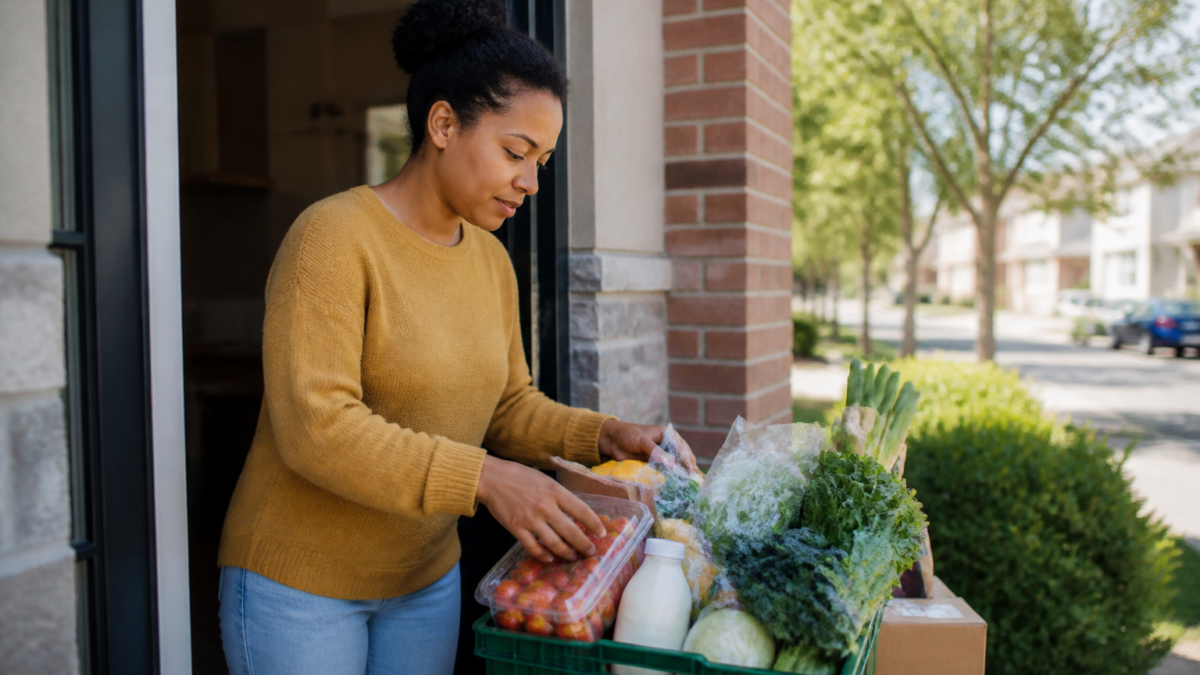
Online grocery delivery can save time, reduce travel, and make it easier to shop when you are busy, sick, caring for someone, or unable to visit a store. However, the amount shown for groceries is not always the amount you ultimately pay. Delivery fees, service charges, taxes, tips, item-price differences, small-order rules, and subscription costs can all affect the final total.
For shoppers in the United States, the most useful comparison is not the advertised delivery fee by itself. It is the complete checkout cost for the specific order, delivery address, store, time slot, and platform being used. Fee policies and online-versus-in-store pricing can vary by retailer, third-party marketplace, location, membership status, order size, and order type.
Quick Summary online grocery delivery fees
- Review the complete checkout total instead of focusing only on the delivery charge.
- Check whether online item prices differ from in-store prices.
- Look for service, small-order, heavy-item, priority, time-slot, and delivery-area fees.
- Understand how taxes, tips, substitutions, refunds, and weighted products may affect the final charge.
- Compare delivery with pickup or an in-store trip using the same shopping list.
- Read membership renewal, cancellation, trial, and promotional terms before subscribing.
Why Online Grocery Delivery Fees Are Receiving Attention
In April 2026, the Federal Trade Commission announced that it was seeking public comments on whether a rule may be needed to address unfair or deceptive fee practices connected with online food and grocery delivery platforms. The FTC’s questions include whether platforms clearly show total prices, explain mandatory and optional charges, disclose variable fees, and tell consumers when online prices differ from in-store prices.
The FTC’s related consumer alert, published on May 14, 2026, invited people to share written comments about their experiences with online food and grocery delivery fees and pricing. The comment period listed in the notice ended May 18, 2026. This was a request for public input about possible rulemaking, not an announcement that a nationwide grocery-delivery fee rule had already taken effect.
Consumers can review the specific FTC materials for context:
- FTC Consumer Alert: Tell the FTC about your experience with online food and grocery delivery fees and pricing
- FTC announcement seeking public comment on online food and grocery delivery fees
- FTC proposed rulemaking page for online food delivery service fees
Common Online Grocery Delivery Fees to Check online grocery delivery fees
Different platforms use different names and pricing structures. A fee may also appear only after you enter a delivery address, choose a delivery window, or reach the payment screen. The following categories are common items to review.
| Charge or pricing factor | What to check |
|---|---|
| Delivery fee | The charge for bringing an order to your address. It may vary by distance, order size, membership status, or delivery speed. |
| Service or platform fee | A separate charge for processing, shopping, order support, or use of the platform. It may apply even when delivery is advertised as free. |
| Small-order fee | A charge that may apply when the merchandise subtotal is below a stated minimum. Confirm whether taxes, discounts, or coupons count toward the minimum. |
| Delivery-area or distance fee | An additional charge may appear for addresses outside a retailer’s usual service area or for longer delivery distances. |
| Priority, rush, or time-slot fee | Faster delivery or a high-demand time window may cost more than a standard delivery option. |
| Heavy-item or special-handling fee | Large quantities of beverages, pet supplies, bulk products, or other heavy items may trigger an additional charge under a platform’s policy. |
| Tip | A suggested or customer-selected amount for the shopper, driver, or delivery team. Check how the app labels tips and whether the amount can be changed. |
| Taxes and government charges | Tax treatment can depend on the product, delivery location, and applicable state or local rules. The tax amount may not be clear until checkout. |
| Online item-price difference | Some stores or platforms may use online prices that differ from in-store shelf prices. Compare identical products when possible. |
| Membership cost | A monthly or annual plan may reduce certain delivery charges, but it can add a recurring cost and may not cover every fee. |
Taxes, Substitutions, and Other Checkout Details
Taxes may depend on the order and location
Sales-tax treatment is not identical for every grocery product or every jurisdiction. Tax may depend on the item, the delivery address, and local rules. A platform may also estimate the tax before products are finalized. Review the receipt after delivery to see whether the final tax amount changed.
Substitutions can change the total
If an item is unavailable, the shopper or store may substitute another product. A replacement can have a different size, brand, or price. Before ordering, check whether the platform allows you to approve substitutions, select alternatives, reject replacements, or set a maximum price. Also review the final receipt for products that were replaced, removed, refunded, or adjusted.
Weighted products may be estimated first
Produce, meat, seafood, and other items sold by weight may be listed using an estimated amount. The final charge can change when the actual weight is recorded. If your budget is limited, review the platform’s explanation of estimated and final charges.
Minimum-order rules may be easy to overlook
A retailer may require a minimum merchandise subtotal for delivery, free delivery, or a promotional offer. A coupon, sale item, delivery fee, or tax may not count toward that threshold. Read the specific terms shown in the cart rather than assuming that every dollar in the order qualifies.
A Sample Cost Comparison
The following example is for illustration only. It does not represent a specific retailer, platform, or current price. The purpose is to show how a low delivery charge can still result in a higher total.
| Cost component | Delivery order | Pickup order |
|---|---|---|
| Groceries or merchandise | $86.00 | $82.00 |
| Online item-price difference | $4.00 | $0.00 |
| Delivery fee | $5.99 | $0.00 |
| Service fee | $3.50 | $1.99 |
| Small-order fee | $0.00 | $0.00 |
| Tip | $6.00 | $0.00 |
| Estimated tax | $5.70 | $5.04 |
| Illustrative total | $111.19 | $89.03 |
In this hypothetical comparison, the delivery option costs more because it combines a higher online item total with delivery, service, tip, and tax differences. A different order could produce a different result. Membership discounts, coupons, larger order sizes, store policies, and delivery distance may change the calculation.
How to Compare the Real Cost Before Ordering
- Use the same shopping list. Compare the same brands, sizes, quantities, and acceptable substitutions across delivery, pickup, and in-store options.
- Enter your exact delivery address. Fees and available time slots can vary by ZIP code, distance, and service area.
- Check item prices individually. Look for differences between the online price, advertised sale price, loyalty price, and in-store shelf price.
- Open the fee breakdown. Identify delivery, service, small-order, heavy-item, priority, distance, and other charges.
- Review taxes and tips. Confirm whether the tip is optional, how it is calculated, and whether the displayed tax is an estimate.
- Read substitution and refund settings. Choose preferences that match your budget and dietary or household needs.
- Check the final payment screen. Do not rely on the initial cart preview or a promotional headline.
- Save the receipt. Compare the final receipt with the checkout estimate after substitutions, refunds, and weighted items are resolved.
Memberships and Automatic Renewals
A delivery membership may be useful for someone who orders frequently, but the savings depend on the plan’s actual terms. A subscription can have a monthly or annual charge, an introductory promotion, a future renewal price, an order minimum, exclusions, or fees that remain payable even for members.
Before enrolling, check:
- The regular price after any trial or introductory period.
- Whether the plan renews automatically.
- The renewal date and available cancellation method.
- Any minimum order or delivery-area requirements.
- Whether service, priority, small-order, or other charges are excluded.
- Whether benefits apply only to selected stores, orders, or delivery windows.
Occasional shoppers should calculate the membership cost against the delivery fees they realistically expect to avoid. A plan is not automatically cheaper simply because it includes free or reduced delivery on qualifying orders.
Practical Ways to Reduce Grocery Delivery Costs
- Compare pickup before checking out. Pickup may remove delivery and tip costs, although pickup fees or different prices can still apply.
- Combine orders when practical. A larger planned order may help avoid a small-order charge, but do not buy unnecessary items just to reach a threshold.
- Choose standard delivery. Rush or high-demand time slots may cost more than flexible scheduling.
- Use loyalty discounts carefully. Confirm that the sale price is applied to the online cart and that any restrictions are understood.
- Review substitutions. A more expensive replacement can raise the final bill.
- Compare the platform and retailer website. The same store may present different fees, prices, or membership benefits depending on where the order is placed.
- Watch for renewal notices. Set a reminder before a trial or promotional membership ends if you do not want automatic billing.
- Keep records of unexpected charges. Save the order confirmation, receipt, fee breakdown, and relevant promotional terms before contacting customer support.
What to Do If the Final Charge Looks Wrong
First, compare the final receipt with the original checkout screen. Look for substitutions, weighted-item adjustments, refunded products, taxes, tips, membership charges, and fees that were added after a delivery option changed. If the charge still appears inconsistent, contact the retailer or platform through its official support channel and provide the order number and saved documentation.
Consumers may also consider reporting suspected deceptive or unauthorized charges to the appropriate government agency. Keep the complaint factual and include dates, screenshots, receipts, promotional language, and the amount in dispute. A complaint does not guarantee a refund, so contacting the company directly may still be necessary.
Frequently Asked Questions
Why is my grocery delivery total higher than the item subtotal?
The final amount may include delivery and service fees, taxes, tips, small-order or distance charges, higher online item prices, substitutions, or adjustments for products sold by weight.
Is grocery delivery cheaper with a subscription?
It depends on how often you order and which fees the membership actually waives. Compare the recurring membership cost with the delivery savings you expect, and check renewal and cancellation terms.
Can online grocery prices differ from store prices?
Yes. Retailers and platforms may use different pricing for online orders, pickup, delivery, loyalty offers, or in-store purchases. Compare the same product, size, brand, and promotion whenever possible.
Can delivery fees change based on my address or time slot?
They may. Delivery-area, distance, rush, priority, and high-demand time-slot fees can vary by location and availability. The fee shown for one address or time may not apply to another.
Do substitutions affect the amount I pay?
They can. A replacement may cost more or less than the unavailable item. Review substitution controls before ordering and check the final receipt afterward.
Should I compare grocery pickup with delivery?
Yes. Pickup can reduce or eliminate some delivery-related costs, but it may have its own fee structure and may not use the same online prices as delivery. Compare the complete totals for both options.
Final Takeaway
Online grocery delivery fees are only one part of the price of convenience. A fair comparison should include item prices, delivery and service charges, taxes, tips, small-order requirements, delivery-area or time-slot fees, substitutions, membership costs, and possible renewal billing.
Because policies vary by retailer, platform, location, membership status, and order type, review the complete checkout breakdown for every order. The most reliable number is the final total shown before payment, followed by the receipt issued after substitutions, refunds, and weighted products are finalized.
Disclaimer: This article provides general consumer information and is not legal or financial advice. Fees, taxes, prices, delivery policies, promotions, and subscription terms can change. Always review the retailer’s current terms and the final checkout total before placing an order.
Source: Federal Trade Commission consumer education and public-comment materials regarding online food and grocery delivery fees, including the FTC Consumer Alert published May 14, 2026.












Leave a Reply