
Last updated: August 12, 2026
Mitsubishi is preparing to return to the North American battery-electric vehicle market with the 2027 Eclipse Sportback EV. The company has confirmed that the vehicle will be supplied by Nissan on an original-equipment-manufacturer basis and sold in the United States and Canada during the second half of 2026.
That makes the Eclipse Sportback an important product for Mitsubishi, but the vehicle should not be described as a completely independent Mitsubishi EV developed from the ground up. Mitsubishi’s own announcement identifies Nissan as the source of the vehicle, while Mitsubishi says it has applied model-specific exterior changes to create a distinct identity.
For shoppers, the most useful way to understand this vehicle is to separate confirmed information from predictions. Mitsubishi has released basic information about the partnership, body style, exterior design, and target launch period. However, important U.S. buyer details—including official EPA range, pricing, dimensions, trim levels, warranty coverage, and final equipment—still need to be confirmed.
What Mitsubishi Has Confirmed
Mitsubishi announced on June 10, 2026, that its North American operations would begin selling the all-new Eclipse Sportback in the second half of 2026. The company describes it as a battery-electric subcompact SUV for the United States and Canada.
The announcement also states that Nissan will supply the vehicle on an OEM basis. In practical terms, this means Mitsubishi is using a vehicle sourced from its Alliance partner rather than developing every major component independently. The arrangement is consistent with the Renault-Nissan-Mitsubishi Alliance’s broader approach of sharing products, platforms, and engineering resources when it makes business sense.
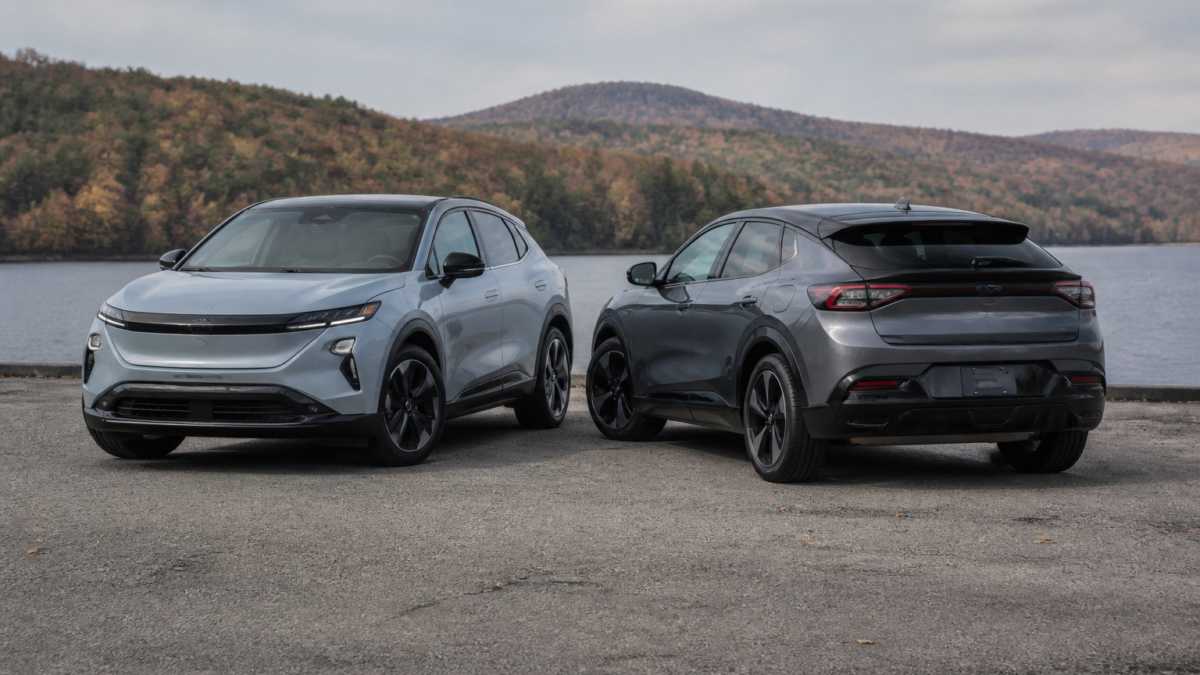
Mitsubishi says the Eclipse Sportback will receive its own exterior treatment. The listed changes include the front and rear bumpers, grille, headlights, rear combination lamps, rear gate, D-pillars, and wheels. These changes are intended to give the vehicle a recognizable Mitsubishi appearance rather than simply placing a Triple Diamond badge on an unchanged Nissan model.
Even so, the official announcement does not describe the Eclipse Sportback as an independently engineered Mitsubishi platform. It specifically says the model is supplied by Nissan. That distinction matters because a vehicle’s body styling may be unique while its battery, electric motors, software, suspension components, charging system, and underlying structure are shared or sourced from another model.
Is the Eclipse Sportback a Rebadged Nissan Leaf?
The short answer is that the Eclipse Sportback is Nissan-based, but the phrase “rebadged Nissan Leaf” should be used with some care.
Mitsubishi’s announcement confirms that Nissan will supply the vehicle. Automotive reporting has connected the Eclipse Sportback with the next-generation Nissan Leaf, and the vehicle’s timing and design relationship support that interpretation. Electrek reported that the Eclipse Sportback uses next-generation Leaf underpinnings and shares major technical specifications that Nissan has announced for the new Leaf.
However, Mitsubishi has not presented the Eclipse Sportback as a simple cosmetic copy in its own consumer announcement. The company emphasizes its exterior revisions and describes the model as a Mitsubishi-branded electric subcompact SUV. Therefore, the most accurate description is that the Eclipse Sportback is a Nissan-supplied, Leaf-related EV with Mitsubishi-specific styling and branding.
That wording avoids overstating what has been proven. It also gives readers a clearer picture of how modern automaker partnerships work. A shared vehicle may have the same basic architecture and powertrain while receiving different exterior panels, interior details, software calibration, suspension tuning, features, warranty terms, or dealer support.
Expected Battery and Charging Information
Mitsubishi has not published a complete U.S. specification sheet for the Eclipse Sportback. As a result, buyers should not treat Nissan Leaf specifications as final Mitsubishi specifications until Mitsubishi or the U.S. Environmental Protection Agency publishes vehicle-specific information.
Still, the related next-generation Nissan Leaf provides a reasonable point of reference. Nissan’s global materials identify liquid-cooled battery options, including a larger 75-kilowatt-hour pack. Nissan has also discussed 150-kilowatt DC fast charging and an approximate 10% to 80% charging time of 35 minutes under specified conditions.
Those figures may indicate the technical direction of the Eclipse Sportback, but they are not a substitute for confirmed Mitsubishi data. Charging time can vary with battery temperature, state of charge, charger output, weather, and the vehicle’s charging curve. The final North American Eclipse Sportback could also differ by trim or market.
Electrek reported that the vehicle’s shared technical details include a 75-kilowatt-hour liquid-cooled battery, a native North American Charging Standard connector, and 150-kilowatt DC fast charging. These details are useful context, but Mitsubishi’s U.S. launch materials should remain the primary source for final specifications.
For everyday ownership, the charging connector may be especially relevant. A native NACS port could make access to Tesla Supercharger locations more straightforward, assuming the vehicle is approved for use on the applicable network and the necessary charging arrangements are available. Buyers should confirm compatibility, charging-network access, and any required account or payment process before placing an order.
Range, Pricing, Dimensions, and Availability: What Is Still Unknown?
Several buyer-relevant details remain unconfirmed for the U.S. market.
EPA range
Mitsubishi has not announced an official EPA-estimated range for the Eclipse Sportback. A related Nissan model may offer a useful comparison, but EPA results depend on vehicle configuration, wheel and tire selection, software, aerodynamics, and testing. The Mitsubishi version could receive a different rating even if it shares core hardware with the Leaf.
Price
Mitsubishi has not released U.S. pricing, destination charges, trim-level pricing, or a final equipment breakdown. It would be premature to assume that the Eclipse Sportback will cost exactly the same as a Nissan Leaf. Mitsubishi could position it above or below its Nissan counterpart depending on standard features, branding, dealer strategy, and market conditions.
Dimensions and cargo space
Official U.S. dimensions, passenger volume, cargo capacity, ground clearance, curb weight, and towing information have not been provided in the available announcement. These numbers will be important for shoppers comparing the Eclipse Sportback with other small electric SUVs and hatchback-style EVs.
Launch timing and dealer availability
Mitsubishi has confirmed a North American launch during the second half of 2026. That is a target period rather than a guarantee that every U.S. dealership will have inventory at the same time. Regional availability may depend on production, transportation, certification, allocation, and dealer participation.
Buyers should look for a formal Mitsubishi Motors North America announcement, an online configurator, vehicle-order information, and an EPA listing before relying on specific range, price, or delivery claims.
Why Mitsubishi Is Using an Alliance-Supplied EV
Developing a new electric vehicle requires substantial investment in batteries, motors, power electronics, software, crash testing, manufacturing, and charging compatibility. An OEM partnership allows an automaker to add an EV more quickly than starting a completely new program.
For Mitsubishi, the Eclipse Sportback can provide a battery-electric offering while the company continues to build its broader product strategy. The arrangement may also allow Mitsubishi to use Nissan’s existing electric-vehicle experience and supply chain. Nissan has been developing Leaf models for more than a decade, giving the Alliance an established base of EV engineering knowledge.
There are trade-offs. A shared product may reduce development risk, but it can also make brand differentiation more difficult. Mitsubishi will need to explain why a customer should choose the Eclipse Sportback instead of the related Nissan model. Styling, standard equipment, warranty coverage, service experience, financing, and local inventory could all influence that decision.
The partnership also illustrates a broader trend in the automotive industry. Automakers increasingly share platforms and components to control costs and speed up product launches. This practice is not automatically negative for consumers. Shared engineering can improve reliability, expand parts availability, and make advanced technology available across more brands. The key question is whether the final vehicle offers clear value and receives appropriate support from the automaker.
What the Eclipse Name Means for Mitsubishi
The Eclipse name has a long history within Mitsubishi’s lineup. It was first associated with a sporty coupe before being adapted for the Eclipse Cross crossover. Applying the name to an electric subcompact SUV continues that evolution, although the vehicle’s mission is different from the performance-focused coupes that carried the badge in earlier years.
The name may help Mitsubishi attract attention in a crowded EV market, but branding alone will not determine the vehicle’s success. Buyers are likely to focus on practical questions: How far can it travel on a charge? How quickly can it recharge? What does it cost? Is it comfortable? Does it have enough cargo space? How does the warranty compare with competing EVs?
Mitsubishi’s challenge will be turning a Nissan-supplied vehicle into a product that feels purposeful within its own lineup. The exterior changes may help, but the ownership experience and value proposition will matter just as much.
What Prospective Buyers Should Watch Before Ordering
- Official EPA range: Look for the final rating by trim and wheel size.
- Pricing: Compare the starting price, destination charge, and standard equipment.
- Charging details: Confirm connector type, maximum DC charging rate, and network compatibility.
- Warranty coverage: Review the vehicle, battery, and powertrain warranties in writing.
- Interior specifications: Check passenger room, cargo volume, seat-folding flexibility, and available technology.
- Drive configuration: Confirm whether front-wheel drive, all-wheel drive, or multiple power outputs will be offered.
- Availability: Ask local dealers about allocation, deposits, estimated delivery, and cancellation terms.
These details will help shoppers evaluate the Eclipse Sportback on its own merits rather than assuming it will be identical to the Nissan Leaf.
Bottom Line
The 2027 Mitsubishi Eclipse Sportback EV is a significant addition to Mitsubishi’s North American lineup because it brings the brand back to the fully electric market. Mitsubishi has confirmed that Nissan will supply the vehicle on an OEM basis and that the model will receive distinctive Mitsubishi exterior styling.
It is fair to describe the Eclipse Sportback as closely related to the next-generation Nissan Leaf. It is less accurate to claim, without qualification, that every detail is already confirmed or that the Mitsubishi is merely an unchanged rebadge. The available evidence supports a more precise conclusion: this is a Nissan-supplied EV adapted for Mitsubishi through exterior design, branding, and market positioning.
The vehicle’s appeal will ultimately depend on information that Mitsubishi has not yet released, especially U.S. pricing, EPA range, trim content, dimensions, warranty terms, and dealer availability. Until those details arrive, the Eclipse Sportback should be viewed as a promising Alliance-based EV with a confirmed launch plan—but not yet a fully defined purchase decision.
Frequently Asked Questions
When will the 2027 Mitsubishi Eclipse Sportback EV launch?
Mitsubishi has announced plans to begin sales in the United States and Canada during the second half of 2026. Exact U.S. arrival dates may vary by region and dealer.
Is the Eclipse Sportback the same vehicle as the Nissan Leaf?
Mitsubishi has confirmed that Nissan will supply the vehicle on an OEM basis. The Eclipse Sportback is closely related to the next-generation Leaf, but final Mitsubishi-specific equipment and specifications should be confirmed separately.
How much range will it have?
An official U.S. EPA range estimate for the Eclipse Sportback has not been announced in the available materials.
How much will the Mitsubishi Eclipse Sportback cost?
Mitsubishi has not released official U.S. pricing. Buyers should wait for the company’s final trim and pricing information rather than relying on estimates based on the Nissan Leaf.
What charging technology may it use?
Reporting on the related Nissan-based vehicle has referenced a liquid-cooled battery, 150-kilowatt DC fast charging, and a NACS connector. Mitsubishi’s final U.S. specifications should be treated as authoritative when published.
Sources: Mitsubishi Motors official announcement; Electrek report dated July 28, 2026. Product specifications, pricing, range, and availability may change before the vehicle goes on sale.




Leave a Reply