
Selling a used car online can be convenient, but the best car selling site is not the same for every seller. A private-party marketplace may help you reach more buyers and potentially earn more, while an instant-offer service can reduce the time and effort involved. Dealer trade-ins are often practical when you are replacing the vehicle, and specialty auction platforms may be better suited to collectible or enthusiast cars.
The right choice depends on your vehicle, location, title status, desired selling speed, and willingness to handle questions, test drives, negotiations, and paperwork. Before choosing a platform, compare how it values cars, what it charges, how payment is handled, and whether pickup or delivery assistance is available.
Quick comparison of the main ways to sell a car
| Selling method | Best for | Typical process | Main trade-off |
|---|---|---|---|
| Private-party marketplace | Sellers seeking control over price | Create a listing, answer buyers, arrange inspections, and complete the sale | Requires more time and safety precautions |
| Instant online buyer | People who want a predictable, relatively quick sale | Enter vehicle information, receive an offer, verify the car, and schedule payment or pickup | The offer may be lower than a successful private-party sale |
| Dealer offer or trade-in | Sellers buying another vehicle or prioritizing convenience | Request an offer from a participating dealer and complete the transaction at the dealership | Less control over the final price than selling directly to a private buyer |
| Online auction | Rare, classic, modified, or enthusiast vehicles | Submit the car for review, publish an auction, and sell according to the platform’s rules | Approval, fees, reserve rules, and buyer interest vary by platform |
Best car selling sites for private-party listings
Autotrader: useful for broad exposure and guided private sales
Autotrader is a well-known marketplace for sellers who want to advertise a vehicle rather than accept the first wholesale-style offer. Its current private-sale service allows sellers to create a listing that can appear across Autotrader and Kelley Blue Book properties. The platform also promotes tools for buyer communication, fraud prevention, secure payment, and title-transfer assistance. (autotrader.com)
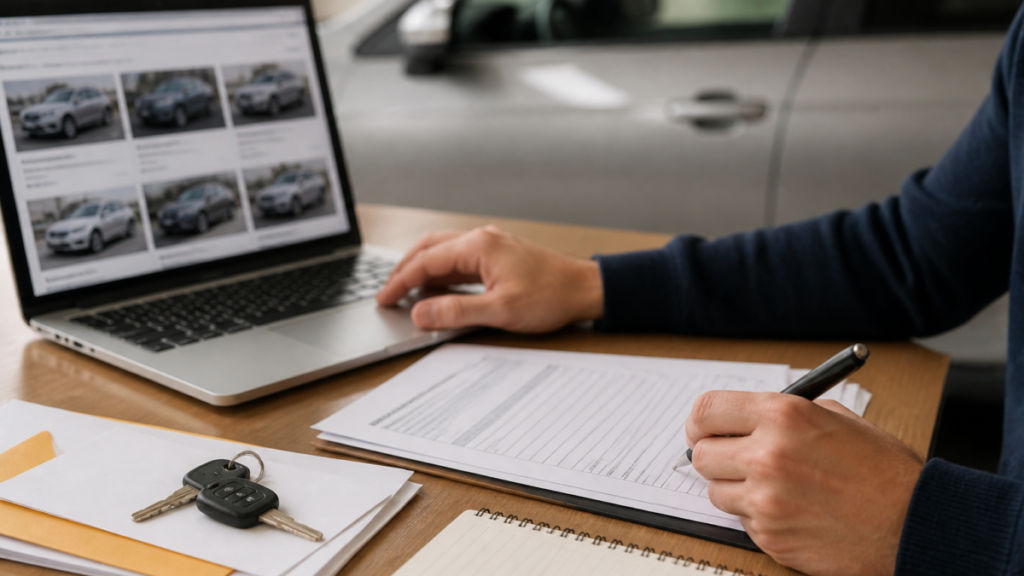
Supporting Image for “Best Car Selling Sites in the U.S.: Compare Private Listings, Instant Offers, and Auctions”.
Autotrader’s current listing prices are presented in tiers, such as $9, $29, or $49, depending on the vehicle and asking price. A seller protection fee may also apply when the transaction is completed through its Private Seller Exchange; the platform currently describes that fee as 0.99% of the selling price, with a stated minimum of $99. Because pricing and service availability can change, review the final fee schedule before publishing an advertisement. (autotrader.com)
This option may suit sellers with a desirable everyday vehicle, a higher-mileage car, or a vehicle that needs to reach buyers outside the local area. It is less convenient than selling directly to a dealer because you still need to describe the car accurately, respond to inquiries, and coordinate the handover.
Cars.com: a free listing option plus dealer offers
Cars.com offers two distinct paths: a private listing at the seller’s asking price or an instant offer from a local participating dealer. Its current sell-your-car page states that private listings are free to the seller and that sellers can use the site’s market insights to help set an asking price. The dealer-offer process involves an online offer followed by a vehicle inspection before the transaction is completed. (cars.com)
Cars.com also states that its private listings are intended for mass-produced, noncommercial vehicles made for sale in the United States. Its current guidance says vehicles older than 1992 are not accepted, and it excludes categories such as motorcycles, recreational vehicles, replicas, and kit cars. Sellers with an unusual or collectible vehicle should confirm eligibility before preparing a listing. (cars.com)
Cars.com can be a practical starting point for comparing a private-party asking price with a dealer-backed offer. The trade-off is that the site does not guarantee that a listing will attract legitimate inquiries, sell within a particular time, or achieve a target price. (cars.com)
Best sites for an instant cash offer
Carvana: convenient online offers and scheduled handoff
Carvana is an online vehicle retailer that also buys cars directly from consumers. To generate an offer, the company asks for information such as the vehicle identification number or license plate, mileage, condition, and features. Sellers may then need to upload documents verifying ownership and select a payment method before scheduling an appointment. (carvana.com)
Depending on the seller’s location, Carvana may arrange pickup, meet at an agreed location, or accept the vehicle at a Carvana facility. A pickup charge may apply in some areas, and the company says the charge will be shown before scheduling. Carvana also states that the average selling process takes approximately three to 10 days, although the actual timeline can vary by location, documentation, vehicle condition, and loan status. (carvana.com)
Carvana may be a good fit when convenience matters more than maximizing the private-party price. It should not automatically be described as the best choice for old or unique cars. Older, rare, heavily modified, or specialty vehicles may have limited eligibility or may receive a stronger price from a specialist buyer, enthusiast marketplace, or auction. Always compare the offer with several independent valuation sources before accepting it.
Dealer instant-offer services: simple transactions with local verification
Some marketplaces connect sellers with local dealers that provide cash offers. Cars.com, for example, describes an instant-offer process in which the seller receives an online estimate and completes a short dealership appointment if the offer is accepted. The dealer may inspect the vehicle and confirm its condition before payment. (cars.com)
Dealer offers are usually more convenient than private sales because the seller does not need to advertise the vehicle, host test drives, or negotiate with multiple individuals. However, the offer reflects the dealer’s expected resale value, reconditioning costs, operating expenses, and desired margin. Requesting multiple offers can help you determine whether convenience is worth the price difference.
Specialty and auction platforms for older or unique cars
Rare, classic, collectible, performance, and heavily modified vehicles require a different selling strategy from a typical commuter car. A general marketplace may expose the vehicle to many shoppers, but its audience may not understand unusual equipment, restoration quality, provenance, or market value.
Specialty auction platforms can attract enthusiasts who are actively searching for distinctive cars. Before choosing one, investigate its submission process, seller commission, buyer fees, reserve-price rules, inspection requirements, title expectations, shipping arrangements, and dispute procedures. Auction results are not guaranteed, and a car that receives little attention may sell below expectations or fail to meet its reserve.
For a genuinely rare vehicle, consider obtaining documentation before listing. Helpful material may include restoration invoices, service records, ownership history, factory options, photographs of repairs, and an independent inspection. Be precise about defects and modifications. Enthusiast buyers often scrutinize details more closely than ordinary marketplace shoppers.
How online car sites determine value
Most platforms use the information you provide, vehicle-history data, market comparisons, mileage, trim, features, location, and reported condition. An instant buyer may also consider its current inventory needs and the expected cost of transporting or reconditioning the vehicle. A private listing, by contrast, lets you set the asking price, but the response from buyers will reveal whether that price is competitive.
Start by comparing several sources, including Kelley Blue Book, marketplace listings for similar vehicles, and local dealer offers. Match the year, trim, drivetrain, mileage range, condition, title status, and major options as closely as possible. Asking prices are not the same as completed sale prices, so avoid treating the highest online listing as proof of what your car is worth. Autotrader’s pricing guidance similarly emphasizes condition, mileage, equipment, local market conditions, and comparable prices. (autotrader.com)
Paperwork to prepare before listing
Gather the documents that prove you can legally transfer the vehicle. Depending on your state and circumstances, you may need the signed title, lien-release information, registration, bill of sale, odometer disclosure, maintenance records, warranty documents, and identification. Requirements differ across the United States, so check your state motor-vehicle agency before completing the transaction.
If a lender still holds the title, contact the lender early. Some platforms can help coordinate a payoff, but the exact procedure varies. Do not advertise the vehicle as free and clear if a lien remains. Cars.com’s seller terms also require sellers to have the right to transfer the advertised vehicle and to provide truthful, complete information. (cars.com)
Safety tips for selling a car online
- Keep communication on the platform when possible, especially before you have verified a buyer.
- Do not accept overpayments, gift cards, unusual payment arrangements, or requests to send money to a third party.
- Never release the vehicle, keys, or signed title until payment has been independently verified and the platform’s instructions say the transaction is complete.
- Meet prospective buyers in a public location and consider bringing another adult.
- Allow test drives only after checking the driver’s license and confirming insurance requirements.
- Remove personal data from connected systems, navigation history, garage-door openers, toll accounts, and paired phones.
- Take photos of the vehicle and odometer immediately before handover, and keep copies of every signed document.
Which car selling site should you choose?
Choose a private-party marketplace such as Autotrader or Cars.com if your priority is control over the asking price and you are prepared to communicate with buyers. Consider Carvana or a dealer instant-offer service if you value speed, a defined process, and assistance with the handoff. For a classic, rare, or enthusiast vehicle, investigate specialty auctions and compare their terms carefully rather than assuming a mainstream instant buyer will provide the strongest offer.
A sensible strategy is to collect more than one type of offer. Obtain an instant quote, review comparable private listings, and ask a local dealer for a purchase or trade-in estimate. Then compare the likely net proceeds after listing fees, pickup charges, loan payoff, transportation, repairs, and your time. The best car selling site is ultimately the one that provides an acceptable balance of price, speed, convenience, and transaction security.
Methodology and disclosure
This guide compares the selling models and publicly described tools offered by major U.S. automotive marketplaces and online buyers. Platform fees, vehicle eligibility, geographic coverage, pickup availability, payment methods, and service terms may change. Confirm the current terms directly with each provider before listing or accepting an offer. This article is general consumer information, not legal, tax, or financial advice.










Leave a Reply