
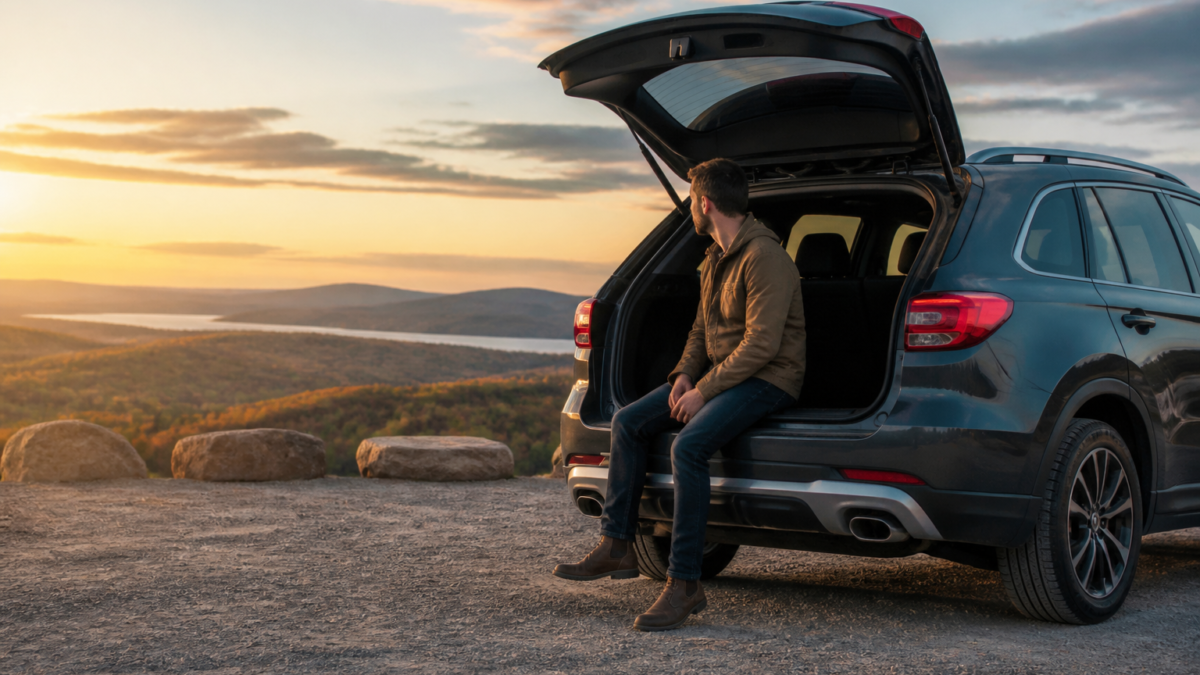
How to Choose the Best SUV in the U.S.
SUVs are popular with U.S. drivers because they can combine a relatively high seating position with flexible cargo space, available all-wheel drive and, in some cases, strong towing ability. However, “SUV” covers a wide range of vehicles. A small crossover used for commuting has very different costs and capabilities from a three-row family SUV, a body-on-frame tow vehicle or a luxury model.
That variety makes comparison important. The best SUV is not automatically the largest, most powerful or most expensive option. It is the vehicle that fits your passenger, cargo, driving, parking, towing and budget requirements without imposing unnecessary fuel, insurance or maintenance costs.
This guide explains what to compare when shopping for a new or used SUV in the United States. Model availability, equipment, pricing and ratings can change by model year and trim, so verify final details with the manufacturer, the EPA, the National Highway Traffic Safety Administration (NHTSA) and the Insurance Institute for Highway Safety (IIHS) before purchasing.
Start with the SUV size and body style
Size is one of the most useful ways to narrow the market. It affects interior room, maneuverability, fuel consumption, purchase price and towing potential.
Subcompact and compact SUVs
Subcompact SUVs are often easier to park and less expensive than larger vehicles. They can work well for solo drivers, couples and small families, although rear-seat and cargo room may be limited. Compact SUVs generally offer a better balance of passenger space, cargo capacity and everyday maneuverability.
Common examples include the Honda CR-V, Toyota RAV4 and Subaru Forester. These models are frequently considered by shoppers who want more flexibility than a sedan without moving to a larger three-row vehicle. Hybrid versions can be especially attractive for drivers with substantial city or suburban mileage, but the hybrid trim may cost more initially.
Midsize two-row and three-row SUVs
Midsize SUVs offer more interior space and, in many cases, stronger engines than compact models. A two-row midsize SUV may provide useful cargo room without the added length and weight of a third row. Three-row models are designed for larger families, carpooling and occasional use of extra seats.
Examples in this category include the Honda Pilot, Toyota Highlander and Chevrolet Traverse. Before choosing a three-row SUV, sit in the third row with the second row adjusted for normal use. Some third rows are suitable for children but less comfortable for adults. Also check how much cargo space remains behind the third row, because a vehicle can have seven or eight seats but limited room for luggage when all seats are occupied.
Full-size SUVs
Full-size SUVs such as the Chevrolet Suburban, Ford Expedition and Lincoln Navigator provide substantial passenger and cargo capacity. Many use truck-based platforms and are better suited to heavy trailers than compact crossovers. The tradeoffs can include a higher purchase price, greater fuel consumption, more expensive tires and brakes, and difficulty fitting into garages or tight parking spaces.
Choose this class because you need its capacity, not simply because a larger vehicle appears more practical. If you rarely carry more than five people or tow a heavy trailer, a compact or midsize model may meet your needs at a lower total cost.
New SUV examples and pricing context
New-SUV pricing varies significantly by brand, trim, drivetrain and destination charges. Manufacturer MSRP is only a starting point; taxes, registration, dealer fees, optional equipment, financing interest and insurance can materially change the final cost.
For a current point of reference, Honda lists the 2026 CR-V starting at $30,920 before applicable charges. Its available hybrid trims begin higher, with the 2026 CR-V Hybrid listed from $35,630. Honda also lists EPA-estimated ratings of up to 43 city and 36 highway mpg for certain two-wheel-drive hybrid configurations, while non-hybrid versions are listed at 28 city and 33 highway mpg. Actual results depend on trim, drivetrain, weather, traffic and driving habits. ([automobiles.honda.com](https://automobiles.honda.com/cr-v?utm_source=openai))
The 2026 Toyota RAV4 provides another example of how trim and drivetrain affect both price and efficiency. Toyota lists a starting MSRP of $31,900 for the 2026 RAV4 and publishes different EPA-estimated fuel-economy figures across its configurations. Some front-wheel-drive trims are listed near the upper-40-mpg range, while more rugged or higher-performance versions have lower estimates. Confirm the exact rating for the vehicle’s window sticker rather than relying on the model name alone. ([toyota.com](https://www.toyota.com/rav4/features/mpg_other_price/4534/4437/4530/?utm_source=openai))
These examples are not universal recommendations. They illustrate why shoppers should compare specific model years and trims instead of comparing only brand names or vehicle classes.
Fuel economy: compare the full cost, not just the mpg number
SUV fuel economy can differ widely. A small hybrid crossover may use considerably less fuel than a large gasoline SUV, while an all-wheel-drive system, larger wheels, roof equipment and off-road tires can reduce efficiency compared with a lower trim.
Use the EPA’s fueleconomy.gov database to compare city, highway and combined estimates. City-heavy drivers should pay particular attention to the city rating, while frequent highway travelers may place more emphasis on highway efficiency. Plug-in hybrids and electric SUVs require additional comparisons, including electric range, charging access, charging time and energy costs.
A simple ownership estimate can make the difference easier to understand. Multiply your expected annual miles by the vehicle’s fuel cost per mile, then compare that result with other models. Fuel prices change by region and over time, so use a realistic local estimate instead of treating a published example as a promise.
Remember that fuel is only one operating cost. Insurance premiums, scheduled maintenance, tires, brakes, registration and repairs also affect the long-term budget. A less expensive SUV with poor fuel economy may not be cheaper to own, while a higher-priced hybrid may recover part of its premium through lower fuel use depending on mileage and fuel prices.
Safety: avoid broad assumptions about SUV size
A larger or heavier vehicle is not automatically safer in every crash or driving situation. Safety performance varies by model, model year, body structure, restraint systems, crash-avoidance technology and the vehicle with which it collides. Larger vehicles can also have disadvantages, including greater blind spots, longer stopping distances and a higher center of gravity in some designs.
Before buying, check the specific model year through NHTSA’s 5-Star Safety Ratings and IIHS testing. Look beyond a single overall score. Review individual crash-test categories, front-crash prevention, headlights, seat-belt performance, child-seat usability and second-row protection where available.
Safety labels also need context. IIHS has updated testing requirements over time, and ratings are tied to specific model years and tested configurations. In January 2026, IIHS reported that only four of the first 18 small SUVs evaluated in its new whiplash-prevention test earned a good rating, showing why shoppers should not assume that every vehicle in a category performs equally. ([mediaroom.iihs.org](https://mediaroom.iihs.org/news-releases?utm_source=openai))
Check whether an award applies to the exact trim and model year under consideration. Rating extensions may not apply across different vehicle classes or substantially changed designs. ([iihs.org](https://www.iihs.org/media/e0908220-e880-4755-8947-7138c14743c1/ONpoNw/Ratings/About%20our%20tests/Evolution%20of%20IIHS%20ratings.pdf?utm_source=openai))
Cargo space, seating and everyday practicality
Manufacturers may publish cargo measurements using different methods, so measurements are most useful when paired with an in-person inspection. Bring a stroller, sports equipment, work materials or other items you routinely carry. Check the opening height, floor width, under-floor storage, rear-seat folding arrangement and whether the cargo floor becomes level when the seats are folded.
For family use, examine the second-row access and child-seat fit. Some SUVs offer sliding second-row seats, captain’s chairs or wide-opening rear doors, but useful features may be limited to particular trims. If you need a third row, test access to it with a child seat installed and check whether luggage space remains adequate.
Seating capacity is not the same as usable comfort. A vehicle advertised for seven passengers may be practical for five adults and two children, while another model may offer more comfortable seating but less cargo room. Your normal passenger mix matters more than the maximum number printed in a brochure.
Towing and all-wheel-drive considerations
All-wheel drive can improve traction in rain, snow or loose conditions, but it does not replace suitable tires, careful driving or adequate stopping distance. It can also add cost, weight and maintenance considerations.
If you plan to tow, compare the maximum tow rating for the exact engine, drivetrain, cooling equipment and package. Then account for the trailer’s loaded weight, tongue weight, passengers and cargo. A vehicle’s maximum advertised rating may require a particular factory package and may not represent a comfortable choice for frequent towing.
Useful towing equipment can include an integrated brake controller, trailer wiring, a hitch receiver, transmission cooling and a camera system with trailer guidance. Ask the dealer for the owner’s manual and towing guide rather than relying on a general online listing.
Are used SUVs a better value?
A used SUV can reduce the purchase price and may provide access to features that would be expensive on a new vehicle. The best candidates usually have a documented maintenance history, a clean title, no unresolved recalls and an inspection from an independent mechanic.
Compare several model years because safety equipment, infotainment systems, powertrains and crash-test procedures can change during a generation. Review repair records and investigate common problems for the specific year and engine. A low asking price may be less attractive if the SUV needs tires, brakes, suspension work or major scheduled maintenance soon after purchase.
For a used vehicle, inspect the underbody for corrosion, check the tires for uneven wear, test every electronic feature and look for water intrusion. A vehicle history report can be useful, but it does not replace an independent inspection. Before buying, obtain an insurance quote using the vehicle identification number and confirm that replacement parts and service are available in your area.
When does a luxury SUV make sense?
Luxury SUVs may offer higher-grade materials, quieter cabins, stronger performance, advanced suspension systems and more technology. They can also carry higher ownership costs. Insurance, premium fuel requirements, specialized tires, complicated electronics and out-of-warranty repairs may be more expensive than on a mainstream SUV.
Compare the complete ownership picture rather than focusing only on the monthly payment. Ask about warranty coverage, maintenance plans, tire sizes, repair-network availability and depreciation. A certified pre-owned luxury SUV may offer warranty protection, but program terms differ by manufacturer and should be read carefully.
A practical SUV buying checklist
- Set an all-in budget: Include the purchase price, taxes, registration, financing, insurance, fuel, maintenance and likely repairs.
- Define your real needs: List passenger capacity, cargo items, driving conditions, parking limits and towing requirements.
- Shortlist by size: Compare compact, midsize and full-size SUVs only after deciding how much space you actually use.
- Compare exact trims: Check drivetrain, fuel economy, cargo measurements, safety equipment and included technology.
- Review safety sources: Search the exact model year through NHTSA and IIHS instead of relying on general reputation.
- Get insurance estimates: Premiums can vary by driver, location, vehicle value, repair cost and coverage level.
- Test-drive realistically: Try highway merging, tight turns, parking, seat adjustment and visibility.
- Inspect used vehicles: Obtain records, check recalls and pay for an independent pre-purchase inspection.
Final takeaway
The best SUV is the one that matches your actual use without forcing you to pay for excess size, power or luxury. Compact hybrids may suit commuters, midsize SUVs can balance family space and maneuverability, full-size models are appropriate for substantial passenger or towing needs, and used SUVs can offer value when selected carefully.
Use model-year-specific pricing, EPA fuel-economy data, NHTSA and IIHS safety information, cargo measurements and ownership-cost estimates to make the comparison more objective. Because vehicle specifications and prices can change, verify the final details on the manufacturer’s website, the vehicle window sticker and the applicable government or safety-testing databases before signing a purchase agreement.
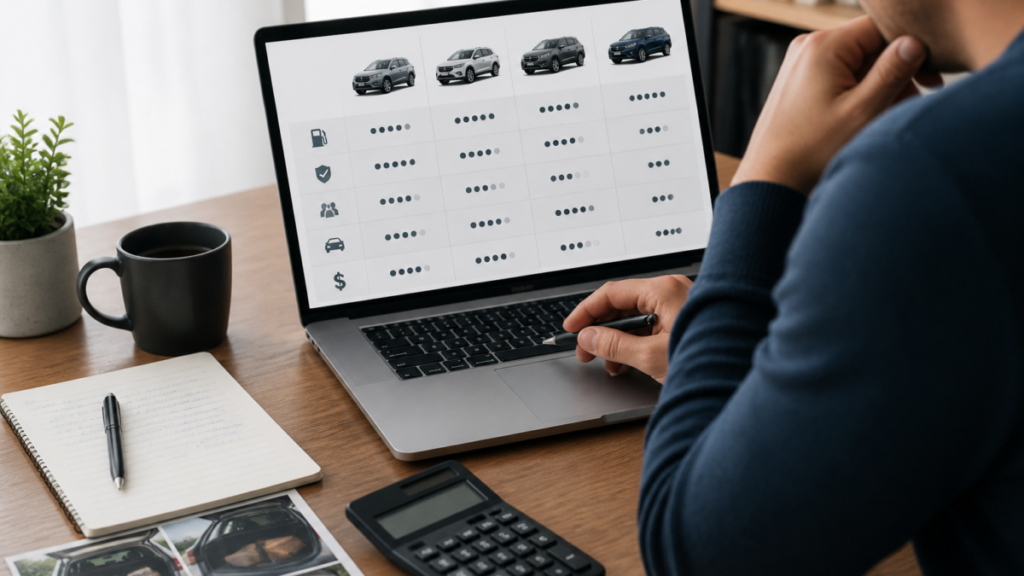
Supporting Image for “How to Choose the Best SUV in the U.S.: New, Used, Luxury, Safety and Fuel-Economy Guide”.








Leave a Reply