
Last updated:
Introduction
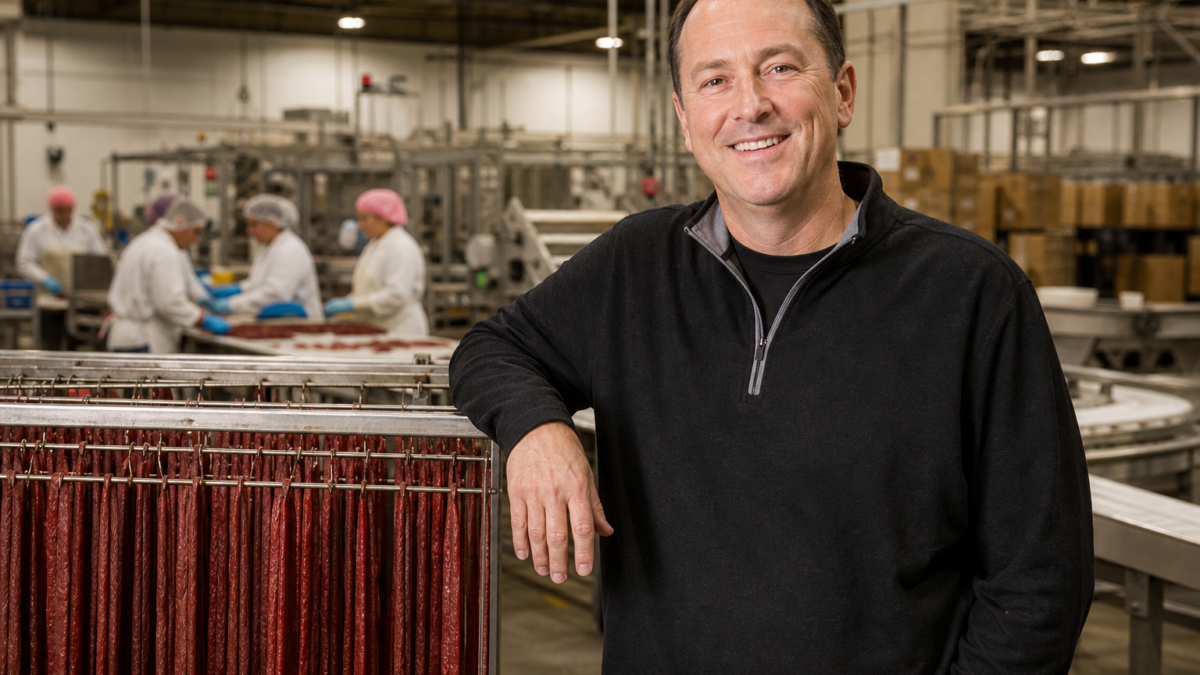
What does it take to transform a bankrupt family business into a category-dominating global snack empire? Jack Link faced precisely this challenge in mid-1980s Wisconsin. At age 40, he seized on a setback—his family’s failing slaughterhouse—as a launching pad for change, harnessing both heritage and forward-thinking strategy. By resurrecting a generations-old jerky recipe and daring to rethink how Americans snack, he built Link Snacks into a $2 billion juggernaut with a 34% U.S. market share, available in more than 55 countries.[1] This is not just a tale of financial turnaround, but a masterclass in marketing, product innovation, and relentless expansion. Below, we revisit the pivotal events, strategies, and lessons fueling Jack Link’s ascent from rural crisis to the top of the meat snacks world.
Key Milestones: From Bankruptcy to Beef Jerky Titan
- 1985: Jack Link, then age 40, pivots after his family’s meatpacking business files for bankruptcy.[2]
- 1986: Formal Chapter 11 bankruptcy protection filed.[3]
- 1988: Emergence from bankruptcy, Link Snacks established as a standalone snack business.[3]
- 2025: U.S. brick-and-mortar sales top $1.6 billion; estimated total revenues reach $2 billion.[2][1]
- 2026: Link Snacks holds 34% of U.S. meat snacks market by value, with products in over 55 countries.[1]
The Origin Story: Crisis Ignites Innovation
In the early 1980s, the Link family business—founded decades prior in Minong, Wisconsin—faced mounting challenges. A saturated market, changing consumer tastes, and cost pressures led the meatpacking operation to the brink. In 1985, with bankruptcy looming, Jack Link recalled his great-grandfather’s jerky recipe from the 1880s and began producing beef jerky for local bars and sporting stores.[1] Initial sales were modest, but word of mouth and regional distribution partnerships helped Link rebuild from the rubble. Within three years, after a formal Chapter 11 bankruptcy and recalibration, Link Snacks emerged not just solvent, but on the offense as a focused meat snack business.[3]
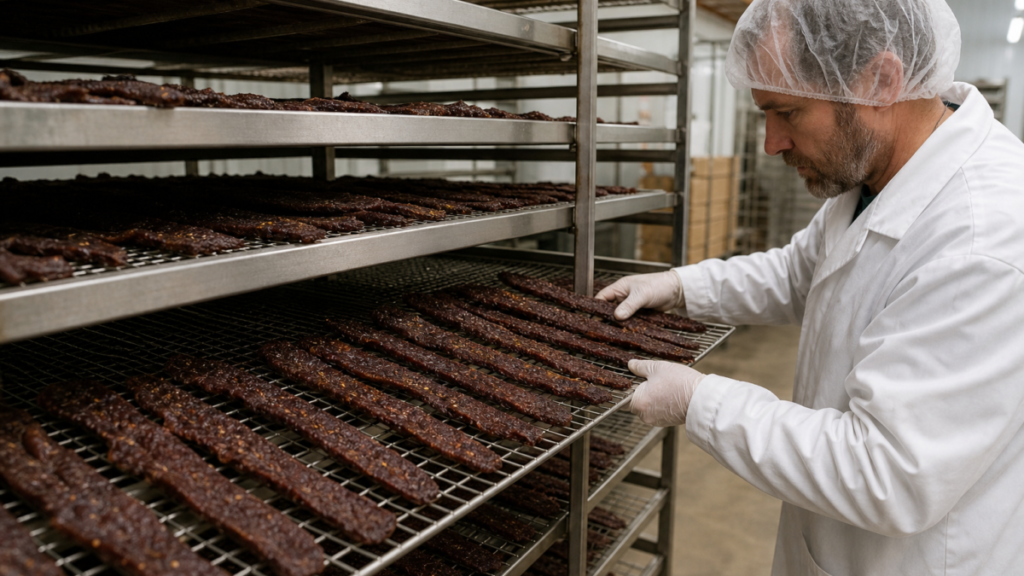
Supporting Image for the Jack Link story: From bankruptcy to meat snacks titan.
Pillars of Growth: Marketing, Expansion, and Brand Identity
Jack Link’s ability to spot emerging consumer trends—especially the demand for portable, high-protein snacks—fueled Link Snacks’ ascent. The jerky that began as a sideline product for hunters and travelers was repositioned for mainstream America, with a distinct packaging overhaul and viral marketing.
- Marketing Genius: The “Messin’ with Sasquatch” ad campaign, which launched in 2006, gave the brand irreverent cultural cachet and is still referenced as among the most effective snack ads of the 21st century.[4]
- Distribution: Link Snacks aggressively pushed into convenience stores, gas stations, big-box retailers, and international markets. By 2026, its products inhabit over 200,000 U.S. stores and 55+ countries.[1]
- Acquisitions and Diversification: The firm expanded via acquisition (e.g., Lorissa’s Kitchen, Golden Island, BiFi, Peperami) and diversified into sticks, bites, steaks, and slices to broaden appeal.[5]
Financials: Sizing the Empire
| Metric | Value / Performance | Source |
|---|---|---|
| U.S. Brick-&-Mortar Retail Sales (2025) | $1.6 billion+ | CNBC |
| Estimated Total Revenue | $2 billion | Forbes |
| Market Share (U.S.) | 34% | Forbes |
| Annual Packages Sold | ~800 million | Link Snacks |
| Facilities Worldwide | 15+ | Link Snacks |
| Countries Served | 55+ | Forbes |
Strategic Changes That Rescued and Grew the Business
- Pivoting Product Focus: Abandoned low-margin slaughter operations, concentrated on value-added snacks.[3]
- Recipe & Brand Heritage: Leveraged the cachet of “family recipe, since 1885” to create authenticity and trust.[1]
- Marketing: Consistent logo/packaging, memorable ad characters, and humor to build distinct brand identity.[4]
- Strategic Acquisitions: Entering new global snack categories and regions via acquisitions.[5]
- Distribution Mastery: Heavy investment in national and international channels beyond regional grocery.
Challenges and Competitive Landscape
Link Snacks’ road to dominance was neither smooth nor solitary. The U.S. meat snack market, valued at $6.7 billion in 2026 (up 11.8% from the previous year), is fiercely competitive.[6] Jack Link’s core jerky segment saw a slight revenue dip (down 2.9% to $912 million) while the “other dried meat snacks” segment grew 7.5% to $844 million.[6] Price increases, competition from upstart brands in the high-protein and biltong niches, supply chain disruptions, and consumer appetite for novelty all require constant innovation and adaptation.
Timeline: Jack Link’s Empire at a Glance
- 1978: Link family acquires Minong slaughterhouse.
- 1985–1986: Bankruptcy leads to jerky-making pivot.[2]
- 1988: Link Snacks emerges from Chapter 11 as dedicated snack company.[3]
- 2006: “Sasquatch” campaign launches.[4]
- 2014–2020s: Acquisitions and global expansion.
- 2025–2026: Approaching $2 billion annual revenue, leading the U.S. category.[1]
Checklist: What Made Link Snacks a Global Leader?
- Persistence in adversity (Bankruptcy → Innovation)
- Maintaining quality with scalability
- Strong brand persona and viral advertising
- Regular product diversification and acquisitions
- Category leadership via distribution scale
- Family heritage and authenticity
Frequently Asked Questions (FAQ)
- How did Jack Link start the meat snacks business?
- Jack Link pivoted from his family’s bankrupt slaughterhouse in 1985, starting small-batch jerky production using his great-grandfather’s 1880s recipes. This innovation marked the genesis of Link Snacks.[1]
- What distinguishes Jack Link’s from competitors?
- Unique marketing (notably the “Messin’ with Sasquatch” ads), wide product range, aggressive acquisitions, and focus on quality scaled for mass and global markets make Jack Link’s an industry outlier.[4]
- What’s the current scale of Link Snacks?
- Link Snacks is now estimated near $2 billion in annual revenue, moves ~800 million packages yearly through 15+ facilities across 55+ countries, and commands 34% U.S. market share.[1]
- Has the brand faced setbacks?
- Market volatility, rising costs, supply disruptions, and new consumer trends have all posed risks. The brand’s movement into new snack types and global markets has been its answer to these hurdles.
- Are there plant-based or organic Jack Link’s products?
- As of late 2026, there is no verified evidence that Link Snacks offers plant-based or certified organic snack lines.[5]
- Which acquisitions have had the biggest impact?
- Major international acquisitions (Golden Island in the U.S., BiFi and Peperami in Europe) significantly extended reach; Lorissa’s Kitchen expanded the premium/natural segment.
- What’s next for Jack Link’s and Link Snacks?
- The company continues to explore global expansion and new flavors and formats for the evolving, protein-centric market, while maintaining a focus on brand legacy and robust distribution.[7]
Conclusion
Jack Link’s transformation of a failing rural slaughterhouse into a global meat snacks powerhouse demonstrates the enduring value of persistence, brand vision, and adaptability. By blending tradition with innovation and calculated risk, Link Snacks not only became a $2 billion business but also reshaped American snacking culture. The company’s journey highlights how strategic pivots, memorable marketing, and relentless pursuit of scale can build an enduring business legacy—offering valuable lessons for entrepreneurs and family firms confronting adversity in volatile industries.
References:
1. Forbes: Jack Link Profile
2. CNBC: How a 40-Year-Old Father Launched a $1.6B Empire
3. Time Magazine: Thinking Big
4. Wikipedia: Jack Link’s
5. Link Snacks (About Page)
6. Snack & Bakery: Meat Snacks State of Industry July 2026
7. Star Tribune: Jack Link’s 40th Anniversary









Leave a Reply