
Key Takeaways
- China has begun mass-producing domestically-developed immersion DUV (Deep Ultraviolet) lithography machines via state-owned enterprises in 2026, a response to Western export controls.[1]
- The performance and scale of China’s tools still lag far behind industry leader ASML. Key components are still imported, mostly from Japan.[2]
- The breakthrough offers greater resilience to Chinese foundries, but is not a direct threat to ASML’s global commercial dominance at this stage.[3]
- Geopolitically, the move is significant, reshaping the semiconductor supply chain and prompting both optimism for domestic autonomy and continuing caution from experts.
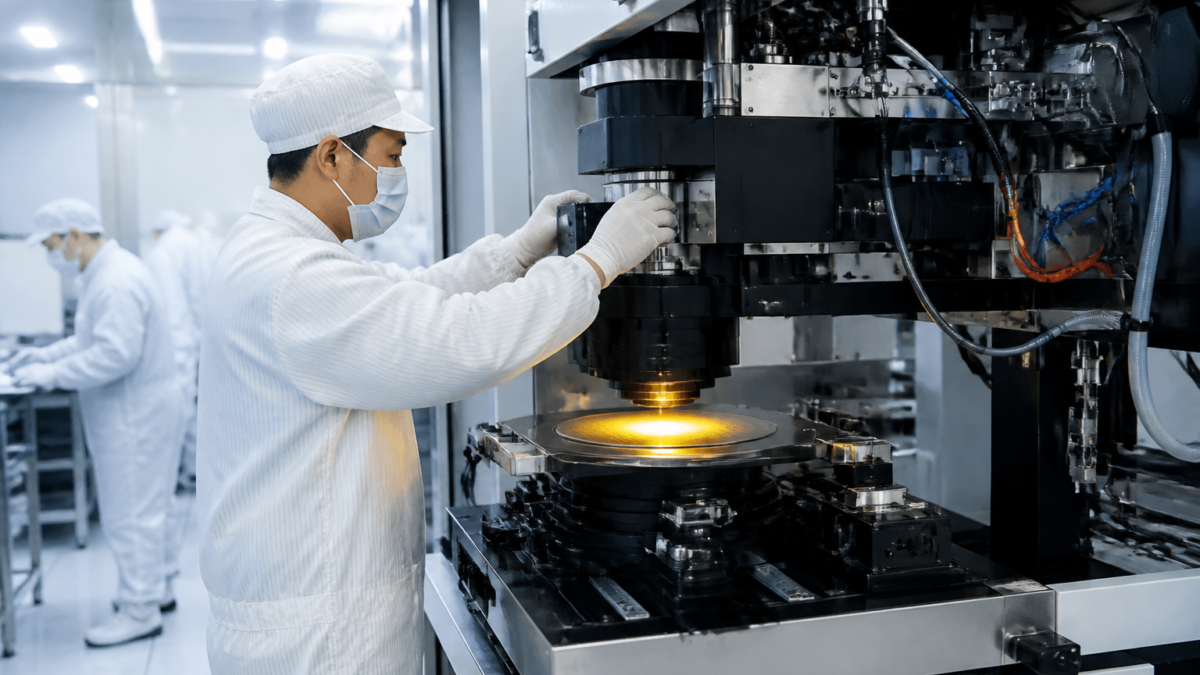
The global semiconductor industry is at a pivotal crossroads as China begins mass production of its own immersion DUV lithography machines, marking a historic step toward chipmaking self-sufficiency. This strategic advancement arrives in the midst of mounting Western export restrictions, which have denied China access to leading-edge chipmaking equipment—especially from Dutch giant ASML. By developing indigenous tools, China aims to reduce dependence on foreign technology and secure its critical semiconductor supply chain. Yet, analysts and executives warn that the performance and reliability of these machines remain behind the global state-of-the-art, and scaling up production to match established players poses major challenges. As the world watches closely, the implications for global tech supply chains, intellectual property regimes, and the balance of geopolitical power are profound. This article examines the scope, limitations, and prospective impact of China’s chip manufacturing breakthrough.
The Core Breakthrough: What Has China Achieved in 2026?
China’s landmark move centers on the development and mass production of domestically-designed immersion DUV (Deep Ultraviolet) lithography machines. Shanghai Aishengna Electronic Technology Group, a state-owned player, spearheads production, with about five tools targeted for delivery in 2026 and up to 20 for the following year.[1] The principal clients are major Chinese foundries like SMIC, Hua Hong Semiconductor, and CXMT.[4]
Western export controls—particularly those from the US and the Netherlands—have restricted China’s access to both EUV (Extreme Ultraviolet) and cutting-edge DUV systems. In response, developing homegrown DUV machines has become a Chinese national priority, enabling foundries to hedge against foreign supply chain disruptions.[3]
How Do China’s DUV Lithography Tools Compare?
While China’s indigenous DUV equipment is a technical milestone, it is not on par with ASML’s industry-leading systems. ASML, the world’s dominant supplier, produces high-throughput, high-precision immersion DUV machines—accounting for the bulk of global deliveries. In contrast, China’s new machines can reliably produce chips with 28 nm-class features in single-exposure mode, and through advanced “multipatterning” techniques may approach 7 nm-class manufacturing, albeit with significant tradeoffs in yield and throughput.[2]
Nonetheless, these systems have several limitations:
- Lower throughput and speed compared to ASML’s equipment, reducing manufacturing efficiency.
- Lower precision, impacting potential chip complexity and power efficiency.
- Dependence on imported high-end components, especially optics and lasers, mostly sourced from Japan.[2]
- Unproven reliability and production yields, making commercial competitiveness uncertain.[5]
| Feature | China (Shanghai Aishengna, 2026) | ASML (TWINSCan NXT Series) |
|---|---|---|
| First Commercial Production | 2026 | Since 2010s |
| Annual Output (2026) | ~5 units | ~130 units |
| Resolution (Single Exposure) | 28 nm | 7 nm and below |
| Resolution (Multipatterning) | 7 nm (with yield risk) | Sub-7 nm feasible |
| Main Clients | SMIC, Hua Hong, CXMT | TSMC, Samsung, Intel, GloFo, etc. |
| Throughput | Lower, unproven at scale | High (>200 wafers/hour typical) |
| Critical Imports | Yes (Japan) | No (integrated supply) |
Expert and Industry Perspectives
Leaders in China’s chip tool sector admit that despite these advances, their industry is “too small, fragmented, and weak” compared to major non-Chinese players.[6] Observers highlight several recurring challenges:
- Scale: ASML’s mature industrial base allows for rapid, large-volume shipments, while China’s batch output remains limited.
- Reliability: There is insufficient data on the long-term operational performance or defect rates of China’s new tools.[5]
- Fragmentation within China’s equipment ecosystem, causing resource duplication and slower knowledge sharing.
An industry analyst summed up: “It’s a defensive play rather than a market capture. Chinese foundries must be ready if foreign deliveries are cut, but this is not a near-term substitute for ASML’s world-leading technology.”[3]
Geopolitical Dimensions: Strategic Autonomy or Global Disruption?
The drive for local DUV tool production is rooted in broader political and security considerations. Recent years have seen the U.S. and Netherlands coordinate stricter export rules to choke off China from advanced semiconductor manufacturing know-how, especially EUV, which is central to the next generation of microprocessors and memory chips.[4]
The presence of even domestically-produced DUV systems signals resilience and a push for self-reliance—but also prompts Western governments to reconsider the escalation and impact of their own controls. Supply chain contingencies are being redrawn: Chinese foundries have alternative—though less advanced—paths if future sanctions intensify. Yet, as of 2026, industry consensus is clear: ASML still maintains technological and commercial dominance, with China accounting for nearly 20% of its projected 2026 revenue.[3]
Checklist: Assessing Real-World Impact of China’s Homegrown DUV Tools
- Are buyers (foundries) able to maintain acceptable yields and efficiency with Chinese tools?
- Can critical imported components be localized in future generations?
- How quickly can China scale from single-digit tools/year to commercial competitiveness?
- Are Western controls tightening further or seeing diminishing returns?
- Has a domestic supply chain ecosystem matured around the new tools?
Uncertainties, Challenges, and Limitations
Several claims have circulated that overstate China’s present capabilities, specifically regarding EUV systems and “ASML parity.” As of September 2026:
- No EUV (Extreme Ultraviolet) tools: There is no evidence, according to current industry and regulatory reports, that China has developed or operationalized an EUV system. Reports of a domestic EUV prototype remain unconfirmed and years away from deployment.[2]
- Limited Yield, Volume, and IP: Scaling early-stage production to the level required for high-volume, advanced node manufacturing remains a profound hurdle. Even with multipatterning, the yield—and thus profitability—of chips manufactured on new Chinese DUV tools is not independently verified.
- Rumored Imports Denied: U.S. authorities have alleged an ASML EUV machine might be in China; both ASML and published investigations publicly deny any such transfer to date.[7]
Strategic Impacts: Who Benefits and Who Faces Pressure?
Chinese Foundries: The primary beneficiaries—foundries like SMIC, Hua Hong, and CXMT—now possess contingency access to locally made lithography tools, increasing leverage during supply disruptions. However, the risk of lower yields or unproven reliability persists.[5]
ASML: Despite headline risks, ASML’s share of the global DUV and all of the EUV tool market is largely stable in 2026.[3] China remains a key revenue driver, although some analysts warn of potential long-term erosion if China’s domestic sector matures.[3]
Western Policymakers: The effort both justifies and tests the logic of ever-tighter export controls. Policymakers now face the trade-off between slowing China’s progress and incentivizing greater indigenous innovation—which may ultimately make controls less effective.
Frequently Asked Questions
- What is immersion DUV lithography, and why does it matter?
- Immersion DUV lithography is a chipmaking technique using deep ultraviolet light and a liquid interface to print tiny features, enabling advanced semiconductor production. Its mastery is seen as crucial to any nation’s chipmaking competitiveness and strategic autonomy.
- Has China achieved technical parity with ASML?
- No. China’s domestic DUV tools lag significantly in reliability, throughput, and minimum feature size. ASML’s machines are more advanced and widely adopted globally.[8]
- Can China’s new DUV machines make high-end chips?
- The new Chinese machines can make 28 nm-class chips in single exposure, and with additional process steps might reach 7 nm, albeit less efficiently and at higher cost compared to global leaders.[2]
- Does China still rely on imports for its own chip tools?
- Yes. Many critical components in China’s homegrown lithography equipment are still sourced from Japan and other suppliers, particularly high-precision lenses and lasers.[2]
- Is there any evidence an ASML EUV machine has reached China?
- No. ASML and third-party investigations have denied such claims, and there is no public evidence for their presence in China as of September 2026.[7]
- Will export controls stop China’s semiconductor ambitions?
- They have slowed China’s access to top-tier tools but have also motivated the rapid development of indigenous technologies. However, a commercial or technological match to global leaders is not expected soon.[3]
- What are the main risks for global supply chains?
- Geopolitical escalations, now compounded by local Chinese alternatives, could further fragment global tech supply chains—especially if restrictions trigger a “decoupled” ecosystem and parallel tech standards.
Conclusion
China’s immersion DUV lithography breakthrough in 2026 marks a notable step toward greater chipmaking independence, but the strategic journey is only beginning. This development reinforces China’s resilience under export pressure but stops short of establishing technological parity with global leaders like ASML. Despite genuine progress—some delivery of domestic tools, a maturing design ecosystem, and credible intent—the scale, quality, and reliability gaps are large. Critical components remain imported, and real-world competitiveness is, for now, aspirational rather than actualized. Yet, as policymakers, executives, and investors navigate this evolving market, the longer-term outcome will depend on continued technical improvement, localized supply chain development, and the trajectory of global chip policy. The next several years will show whether China’s efforts yield a permanent realignment of global technology leadership or mostly serve as strategic insurance against uncertain supply chains.









Leave a Reply