
Key Takeaways
- Brazil’s stablecoin market has expanded rapidly since 2017, outpacing traditional capital flow growth.
- USD-pegged stablecoins are especially popular and Brazil is now among the world’s largest recipients of cross-border stablecoin inflows (IMF, 2026).
- IMF analysis highlights urgent need for comprehensive regulation and monitoring to mitigate emerging macro-financial and FX risks.
How Brazil’s Stablecoin Market Surged Past Traditional Capital Flows
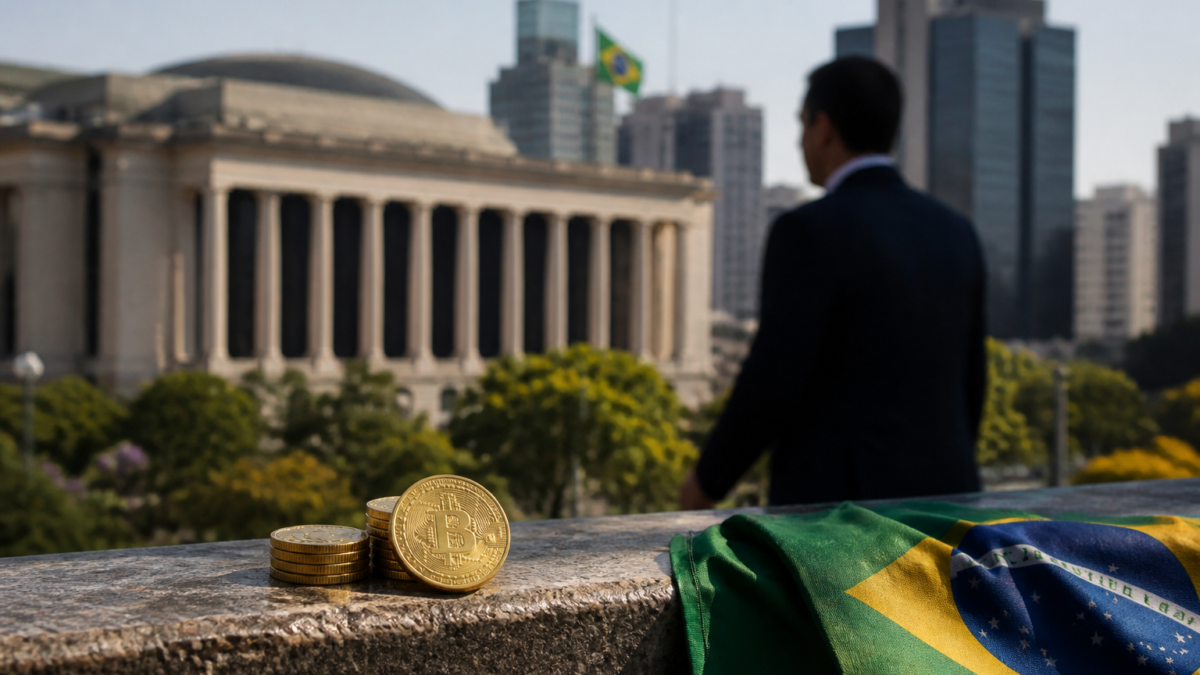
Brazil’s stablecoin market, especially for USD-pegged tokens like Tether (USDT) and USD Coin (USDC), has experienced explosive growth since 2017. According to the IMF’s 2026 Article IV and Financial Sector Stability Assessment, cross-border stablecoin inflows into Brazil now outstrip the pace of both conventional portfolio investment and foreign direct investment (FDI), as well as overall GDP growth. As of Q1 2025, global cross-border flows in Tether and USDC reached a staggering $316 billion, with Brazil counted among the top receiving countries.1 The rapid adoption reflects broader regional trends, but Brazil’s intensity is especially marked by its outsized role in stablecoin transactions compared to traditional financial flows.
IMF’s Core Concerns: Financial Stability and Regulatory Gaps
The IMF has raised multiple red flags about Brazil’s accelerating stablecoin activity. While the overall financial system remains stable, stablecoin flows exhibit two to three times more sensitivity to global financial shocks than traditional capital flows.2 A research working paper from the IMF reveals that a 1% exogenous rise in stablecoin net inflows could cause a 40-basis point increase in parity deviations, leading to currency depreciation and increasing dollar premiums in synthetic FX funding markets.3 These findings point to rising risks of currency substitution, heightened capital flow volatility, and challenges to both monetary policy and FX management.
Why Are Stablecoins Gaining Traction in Brazil?
The popularity of stablecoins is driven by a combination of domestic factors and global trends. Inflationary pressures and sporadic currency volatility have made USD-pegged stablecoins especially attractive to Brazilian individuals and entities seeking to preserve value or conduct international transactions with lower costs and greater speed. Functionally, these stablecoins now act as a conduit for dollar transfers rather than as speculative crypto assets.4 Despite the absence of official data confirming widespread business usage, anecdotal evidence and practitioner observations indicate expanding use beyond individual investors.
How Stablecoin Flows Compare to Traditional Capital Movements
| Metric | Traditional Capital Flows | Stablecoin Flows (USDT/USDC) |
|---|---|---|
| Growth trajectory | Moderate/linear | Exponential since 2017; outpaces capital flows |
| Sensitivity to global shocks | Lower | 2–3× higher |
| Effect on FX markets | Predictable, regulated channels | Elevates dollarization risk; can widen dollar premium |
| Volume (Q1 2025, global) | Varied (Brazil specifics not published) | ~$316B in USDT/USDC across emerging markets |
| Regulatory clarity | Comprehensive | In progress/gaps remain |
Source: IMF GFSR 2026, IMF FSSA
Brazil’s Policy and Regulatory Response to IMF Warnings
In response to rising concerns, Brazilian authorities have started supervising crypto-asset service providers (CASPs) with an initial focus on anti-money laundering (AML) compliance and FX-related risks. However, the IMF emphasizes that full legal and regulatory frameworks are still incomplete: outstanding issues include consumer asset protection, risk-based capital standards for CASPs, and targeted oversight of stablecoin issuance and cross-border payment schemes.5 The IMF explicitly calls for accelerated action to close these gaps, synchronize regulation with international Financial Stability Board (FSB) and Bank for International Settlements (BIS) standards, and improve data collection on stablecoin use and cross-border transactions.
Potential Macro-Financial Risks of Stablecoin Growth
The swift expansion of stablecoin use presents several macro-financial challenges for Brazil:
- Currency Substitution: Rapid uptake of USD-pegged stablecoins could undermine the effectiveness of domestic monetary policy through informal dollarization.
- Financial Stability: Stablecoin flows are unusually volatile and reactive to external financial shocks, potentially heightening systemic risk during periods of global turbulence.
- Capital Flow Volatility: Stablecoins can circumvent formal capital controls, creating new channels for unregulated cross-border movements.
- Fragmentation and Contagion: Multiple stablecoin platforms and limited interoperability complicate monitoring, amplifying contagion concerns in stress scenarios.4
Checklist: Steps for Regulators to Address Stablecoin Risks
- Establish comprehensive frameworks for licensing and supervision of CASPs
- Set customer asset protection and reserve requirements for stablecoin issuers
- Implement robust AML/CFT regulations for all crypto flows
- Enhance cross-border information exchange and regulatory cooperation
- Promote interoperability among payment systems to reduce fragmentation
- Improve data collection and reporting on stablecoin transactions and FX impacts
Adapted from: IMF Annual Report 2026
Brazil’s Stablecoin Market in a Global Context
The IMF stresses that Brazil’s experience is emblematic of broader emerging-market challenges. Stablecoin inflows into emerging markets have accelerated sharply, and while use in cross-border remittances remains modest, the trend presents new international financial vulnerabilities.6 The IMF urges international cooperation—especially standardization across jurisdictions—to help countries like Brazil manage capital flow volatility, FX pressures, and the increasing complexity of digital financial instruments.
Frequently Asked Questions
- How large is Brazil’s stablecoin market compared to traditional capital flows?
- Brazil’s cross-border stablecoin inflows have surpassed the growth rates of traditional capital flows and nominal GDP since 2017. While exact volumes are not fully published, IMF data shows that global cross-border USDT/USDC flows hit $316 billion as of Q1 2025, with Brazil among the top receiving countries.1
- What specific risks does the IMF highlight with stablecoin adoption in Brazil?
- The IMF points to heightened volatility (shock sensitivity), threats to monetary policy from currency substitution, risk of capital flow circumvention, and the challenges posed to oversight by the speed and cross-border nature of stablecoin transactions.4
- Are traditional financial stability risks materializing in Brazil yet?
- According to the most recent IMF Article IV report, no immediate financial stability impact is evident, but the rapid growth of stablecoin flows means risks could emerge quickly without adequate regulatory response.5
- What regulatory actions has Brazil taken so far on stablecoins?
- Brazilian authorities have begun supervising crypto-asset service providers, with an initial focus on AML compliance and FX risks, but comprehensive regulatory frameworks for stablecoin issuance and asset protection are still in progress.5
- Could a Brazilian central bank digital currency (CBDC) compete with stablecoins?
- As of September 2026, there is no official confirmation that Brazil is planning a CBDC launch. Any discussion of a state-backed digital currency as a competitor to stablecoins remains speculative pending official announcements.
- How can international standards help manage stablecoin risks?
- The IMF advocates aligning Brazil’s regulation of stablecoins and CASPs with global standards set by the Financial Stability Board and BIS. This would improve risk management, make cross-border enforcement easier, and limit regulatory arbitrage.6
- What should investors and users watch for in Brazil’s stablecoin environment?
- Stay alert to regulatory changes, monitor FX rate movements, and watch for announcements from the central bank or financial regulators regarding oversight, asset protection, and transparency measures.
Conclusion
Brazil’s surging stablecoin market has captured global attention and prompted explicit IMF warnings. While stablecoins offer notable benefits—faster, lower-cost cross-border transactions—they currently outpace traditional capital flows and show pronounced sensitivity to global shocks. The absence of finalized regulatory frameworks leaves the financial system exposed to risks of volatility, informal dollarization, and FX spillover effects. Addressing these vulnerabilities through comprehensive regulation, data sharing, and international standards will be crucial for Brazil to harness the advantages of digital finance while safeguarding market stability. Both policymakers and market users should prepare for rapid evolution as regulatory regimes catch up with the realities of Brazil’s digital economy in 2026.








Leave a Reply