
The Land Rover Defender is one of the most recognizable off-road SUVs in the world. It has a long history built around adventure, durability, exploration, and go-anywhere capability. Today’s Defender keeps that rugged personality but adds modern comfort, advanced technology, premium materials, and a wider range of models for different lifestyles.
For many buyers, the Land Rover Defender is not just a regular SUV. It is a vehicle with identity. It looks tough, feels premium, and carries a name that is closely connected with off-road travel. It can be used for city driving, family road trips, camping, towing, luxury travel, and challenging terrain depending on configuration.
The modern Defender is available in different body styles, including the compact Defender 90, the balanced Defender 110, the longer Defender 130, and the high-performance Defender OCTA. This gives buyers several ways to choose the right Defender for their needs, whether they want a stylish daily SUV, a family adventure vehicle, or a serious performance off-roader.
What Is the Land Rover Defender?
The Land Rover Defender is a premium SUV designed around off-road capability, practical design, and luxury comfort. It is part of the modern Defender family from Land Rover and is offered in different sizes and trims.
Unlike many luxury SUVs that focus mostly on comfort and road presence, the Defender is built with real off-road ability in mind. It includes features such as all-wheel drive, a twin-speed transfer box, Terrain Response, strong ground clearance, and advanced traction technology depending on model and trim.
At the same time, the Defender is also designed for modern daily use. It can include a large touchscreen, digital displays, premium audio, advanced safety features, comfortable seating, and upscale cabin materials. This combination of rugged capability and luxury convenience is what makes the Defender special.
Why the Land Rover Defender Gets Attention
The Land Rover Defender gets attention because it blends heritage with modern design. Many SUVs look rugged, but the Defender has a real history behind its image. It is associated with farms, expeditions, rescue work, remote travel, and adventure.
Another reason people search for the Defender is its unique styling. It does not look like a normal crossover. It has a boxy shape, upright stance, short overhangs, rear-mounted spare wheel, alpine-style roof details, and strong road presence. This makes it stand out in traffic.
The Defender also attracts buyers who want a luxury SUV that can do more than look premium. It can handle rough roads, mud, snow, sand, gravel, steep trails, and outdoor travel when properly equipped. For buyers who want style, comfort, and capability together, the Defender is a strong option.
Defender 90, Defender 110, and Defender 130
One of the most important parts of choosing a Land Rover Defender is selecting the right body style. The Defender family includes different sizes, and each one has a different personality.
Defender 90
The Defender 90 is the shortest version. It has a compact two-door body style and is the most classic-looking version for many enthusiasts. Because of its shorter length, it can feel more agile off-road and easier to maneuver in tight spaces.
The Defender 90 is best for buyers who want a stylish, personal, adventure-focused SUV rather than a large family vehicle. It has strong character and a unique look, but it is not the most practical choice for people who often carry rear passengers or lots of cargo.
Defender 110
The Defender 110 is the most balanced and popular version for many buyers. It has four doors, better rear-seat access, more cargo flexibility, and a more family-friendly layout.
For most shoppers, the Defender 110 is the sweet spot. It is large enough for daily use, road trips, and passengers, but it is not as long as the Defender 130. It still keeps the strong Defender shape while offering better practicality.
The Defender 110 is a good fit for families, outdoor travelers, and buyers who want one SUV that can handle both city life and weekend adventure.
Defender 130
The Defender 130 is the longest version. It is designed for buyers who need more passenger and cargo space. It can be a strong choice for larger families, group travel, or people who want maximum room inside the Defender lineup.
The Defender 130 gives up some compactness compared with the 90 and 110, but it adds useful space. It is better for road trips, luggage, third-row use, and passengers who need more room.
For buyers who love the Defender style but need a larger SUV, the Defender 130 is the practical choice.
Defender OCTA
The Defender OCTA is the high-performance and high-capability version of the lineup. It is built for buyers who want more power, more aggressive capability, and a more exclusive Defender experience.
The OCTA is not just about luxury. It is designed to push the Defender into a more serious performance category, with stronger engine output and advanced chassis technology depending on specification. It is for buyers who want the most extreme version of the modern Defender family.
Exterior Design
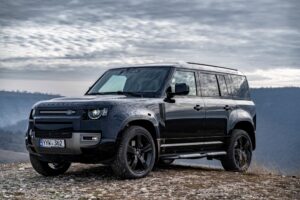
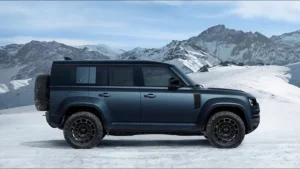
The Land Rover Defender has one of the most distinctive designs in the SUV market. Its boxy body, upright windshield, flat sides, short front and rear overhangs, and rear-mounted spare tire all help create a rugged and recognizable shape.
The design is modern but still connected to older Defender models. It does not look overly soft or overly sporty. Instead, it looks purposeful. The body shape suggests strength and utility, while the details make it feel premium.
The front design includes a strong grille area, modern lighting, and a wide stance. The side profile is simple and functional, with strong wheel arches and clean body panels. The rear design is especially recognizable because of the side-hinged tailgate and spare wheel mounted on the back.
Different trims and packages can change the Defender’s personality. Some versions look more refined and urban, while others look rugged and expedition-ready. Accessories such as roof racks, side ladders, external storage boxes, mud flaps, and off-road tires can make the Defender look even more adventure-focused.
Interior and Cabin Design
Inside, the Land Rover Defender combines rugged design with premium materials. The cabin does not feel like a traditional luxury SUV with delicate surfaces everywhere. Instead, it uses a functional and durable design style while still offering comfort and technology.
The dashboard is clean and horizontal, with grab handles, practical storage areas, and a strong structural look. This gives the interior a tough personality. Depending on trim, the Defender may include leather, textile materials, rubberized flooring, premium sound systems, heated and cooled seats, and advanced climate features.
One of the Defender’s strengths is that the interior feels ready for real use. It can feel premium, but it does not feel too fragile. This matters for buyers who travel with pets, kids, outdoor gear, muddy shoes, or camping equipment.
The Defender 110 and 130 offer better practicality for families, while the Defender 90 is more compact and personal. Buyers should choose the body style based on how often they carry passengers and cargo.
Technology and Infotainment
Modern Defender models include advanced technology to make daily driving and off-road travel easier. Land Rover’s official 2026 Defender information lists a 13.1-inch touchscreen among available or standard features depending on model and trim. The Defender also offers Pivi Pro infotainment, smartphone connectivity, available Meridian sound systems, navigation features, wireless charging, and connected services depending on configuration.
The touchscreen is important because many vehicle functions are controlled through the infotainment system. It supports navigation, media, phone integration, camera views, settings, and off-road information.
The Defender can also include 3D Surround Camera technology, which is useful both in parking lots and on trails. A large SUV with a high seating position benefits from camera assistance, especially when maneuvering near obstacles.
Off-Road Capability
Off-road capability is one of the main reasons people choose the Land Rover Defender. While many SUVs are designed mainly for paved roads, the Defender is built to handle challenging surfaces.
Depending on model and trim, the Defender includes all-wheel drive, a twin-speed transfer box, Terrain Response, hill descent control, electronic traction control, low-traction launch, and other systems designed to help in difficult conditions.
Terrain Response allows the driver to adjust the vehicle’s behavior for different surfaces. This can include settings for mud, sand, snow, rocks, or general off-road use depending on system version. The vehicle then adjusts throttle response, traction control, transmission behavior, and other systems to improve control.
The Defender’s body shape also helps off-road. Short overhangs improve approach and departure angles, especially on the Defender 90 and 110. Strong ground clearance helps the vehicle move over rough surfaces. Available air suspension can also improve ride height and comfort depending on configuration.
All-Wheel Drive and Twin-Speed Transfer Box
The Defender’s all-wheel-drive system is central to its capability. Unlike basic SUVs that are mostly front-wheel drive with occasional rear assistance, the Defender is designed with more serious traction needs in mind.
A twin-speed transfer box gives the Defender high and low range. Low range is useful in challenging off-road situations where slow, controlled movement is needed. This can include steep climbs, rocky trails, deep mud, or technical terrain.
For many buyers, these features may not be used every day. But they are part of what makes the Defender different from many luxury crossovers. The Defender is built for people who may actually leave paved roads.
Driving Experience on the Road
Although the Defender is known for off-road ability, most owners will spend most of their time on normal roads. The modern Defender is designed to be much more comfortable and refined than older rugged SUVs.
On highways, the Defender feels stable and confident. The seating position is high, giving the driver a strong view of the road. The cabin can feel quiet and comfortable, especially in higher trims. The steering is designed to feel controlled, and the suspension helps manage the Defender’s weight and height.
Because it is tall and boxy, the Defender will not feel like a low sports SUV. It has its own personality. It feels solid, upright, and strong rather than low and sharp.
In city driving, size matters. The Defender 90 is easier to maneuver, while the Defender 130 requires more care in tight parking spaces. The Defender 110 offers a good balance for many buyers.
Engine Options and Performance
Land Rover Defender engine options can vary by market, model year, body style, and trim. Common Defender engine families include four-cylinder, six-cylinder, V8, and high-performance V8 options depending on configuration and availability.
Lower-output engines may be enough for daily driving and basic SUV use. Six-cylinder versions usually provide stronger and smoother performance. V8 versions deliver more power, stronger acceleration, and a more emotional driving experience.
The Defender OCTA sits at the top of the performance range. It is designed for buyers who want more power and a more extreme version of the Defender.
Because engine availability changes by market and model year, buyers should check the exact local Land Rover configurator or dealer information before deciding.
Towing Capability
The Land Rover Defender can be a strong towing SUV when properly equipped. It is suitable for towing small campers, boats, trailers, and outdoor equipment depending on configuration.
Towing capacity depends on body style, engine, drivetrain, equipment, trailer setup, passengers, and cargo. Buyers should never rely only on general estimates. They should check the exact towing rating for the specific Defender they are considering.
The Defender’s strong chassis, all-wheel-drive system, and available towing technology can make it useful for people who need a luxury SUV that can also pull recreational equipment.
Defender Trims and Model Choices
The Defender lineup includes multiple trims and special versions depending on market and model year. Land Rover USA’s 2026 Defender 110 page shows trims such as Defender S, X-Dynamic SE, Defender X, Defender V8, and Trophy Edition depending on configuration. The same official page lists starting price for the 2026 Defender 110 S at $63,500.
Defender S
The Defender S is often a practical entry point into the lineup. It gives buyers core Defender design, capability, technology, and comfort without moving into the most expensive versions.
It is best for buyers who want the Defender experience but do not need the highest performance or luxury package.
Defender X-Dynamic SE
The X-Dynamic SE adds stronger styling, more premium details, and upgraded features. It is a good fit for buyers who want a Defender that feels more upscale and visually distinctive.
Defender X
The Defender X is a more premium and highly equipped version. It usually includes advanced features, upgraded interior materials, and stronger visual details. It is designed for buyers who want more luxury and capability in one package.
Defender V8
The Defender V8 is for buyers who want more power and a stronger emotional driving experience. It adds performance and exclusivity compared with lower-output versions.
Defender Trophy Edition
The Trophy Edition is designed around adventure styling and special-edition appeal. It may include unique colors, accessories, and details that connect to the Defender’s expedition image.
Defender OCTA
The OCTA is the high-performance flagship for buyers who want the most extreme modern Defender. It combines serious power with advanced capability and exclusive positioning.
Defender 90: Pros and Cons
The Defender 90 is the most compact and characterful version. It looks bold, feels unique, and offers a classic two-door SUV personality.
The main advantage is style and maneuverability. It is easier to place on trails and easier to park than larger Defenders. It also has a strong enthusiast appeal.
The downside is practicality. Rear-seat access is less convenient, cargo space is more limited, and it is not the best family choice. Buyers who regularly carry passengers may prefer the Defender 110.
Defender 110: Pros and Cons
The Defender 110 is the most balanced version. It has four doors, better rear-seat access, practical cargo room, and strong daily usability.
The main advantage is versatility. It works for families, commuters, road trips, outdoor adventures, and luxury SUV use. It is big enough to be practical but not as long as the Defender 130.
The downside is that it is less compact than the Defender 90 and less spacious than the Defender 130. Still, for most buyers, it is the best all-around choice.
Defender 130: Pros and Cons
The Defender 130 is the best choice for maximum space. It is longer and more useful for larger families or buyers who need more passenger room.
The main advantage is practicality. It offers more space for people and gear, making it better for road trips and group travel.
The downside is size. It is longer, harder to park, and less agile off-road than shorter versions. Buyers should consider where they drive most often.
Land Rover Defender vs Jeep Wrangler
The Jeep Wrangler is one of the Defender’s closest off-road rivals in spirit, but the two vehicles feel very different.
The Wrangler is more raw, removable-roof focused, and trail-oriented. It appeals to buyers who want a traditional off-road experience and strong aftermarket customization.
The Defender feels more premium and refined. It offers a more luxury-focused cabin, smoother road manners, and advanced technology while still keeping strong off-road ability.
The Wrangler may be better for buyers who want a more rugged and open-air off-road lifestyle. The Defender may be better for buyers who want capability with comfort and premium design.
Land Rover Defender vs Mercedes-Benz G-Class
The Mercedes-Benz G-Class is another luxury off-road icon. It has a long history, boxy styling, and strong status appeal.
Compared with the G-Class, the Defender is usually more accessible in price depending on trim and offers more body-style flexibility. The G-Class feels more exclusive and luxury-status focused.
The Defender may be more practical for buyers who want a modern adventure SUV with multiple size options. The G-Class may appeal more to buyers who want prestige, luxury, and iconic design above all else.
Land Rover Defender vs Toyota Land Cruiser
The Toyota Land Cruiser is known for durability, reliability, and global off-road reputation. It is often chosen by buyers who value long-term dependability and serious utility.
The Defender feels more premium and design-focused, while the Land Cruiser is often seen as more practical and reliability-focused. The better choice depends on buyer priorities.
If the goal is luxury, style, and technology with strong off-road capability, the Defender is attractive. If the goal is long-term rugged dependability and simpler ownership, the Land Cruiser may be more appealing.
Land Rover Defender vs Ford Bronco
The Ford Bronco is another rugged SUV with strong off-road identity. It offers removable roof options, trail-focused trims, and a more playful off-road personality.
The Defender is more premium and refined, while the Bronco is more lifestyle-adventure focused. The Bronco may appeal to buyers who want open-air fun and off-road customization. The Defender may appeal to buyers who want adventure capability with luxury comfort.
Is the Land Rover Defender Good for Families?
The Land Rover Defender can be good for families, especially in Defender 110 and Defender 130 form. These versions offer better rear-seat access, more cargo space, and more practical passenger layouts.
The Defender 110 is a strong choice for small or medium families who want a stylish SUV that can handle adventure and daily life. The Defender 130 is better for larger families or those who need more room.
Families should consider cargo needs, car-seat access, fuel costs, maintenance, and long-term ownership. The Defender is more expensive than many mainstream family SUVs, but it offers a more premium and adventurous experience.
Is the Land Rover Defender Good for Daily Driving?
Yes, the modern Land Rover Defender can be good for daily driving, especially for buyers who like a tall seating position, strong visibility, and a premium cabin.
The Defender 110 is often the best daily choice because it balances space and size. The Defender 90 is more compact but less practical. The Defender 130 is more spacious but larger to park.
Daily driving costs may be higher than a normal SUV because the Defender is a premium vehicle. Insurance, fuel, tires, maintenance, and repairs should all be considered.
Is the Land Rover Defender Good for Off-Road Driving?
Yes, off-road ability is one of the Defender’s strongest qualities. With AWD, Terrain Response, high/low range, strong clearance, and available off-road technology, the Defender is much more capable than many luxury SUVs.
However, buyers who plan serious off-road use should choose the right tires, wheels, protection accessories, and recovery gear. Even a capable SUV needs proper preparation.
For casual adventure travel, camping roads, snow, mud, and rough terrain, the Defender can be very confidence-inspiring.
Is the Land Rover Defender Expensive to Own?
The Defender is a premium SUV, so ownership costs can be higher than mainstream SUVs. Fuel, tires, insurance, maintenance, and repairs may cost more. Luxury features and advanced technology can also increase repair costs over time.
Buyers should think beyond the purchase price. A Defender may be affordable to buy for some shoppers but still expensive to own if maintenance and repair costs are not planned.
A certified pre-owned Defender may be attractive for some buyers, but warranty coverage and service history are important.
Pros of the Land Rover Defender
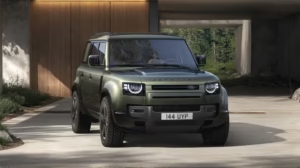
The Land Rover Defender has many strengths. It offers iconic design, serious off-road capability, multiple body styles, premium interior options, strong technology, and a unique personality.
It is one of the few SUVs that can feel at home in a city, at a luxury hotel, on a mountain road, or on a muddy trail. That versatility is a major part of its appeal.
The Defender also has strong customization potential with accessories, wheels, roof racks, storage solutions, and off-road equipment.
Cons of the Land Rover Defender
The Defender is not perfect for every buyer. It can be expensive to buy and own. Some versions may have limited fuel efficiency. The Defender 90 is not very practical for families, while the Defender 130 can feel large in tight spaces.
Luxury off-road vehicles can also have higher maintenance complexity than simpler SUVs. Buyers who want low ownership costs and simple long-term reliability may want to compare carefully.
Should You Buy a Land Rover Defender?
The Land Rover Defender is worth considering if you want a luxury SUV with real off-road capability, iconic styling, and a strong adventure personality. It is not the cheapest SUV and not the simplest to own, but it offers a unique combination of ruggedness and refinement.
Choose the Defender 90 if you want style, personality, and compact adventure appeal. Choose the Defender 110 if you want the best all-around balance. Choose the Defender 130 if you need more space. Choose the V8 or OCTA if you want more performance and exclusivity.
Before buying, compare body styles, trims, engines, warranty, dealer service, insurance cost, and real ownership needs. The best Defender is the one that matches how you actually drive.
Who Should Consider the Land Rover Defender?
The Land Rover Defender may be a good fit for:
Drivers who want a luxury off-road SUV
Buyers who like rugged and iconic design
Families considering Defender 110 or 130
Outdoor travelers and camping enthusiasts
People who drive in snow, mud, gravel, or rough conditions
Buyers comparing Jeep Wrangler, Ford Bronco, Toyota Land Cruiser, and Mercedes G-Class
Drivers who want a premium SUV with adventure capability
People who value style and personality in a vehicle
Who Should Avoid the Land Rover Defender?
The Defender may not be ideal for:
Buyers who want the lowest ownership cost
Drivers who never need off-road capability
People who want maximum fuel efficiency
Families needing a budget-friendly three-row SUV
Drivers who prefer a soft, car-like crossover
Buyers who want simple maintenance
People with very tight parking needs, especially for Defender 130
Buying Tips for the Land Rover Defender
Before buying a Land Rover Defender, start by choosing the right body style. The Defender 90 is stylish but less practical. The Defender 110 is the best all-around option for most buyers. The Defender 130 is better for space and family use.
Next, think about engine choice. A lower-output engine may be enough for daily driving, while a six-cylinder or V8 may better suit buyers who want stronger performance. For serious performance, the OCTA is the flagship choice.
Also consider how much off-road capability you truly need. Some buyers may only need the Defender’s standard capability. Others may benefit from off-road tires, air suspension, underbody protection, towing accessories, or roof storage.
Finally, check ownership costs. Premium SUVs can be expensive to maintain, so warranty, service history, dealer access, and repair budget all matter.
Frequently Asked Questions About the Land Rover Defender
Is the Land Rover Defender a luxury SUV?
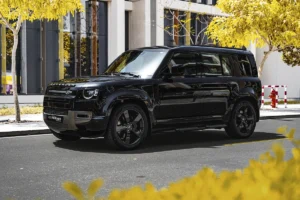
Yes, the modern Land Rover Defender is a luxury SUV with premium features, advanced technology, and strong off-road capability.
What is the difference between Defender 90, 110, and 130?
The Defender 90 is the shortest two-door model, the Defender 110 is the balanced four-door model, and the Defender 130 is the longer version with more passenger and cargo space.
Which Land Rover Defender is best?
For most buyers, the Defender 110 is the best all-around choice because it balances size, practicality, comfort, and capability.
Is the Land Rover Defender good off-road?
Yes, the Defender is one of the more capable luxury SUVs off-road, especially with AWD, Terrain Response, low-range gearing, and proper tires.
Is the Land Rover Defender good for families?
The Defender 110 and Defender 130 can be good for families. The Defender 90 is less practical because of its two-door body style and smaller cabin.
Is the Defender expensive to maintain?
The Defender is a premium vehicle, so maintenance and repair costs can be higher than mainstream SUVs. Buyers should plan for premium ownership costs.
Does the Defender have a third row?
Some Defender 110 and Defender 130 configurations may offer additional seating depending on market and trim. Buyers should check the exact configuration.
Is the Defender better than a Jeep Wrangler?
The Defender is more premium and refined, while the Wrangler is more raw and open-air off-road focused. The better choice depends on lifestyle and budget.
Is the Defender better than a Toyota Land Cruiser?
The Defender may feel more premium and stylish, while the Land Cruiser is often chosen for long-term dependability and practical ruggedness. Both are strong off-road SUVs.
Should I buy a Land Rover Defender?
You should consider the Defender if you want a premium SUV with iconic design, real off-road ability, modern technology, and strong personality.






Leave a Reply