
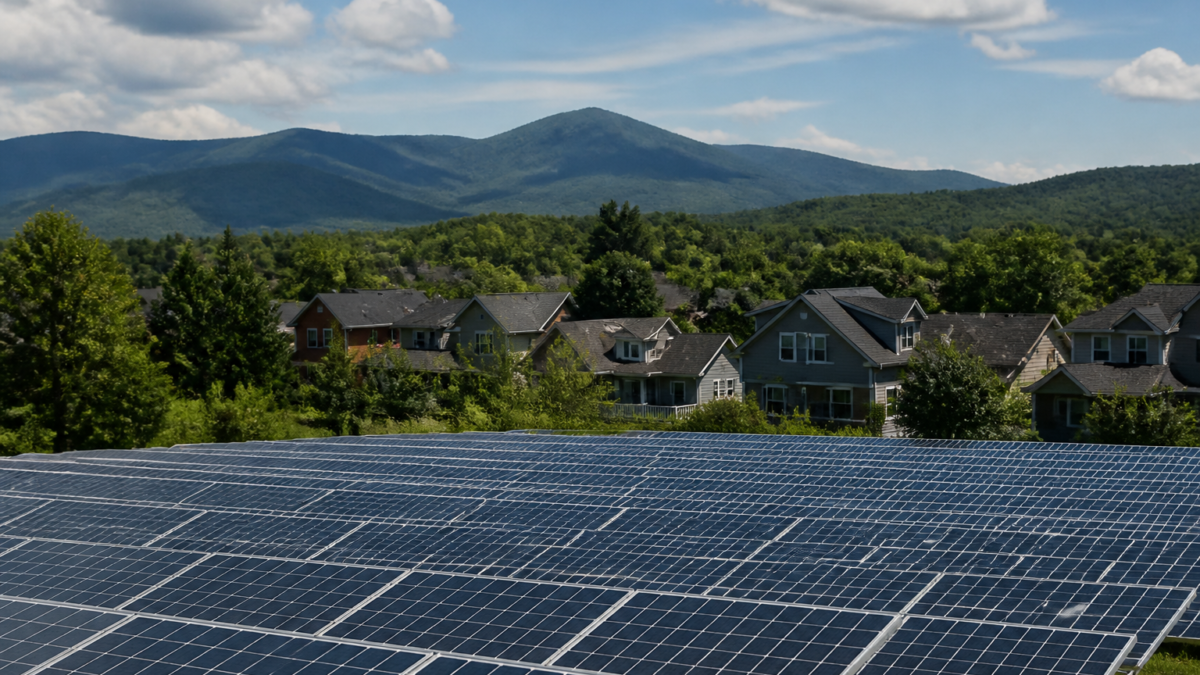
What is a virtual power plant?
A virtual power plant, or VPP, is not a single generating station. It is a network of smaller energy resources that can be coordinated through software and grid controls. Those resources may include home batteries, utility-scale battery systems, solar installations, electric vehicle chargers, smart thermostats, and other equipment that can adjust when it uses or supplies electricity.
When these resources are managed together, they can perform some of the same grid-support functions as a conventional power plant. A utility may draw on stored energy during a demand spike, delay charging until electricity is less expensive, or reduce the amount of power it needs to purchase from the regional market. The exact resources and operating rules vary by utility and program.
That distinction matters when describing Green Mountain Power’s system in Vermont. It is more accurate to call the VPP a coordinated energy-storage and demand-management network than to describe it as Vermont’s “largest energy source.” A VPP aggregates resources; it does not replace the state’s physical power-generation facilities or produce electricity in the same way as a hydroelectric plant, nuclear station, or solar farm.
How Green Mountain Power’s Vermont virtual power plant operates
Green Mountain Power, commonly known as GMP, has developed customer battery programs that allow participating households to receive backup power while giving the utility limited access to stored energy during selected grid events. GMP has described this growing network as a virtual power plant.
The basic process is straightforward:
- A customer receives or installs an eligible home battery system.
- The battery remains available to provide backup power for the home.
- During periods of high electricity demand, GMP can coordinate participating batteries under the terms of the customer’s program.
- The batteries may discharge some stored energy, reducing the amount of electricity GMP needs to obtain from the wider grid.
- After the event, the system can recharge when conditions allow and when doing so will not compromise the customer’s backup needs.
GMP has also reported using utility-scale batteries and other controllable equipment as part of its broader distributed-energy strategy. In an April 2024 announcement, the company said its residential and utility-scale storage network represented about 50 megawatts of energy storage at that time. Capacity, enrollment, eligible equipment, and program terms can change, so customers should review GMP’s current information rather than rely on older figures.
What resources can participate?
Home batteries are the most visible part of GMP’s VPP programs. They can store electricity from the grid or, in some cases, from a customer’s solar system. During an outage, the battery can provide backup power for selected household loads, depending on the equipment, installation, and the customer’s configuration.
GMP’s Bring Your Own Device program allows eligible customers to purchase a compatible battery through an installer of their choice and enroll it for grid participation. The company’s current program information lists several eligible systems, but the approved equipment list should be checked before purchasing because compatibility requirements may be updated.
GMP also offers a separate energy-storage option in which customers can lease battery equipment through the utility’s program. Availability, pricing, installation timing, and other conditions may vary. The utility’s program pages explain that customers agree to share access to some stored energy during peak periods in exchange for program benefits and backup capability.
In addition to batteries, VPPs in general may coordinate devices such as electric vehicle chargers, smart water heaters, heat pumps, or commercial energy systems. Whether a specific device participates in GMP’s current VPP operations depends on the utility’s program design and technical controls.
Why peak demand matters to electricity customers
Electricity demand is not constant throughout the day or year. Hot summer afternoons and evenings can create sharp increases as homes and businesses use air conditioning. Winter cold snaps can also produce significant demand when electric heating systems operate at the same time.
Meeting those short periods of unusually high demand can be expensive. A utility may need to buy additional power in regional markets, operate higher-cost resources, or pay charges connected to system peaks. Reducing demand for even a limited period can therefore have value beyond the individual household providing the battery.
A coordinated battery fleet gives the utility another option. Instead of meeting every peak entirely with power purchased from the regional grid, GMP can use a portion of the energy already stored in participating systems. This does not eliminate the need for transmission, generation, or grid purchases, but it can reduce the amount required during selected events.
How customers participate in GMP programs
Customers considering participation should begin with the current program requirements on GMP’s website. The BYOD program generally requires an eligible battery, an approved communications connection, and an installation that meets the utility’s technical conditions.
Participants may need to choose an installer, confirm that the proposed battery is eligible, and review the agreement governing battery access. The amount of energy a customer makes available can affect the incentive. GMP’s published BYOD information has described incentives based on the amount of battery capacity enrolled and the duration of the discharge commitment. Some systems or locations may qualify for different terms.
Participation does not mean the utility can continuously drain a customer’s battery. Program rules are designed around specific peak events and backup-power requirements. GMP states that it takes steps to preserve backup energy when severe weather is likely to create outage risk. Even so, prospective participants should read the current terms carefully and ask the installer or utility how the controls work in practice.
Customers should also consider costs that may fall outside the incentive itself, including equipment, installation, electrical upgrades, maintenance, financing, insurance, and possible communications or service fees. A rebate or bill credit does not automatically mean a battery will pay for itself. The financial outcome depends on the customer’s equipment, usage, outage priorities, available incentives, and contract terms.
What are the reported savings?
GMP has publicly reported that its battery programs have reduced costs for all utility customers. In an August 2023 announcement, the company said its stored-energy network had saved customers up to $3 million per year in recent years. In an April 2024 announcement, GMP separately said a frequency-regulation pilot had saved all customers about $500,000 during the preceding year.
A later report about a Vermont heat wave cited an estimated $6 million in savings associated with the virtual power plant. That figure should be treated as a reported estimate rather than a universal or independently verified result unless GMP or a regulatory filing provides the underlying calculation. Savings can depend on the timing of the event, wholesale electricity prices, the amount of energy discharged, avoided peak charges, and the costs assigned to the program.
For that reason, a careful explanation should distinguish between:
- Customer-level benefits: backup power, program incentives, or bill credits.
- Utility-system benefits: reduced purchases during expensive periods and possible grid-services revenue.
- Estimated system savings: calculations based on what the utility believes it avoided spending during a particular event or period.
These categories are related but not interchangeable. System-wide savings do not mean that every participating or nonparticipating customer receives the same dollar amount directly on a bill.
Reliability and environmental considerations
Home batteries can improve resilience for participating households, especially during brief outages or disruptions. They may also help utilities manage variable renewable generation by storing electricity for later use. However, batteries are not a complete substitute for generation, transmission, or distribution upgrades. Their usefulness depends on available capacity, state of charge, local grid conditions, and the length of an outage or peak event.
The climate benefits also require qualification. A battery is not automatically emissions-free simply because it is part of a VPP. The environmental result depends partly on how the battery is charged and what electricity it displaces when it discharges. Batteries charged with renewable electricity may provide different emissions benefits than batteries charged from a more carbon-intensive grid mix.
Why Vermont’s approach is attracting attention
GMP’s programs are notable because they connect customer resilience with utility planning. A household receives backup capability, while the utility gains access to a distributed resource that can help during selected periods. This “shared” model is one reason utilities and energy researchers have shown interest in VPPs.
Other utilities are testing similar approaches, but programs differ widely. Some focus on residential batteries, while others coordinate electric vehicles, smart appliances, commercial loads, or solar-plus-storage systems. Differences in electricity markets, utility regulation, customer demographics, and local weather make it difficult to copy one program exactly in another state.
Vermont’s experience may still offer useful lessons: clear customer agreements, reliable communications, protection for backup reserves, transparent savings calculations, and fair treatment of customers who do not own batteries are all important to long-term adoption.
What to watch next
The future of GMP’s virtual power plant will depend on enrollment, battery availability, software performance, regulatory approval, and customer confidence. The utility may add more eligible equipment or develop additional uses for stored energy, such as regional grid services or support during renewable-generation fluctuations.
For readers evaluating the program, the most important questions are practical: What equipment qualifies today? How much energy must be shared? What happens before a forecasted storm? What are the installation and ongoing costs? How are incentives calculated? And where can customers find the current terms?
Virtual power plants are best understood as a flexible grid tool—not as a single new power station. GMP’s Vermont programs show how batteries located in homes and other facilities can work together to support reliability and manage peak demand. The approach is promising, but its costs, benefits, and environmental impact should be evaluated using current program documents and transparent methodology rather than broad promotional claims.
Sources and further reading
- Green Mountain Power: Bring Your Own Device program
- Green Mountain Power: Home energy storage program
- Green Mountain Power: Stored energy and the 2024 eclipse
- Green Mountain Power: Expansion of home battery access
- Original report referenced for the heat-wave savings claim
Frequently asked questions
Is a virtual power plant a physical power plant?
No. A VPP is a coordinated network of distributed resources. It can provide some grid services, but it is not a single generating facility.
Do GMP battery customers lose backup power during peak events?
Program rules are designed to preserve backup capability, but the exact controls and requirements depend on the customer’s agreement and equipment. Review the current terms before enrolling.
Can any home battery join the BYOD program?
No. GMP maintains an eligibility and compatibility process. Customers should confirm the current approved-equipment list before buying or installing a battery.
Does the VPP guarantee lower electric bills?
No. The program may reduce system costs and offer incentives or credits, but individual results vary. Equipment and installation costs must also be considered.

Leave a Reply