
Reviewed for accuracy as of September 24, 2026.
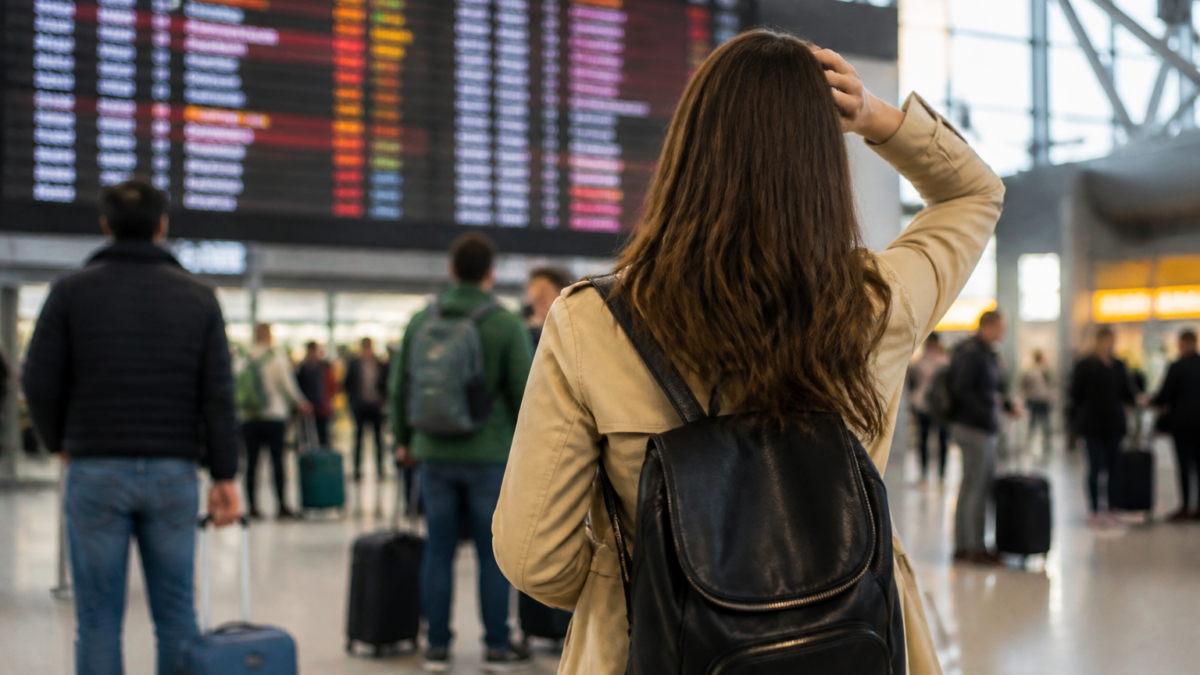
Flight delays and baggage issues remain top concerns for US travelers in 2026. Fortunately, the Department of Transportation (DOT) now provides public, up-to-date airline and airport performance reports, allowing passengers to make informed decisions before booking. If you’re planning a trip, it’s no longer just about finding the cheapest ticket — understanding an airline’s delay likelihood, baggage mishandling rates, and customer complaint trends can help you avoid costly headaches. This guide breaks down the most recent delay and baggage data, offers a comparison of major US carriers, and explains what to look for before locking in your flight plans [source].
Quick Summary
- Most recent DOT data shows 77.6% of US domestic flights arrived on time, with an average 73-minute delay on late flights and cancellations at 1.81% for July 2025–June 2026 [source].
- Baggage mishandling rates improved slightly in 2026, but major differences remain between airlines [source].
- DOT’s monthly Air Travel Consumer Report (ATCR) makes it easy to compare airlines and airports on reliability and customer complaints [source].
- Smart planning can reduce—but not eliminate—the risk of severe delays, missed connections, and lost baggage.
Table of Contents
- Why Airline Performance Reports Matter
- US Airlines: Delay & Baggage Comparison Table 2026
- Traveler’s Checklist: What to Check Before Booking
- How to Reduce Flight Delay and Disruption Risk
- Baggage Advice for 2026 Travelers
- FAQ
- Final Thoughts
Why Airline Performance Reports Matter
Price alone tells only part of the story. A bargain fare can become expensive if your flight is delayed overnight, your bag is lost, or a cancellation ruins important travel plans. The US DOT publishes the monthly Air Travel Consumer Report (ATCR), which includes detailed, up-to-date statistics on flight on-time performance, cancellation rates, mishandled baggage, and consumer complaints.
This data empowers travelers to compare not just prices—but real-world reliability and service performance, airline by airline, route by route [source].
US Airlines: Delay & Baggage Comparison Table 2026
| Carrier | On-Time (%) | Cancellation Rate (%) | Baggage Mishandling Rate† |
|---|---|---|---|
| Allegiant | ~80.2 | 1.38 | 0.12 per 100 bags |
| Southwest | ~78.4 | 1.66 | 0.35 per 100 bags |
| Delta | ~79.5 | 1.20 | 0.43 per 100 bags |
| United | ~75.1 | 2.23 | 0.79 per 100 bags |
| American | ~74.8 | 2.31 | 0.81 per 100 bags |
†Mishandled baggage rates are for July 2026, per latest DOT data [source].
On-time and cancellation rates are rounded from DelayAtlas, July 2025–June 2026 [source].
Traveler’s Checklist: What to Check Before Booking
| What to Check | Why It Matters |
|---|---|
| On-Time Performance | Helps gauge the likelihood of arriving as scheduled. |
| Cancellation Rate | Especially vital for time-sensitive travel (business, weddings, cruises). |
| Baggage Policy & Mishandling Rate | Impacts cost, convenience, and risk of bag delays/loss. |
| Refund/Credit Rules | Matters if your trip may change or is disrupted. |
| Connection Time | Short layovers raise missed connection risk, especially after delays. |
| Airport Options | Certain airports offer more backup flights and fewer delays [source]. |
How to Reduce Flight Delay and Disruption Risk
No planning can guarantee a delay-free trip. However, travelers can minimize risks with careful choices and realistic expectations:
- Compare Delay and Cancellation Data: Review an airline’s performance on your specific route using the latest ATCR or tools like DelayAtlas [source].
- Consider Flight Timing: Early-morning departures often face fewer initial delays, but this is travel wisdom rather than DOT-verified data.
- Nonstop vs. Connecting: Choosing nonstop flights reduces the risk of missed connections; when connecting, allow extra time for potential delays.
- Backup Plans: At major hubs, there are often more rebooking options if something goes wrong [source].
- Arrive Early for Crucial Events: For must-attend activities, arrive a day early when possible.
Baggage Advice for 2026 Travelers
- Carry-on Essentials: Keep medicines, documents, chargers, and valuables in your personal item rather than checked luggage.
- Photos & Documentation: Take clear photos of your bag and contents before check-in to simplify claims.
- Review Size/Weight Policy: Verify restrictions to avoid unexpected fees.
- Consider Luggage Trackers: GPS or Bluetooth trackers may help locate misplaced bags.
- Save Receipts: If your bag is delayed, keep receipts for emergency purchases—airlines may reimburse reasonable expenses.
- Know Claim Process: Report delayed or lost bags to the airline immediately; retain your claim number and follow up promptly [source].
Frequently Asked Questions
Should I always book the cheapest available flight?
Not necessarily. Lower fares may involve higher baggage fees, poor on-time records, or risky connections. Consider total expected costs and reliability using DOT and DelayAtlas data [source].
Are nonstop flights always better?
Nonstop flights avoid connection risk, which can be valuable if delays occur. However, they are sometimes more expensive, and not all routes offer this option. Evaluate your priorities and the likelihood of delays on each leg.
What should I do if my bag is mishandled?
Immediately report it to airline staff at the airport, keep your baggage claim number, and document the situation. Save receipts for essentials, as airlines may reimburse reasonable expenses [source].
Is travel insurance worthwhile for flight delays?
It depends on your personal risk tolerance, itinerary complexity, and the insurance provider’s definition of “delay” or “missed connection.” Review the policy carefully to ensure it covers the disruptions most concerning to you.
How can I check an airline’s performance for a specific route?
DOT’s ATCR site and DelayAtlas.com let you search for up-to-date performance data by airline, flight number, or route [source]. Some travel booking engines also now highlight these statistics.
What are the top reasons for delays?
The most common causes, per DOT, are late-arriving aircraft, weather, and air traffic congestion. Some factors (like staffing or technical problems) are airline-controlled, while others are outside their control [source].
Are airport differences significant?
Yes. Data shows some hubs experience far fewer major delays and cancellations than others—especially during peak travel months. Investigate alternatives in metropolitan areas before booking [source].
Final Thoughts
Flight delays and baggage issues are an unfortunate reality in U.S. air travel even in 2026, but travelers are far better equipped to minimize disruptions with data now widely available from the DOT and independent platforms. When planning your next trip, go beyond price: compare airlines on their recent on-time records, cancellation risk, and baggage mishandling rates. Set realistic expectations, prepare for contingencies, and use travel tools or trackers to mitigate common pitfalls. With a proactive approach, you can significantly lower the odds of costly or stressful surprises at the airport.
Sources: U.S. Department of Transportation (DOT) ATCR, DelayAtlas.com, NomadLawyer.org, Kiplinger Travel, Travel Market Report.










Leave a Reply