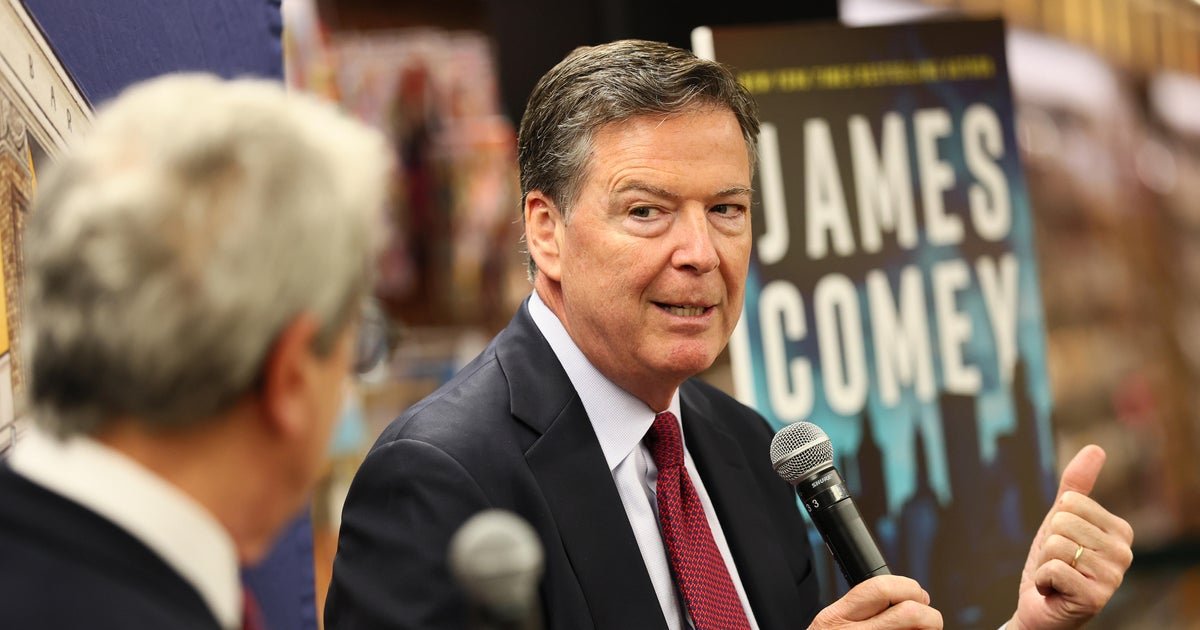
James Comey Seeks Dismissal of Charges Linked to Instagram Post
Former FBI Director James Comey has formally requested that a federal judge dismiss criminal charges stemming from a controversial Instagram post. The legal challenge centers on a photograph uploaded by Comey that features a collection of seashells, which has sparked legal scrutiny and highlighted ongoing debates about the boundaries of free speech in the political realm.
The Controversial Post: Context and Content
In early August, Comey took to Instagram to share a seemingly innocuous image of seashells displayed alongside a lighthearted caption. However, what was intended as a personal reflection quickly morphed into a legal quandary, as federal authorities initiated an investigation into the post. Critics have alleged that the imagery could imply an endorsement or promotion of behaviors considered illicit as they relate to Comey’s previous roles in law enforcement and government.
Comey’s attorneys argue that the charges are an infringement on his First Amendment rights, claiming that the post represents the essence of personal expression. With a public career defined by his leadership of the FBI and as a prominent figure in several high-profile investigations, Comey’s message takes on significant weight amid an increasingly polarized political landscape.
A Complex Legal Landscape
The legal arguments surrounding Comey’s request to drop the charges underscore profound implications for political discourse in the United States. In a motion filed with the United States District Court, Comey’s defense asserts that the criminal allegations embedded in the case are unfounded and threaten not only his rights but also broader freedoms of expression.
- First Amendment Protections: Comey’s defense centers on the First Amendment, asserting that the government should not penalize individuals for expressing thoughts and opinions, even when those expressions may invoke controversy or debate.
- Precedents in Political Speech: Legal experts point out that previous court rulings have reinforced the idea that political speech, including social media expressions, often receives robust protection under U.S. law.
Public Reaction and Political Implications
The incident has ignited a firestorm of public interest, drawing attention from both supporters and critics of Comey. Advocates for free speech herald his stance as a critical pushback against government overreach, while detractors question the appropriateness of his actions given his prior governmental position.
“This case represents a test of our commitment to the principle that speech, no matter how polarizing or disruptive, must be allowed to flourish in a democracy,” asserted legal analyst and First Amendment expert, Sarah Mitchell. “If the government can penalize individuals for social media posts, that sets a dangerous precedent.”
Comey’s Legacy and Ongoing Saga
James Comey’s trajectory has been anything but conventional. His time as FBI Director, significantly marked by the investigations into former President Donald Trump’s campaign and the handling of the Clinton email probe, has created a legacy rife with tension, controversy, and sustained scrutiny. As a public figure who has often found himself at the nexus of critical political developments in recent years, Comey’s social media efforts are viewed through a complex lens.
Moreover, following his dismissal by Trump in May 2017, Comey has been vocal about issues relating to accountability, governance, and civil liberties, often leveraging forums such as social media to share his insights. This latest incident only serves to heighten the focus on his commitment to those ideals, inviting further analysis and conjecture about his motivations and the implications of his actions.
Next Steps in the Case
As the legal proceedings unfold, the outcome remains uncertain. The case will likely raise critical questions about what constitutes protected speech versus potential legal violations. Comey’s team is expected to argue vigorously for the charges to be dismissed on First Amendment grounds, asserting that any legal action in response to the post undermines fundamental democratic principles.
The scheduled hearing to consider Comey’s motion is anticipated to draw considerable media attention, with implications that could extend far beyond the individual case to define the contours of free speech and political expression in America.
Conclusion
The case against James Comey serves as a reminder of the intricate ties between personal expression, legal boundaries, and political accountability. Whether the courts will side with Comey’s assertion of free speech rights will not only impact his own future but may also set a significant benchmark for how political figures engage with the public in the digital age. As the legal battle progresses, observers will closely watch both the courtroom dynamics and the broader implications for freedom of expression in the ever-evolving landscape of American political discourse.
Source: Original Source
About The Author