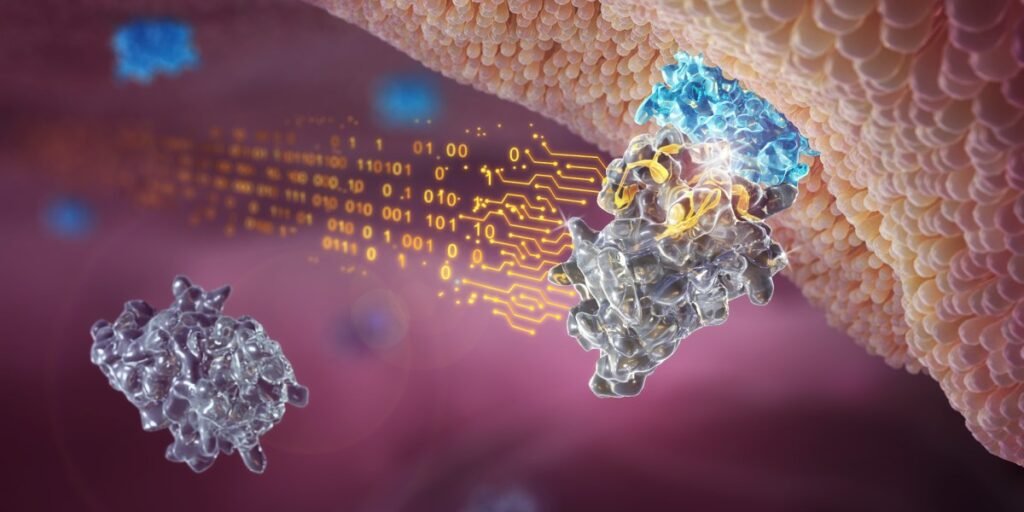
Revolutionizing Pharmaceuticals: How AI Is Paving the Way for Next-Generation Medicines
In the world of medicine, the journey from laboratory bench to bedside is fraught with challenges. The development of new drugs is a lengthy, complex process that can take years and costs billions, and the odds of any candidate making it to market are slim. However, advancements in artificial intelligence (AI) are beginning to reshape this landscape, guiding scientists and researchers toward a future where designing effective, biologic medicines will be faster, cheaper, and more efficient than ever.
The Cost of Drug Development
The pharmaceutical industry is notorious for its high costs and dismal failure rates. According to a report by the Tufts Center for the Study of Drug Development, developing a new medicine can cost upwards of $2.6 billion and take an average of 10 to 15 years from concept to market. These figures underscore the necessity for innovation in drug development methods.
Despite the significant investments made, approximately 90% of drugs that enter clinical trials will fail, leaving researchers and investors in a precarious position. This reality is particularly pronounced in biologic medicines, which utilize engineered proteins and living organisms to provide treatment rather than relying on traditional synthetic chemistry. As treatments for various diseases evolve, including those targeted at complex conditions such as cancer and autoimmune disorders, the need for efficient and effective drug design becomes paramount.
AI’s Role in Drug Discovery
Artificial intelligence serves as a transformative tool in the realm of drug discovery, employing machine learning algorithms to analyze vast datasets that would be unmanageable for human researchers. Here’s how AI assists scientists in crafting the next generation of medicines:
1. Data Analysis and Pattern Recognition
AI can rapidly sift through large datasets comprising biological, chemical, and clinical information to identify patterns and correlations. By analyzing molecular structures, patient data, and clinical trial outcomes, AI can pinpoint promising drug candidates faster than traditional methods.
2. Predictive Modeling
Machine learning models can predict how a potential drug will interact with a target protein, helping scientists prioritize candidates that have a higher likelihood of success. This predictive capability extends to understanding side effects and the most effective dosages, enhancing the safety profile of new drugs.
3. Accelerating the Clinical Trial Process
AI can optimize patient recruitment for clinical trials by analyzing patient databases to find suitable candidates. Furthermore, AI algorithms can monitor patient responses in real-time, enabling swift adjustments in trial protocols and improving the chances of obtaining valid results in less time.
Real-World Applications of AI in Biologic Medicines
Several pharmaceutical companies and biotech startups are already leveraging AI to develop biologic medicines. Below are a few notable examples:
DeepMind and AlphaFold
DeepMind’s AlphaFold has made significant strides in predicting protein structures, a crucial aspect of drug design. By understanding how proteins fold and interact, researchers can design biologics that target specific pathways in diseases.
BenevolentAI
BenevolentAI utilizes AI-driven insights to speed up the drug discovery process, particularly for diseases with high unmet medical needs such as neurodegenerative disorders. Their platform analyzes scientific literature and existing clinical data to identify potential drug candidates rapidly.
Insilico Medicine
Insilico Medicine employs generative adversarial networks (GANs) to create novel molecules from scratch. This technology reduces the time required in the early stages of drug discovery, allowing researchers to focus on the most promising candidates quickly.
The Challenges Ahead
While the use of AI in drug discovery presents remarkable opportunities, several challenges remain:
- Data Quality: AI’s predictions are only as good as the data it analyzes. Incomplete or biased datasets can lead to erroneous conclusions.
- Regulatory Hurdles: Regulatory bodies must adapt to the rapid developments in AI, creating frameworks for how these technologies can be integrated into drug approval processes.
- Ethical Concerns: The implementation of AI in drug development raises ethical questions regarding data privacy and the reliance on algorithms for critical health decisions.
The Future of AI in Medicine
As AI continues to evolve and refine its applications in drug design, we stand on the brink of a transformative era in pharmaceuticals. The integration of AI not only promises to make drug development more efficient but also has the potential to democratize access to innovative treatments, ultimately improving patient outcomes.
In conclusion, as hurdles in drug development are gradually dismantled through AI innovation, the future of medicine looks incredibly promising. With continued investments and advancements in AI technology, the dream of developing effective, safe, and affordable biologic medicines is increasingly becoming a reality.
Source & Original Coverage: Original Publisher