Digital marketing strategy: what it is and why it matters
Digital marketing is the practice of planning and coordinating online channels such as search, paid ads, content, analytics, and partner growth to reach an audience with a clear business goal. A strong strategy does not try to do everything at once. It chooses the right mix of channels, sets measurable goals, and uses data to improve decisions over time. Google’s Search Central guidance emphasizes creating helpful, reliable, people-first content and building pages that search engines can discover and render correctly, which reinforces that quality and technical execution both matter in SEO. Google Ads policies also make clear that advertising must comply with platform rules and avoid deceptive or manipulative practices. ([developers.google.com](https://developers.google.com/search/docs/fundamentals/creating-helpful-content?domain=hubspot.com&utm_source=openai))
Where SEO, PPC, content, analytics, and affiliate growth fit
These channels work best as a system. SEO helps your site become discoverable in organic search, while PPC can place offers in front of people faster, as long as the ads and landing pages follow platform policies. Content gives both SEO and PPC something useful to point to, and analytics tells you whether people are engaging, converting, or leaving. Google’s documentation recommends using Search Console and Google Analytics together to evaluate SEO performance, which is a practical reminder that channel decisions should be based on shared measurement rather than isolated dashboards. ([developers.google.com](https://developers.google.com/search/docs/monitor-debug/google-analytics-search-console?utm_source=openai))
What works well, and what can go wrong
SEO: Often the most durable source of discovery, especially when your pages are useful, technically accessible, and aligned with search intent. The downside is that SEO can take time, and it may underperform if the site has weak content, poor page experience, or rendering/indexing problems. Google notes that websites relying on JavaScript need to be rendered properly for Search to see all content. ([developers.google.com](https://developers.google.com/search/docs/fundamentals/how-search-works?utm_source=openai))
PPC: Useful when you need faster visibility, testing, or targeted promotion. The downside is that paid results require budget discipline, clear landing pages, and policy compliance. Google’s Ads policies prohibit practices such as cloaking, traffic manipulation, and gateway-style pages designed mainly to send users elsewhere. ([support.google.com](https://support.google.com/adspolicy/answer/6008942?hl=en&utm_source=openai))
Content: Good content can support SEO, nurture prospects, and improve ad landing pages. The downside is that publishing without a distribution and measurement plan often produces little business impact. Search Engine Journal’s recent coverage of integrated search planning reflects a broader industry view: content performs better when SEO and PPC teams align on the same brief and KPI framework. ([searchenginejournal.com](https://www.searchenginejournal.com/the-integrated-search-brief-that-aligns-seo-ppc-content-in-the-ai-search-era/575028/?utm_source=openai))
Affiliate and publisher growth: These can extend reach by letting partners promote your products or content. The upside is audience expansion without building every channel alone. The risk is quality control: unclear disclosures, thin partner pages, or low-value placements can damage trust. For publisher-oriented campaigns, Google’s advertising policies still apply to the destination and the promotion. ([support.google.com](https://support.google.com/adspolicy/answer/6008942?hl=en&utm_source=openai))
A practical digital marketing process
- Set one primary business goal. Examples include qualified leads, online sales, demo requests, newsletter signups, or content subscriptions.
- Map the funnel. Decide which channel is best for awareness, consideration, and conversion.
- Build a measurement base. Use analytics, Search Console, and tagged URLs so you can compare channels on the same terms. Google explicitly recommends combining Analytics and Search Console data for SEO analysis. ([developers.google.com](https://developers.google.com/search/docs/monitor-debug/google-analytics-search-console?utm_source=openai))
- Create helpful pages first. Focus on search intent, clear headings, and useful answers instead of trying to force keywords into every page. Google’s guidance favors people-first content over pages made to manipulate rankings. ([developers.google.com](https://developers.google.com/search/docs/fundamentals/creating-helpful-content?domain=hubspot.com&utm_source=openai))
- Use PPC for testing. Paid campaigns are valuable for testing messaging, offers, and landing-page hypotheses before you scale content or SEO bets.
- Review policy compliance. Check ad copy, claims, landing pages, disclosures, and partner placements against official platform rules before launch. ([support.google.com](https://support.google.com/adspolicy/answer/6008942?hl=en&utm_source=openai))
- Iterate on evidence. Keep what supports your goal, reduce what does not, and revisit page quality, conversion paths, and audience fit regularly.
Alternatives and complements
If your budget is tight, a content-led SEO strategy may be a sensible starting point, provided you accept slower results. If you need immediate demand capture, PPC can complement SEO instead of replacing it. If you already have an audience, email, community, and partnerships can reduce dependence on any single source. Search Engine Journal’s strategy coverage reflects this broader principle: digital marketing tends to work best when channels are coordinated rather than treated as separate projects. ([searchenginejournal.com](https://www.searchenginejournal.com/digital-marketing-strategy/480782/?utm_source=openai))
Who this approach is for
This kind of integrated digital marketing strategy is most useful for small businesses, in-house marketing teams, agencies, publishers, and affiliate operators that need a repeatable system for growth. It is also a good fit for teams that want clearer attribution and fewer guesswork-driven decisions. It is less suitable for anyone expecting instant, guaranteed results. No channel can promise rankings, traffic, approval, or ROI on its own. ([developers.google.com](https://developers.google.com/search/docs/monitor-debug/google-analytics-search-console?utm_source=openai))
Concise decision checklist
- Do we have one primary goal and one or two secondary goals?
- Can we measure traffic, engagement, and conversions in one shared reporting view?
- Are our pages genuinely useful to users, not just built to chase rankings?
- Do our ads and landing pages follow platform policies?
- Are SEO, PPC, and content aligned around the same audience and offer?
- Do we have a plan for affiliate or publisher partners, including quality control and disclosure?
- Have we defined what we will stop doing if the data does not support it?
For most teams, the best digital marketing strategy is not a single tactic. It is a disciplined mix of helpful content, technically sound SEO, selective PPC, solid measurement, and carefully managed partner growth.
Frequently Asked Questions
FAQ
What is the most important part of digital marketing?
The most important part is matching a clear business goal with the right channel mix and measurement plan. Without that, even good content or ads can be hard to evaluate.
Should I start with SEO or PPC?
It depends on your timeline and budget. SEO is often better for long-term discovery, while PPC is useful for faster testing and visibility. Many teams use both.
How do analytics fit into digital marketing?
Analytics helps you understand which pages, campaigns, and audiences are contributing to your goal. Google recommends combining Search Console and Analytics data for SEO evaluation.
Are affiliate and publisher strategies safe to use?
They can be effective if the partners are relevant, the disclosures are clear, and the campaigns follow platform rules. Avoid low-quality placements or deceptive promotion.
Can digital marketing guarantee results?
No. Results depend on competition, execution, budget, timing, and compliance. A strategy can improve your odds, but it cannot guarantee rankings, traffic, or revenue.
Sources and Further Reading
- developers.google.com
- developers.google.com
- developers.google.com
- support.google.com
- www.searchenginejournal.com
Editorial note: This article was prepared using live web research and public sources. Policies, prices, availability, health information, and platform interfaces may change. Verify important details with the relevant official source.
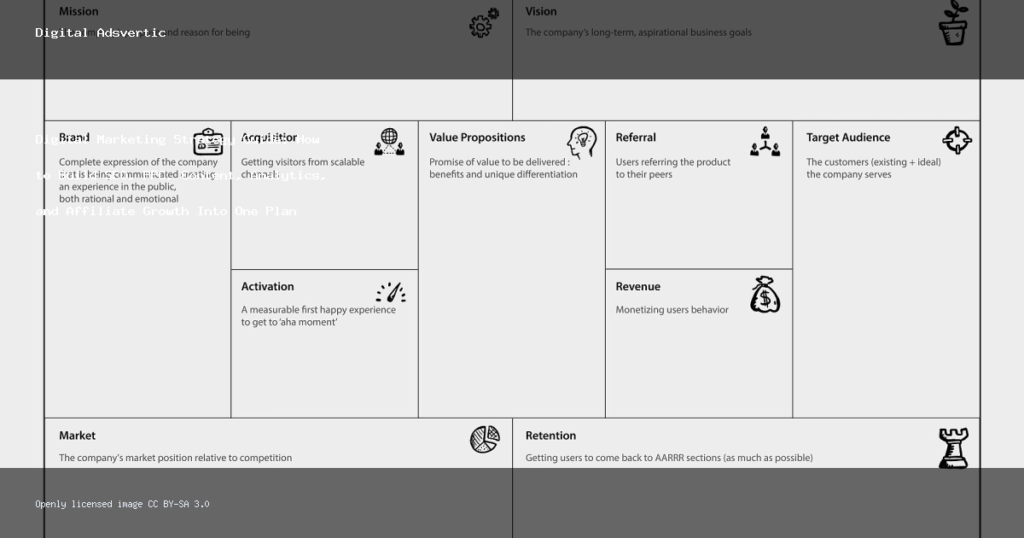
Featured image: Digital-Marketing-Canvas English.jpg by Jeremy Corman (CC BY-SA 3.0).
About The Author
