
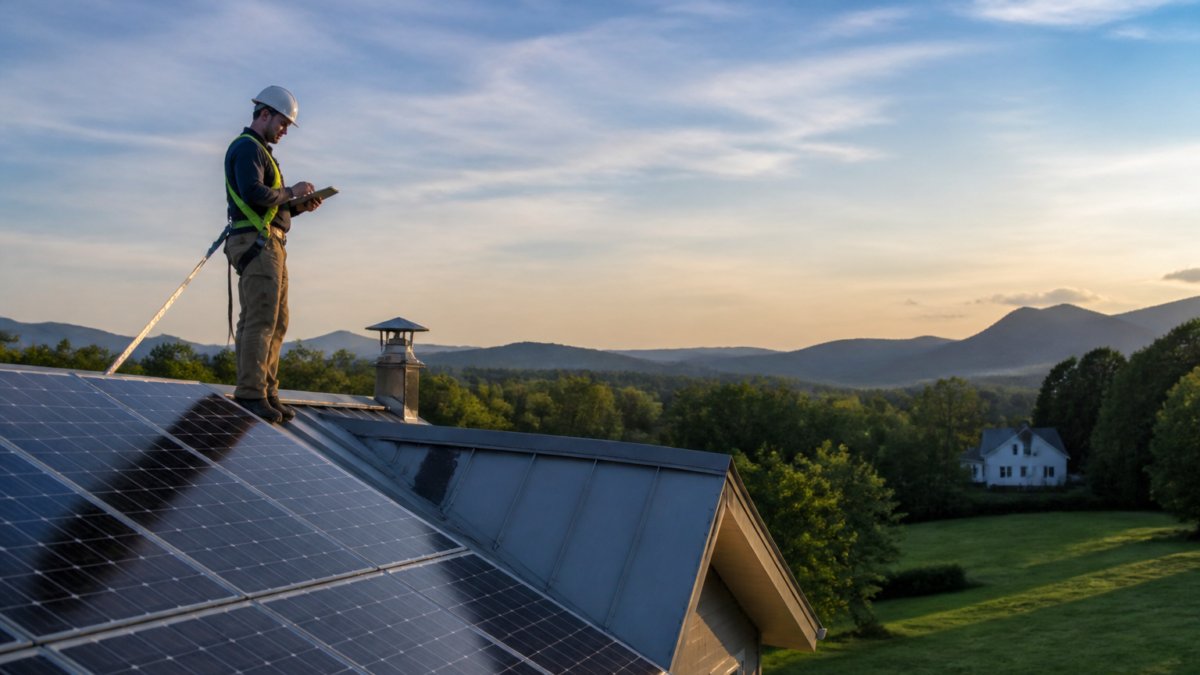
What happened in Vermont?
Green Mountain Power (GMP) reported that its expanding virtual power plant helped reduce electricity demand during an extreme heat event in early July 2026. The utility said its network of stored-energy resources reduced peak energy use by approximately 90 megawatts during one high-demand hour and produced an estimated $6 million in savings for GMP customers.
GMP also reported that the virtual power plant had reached approximately 110 megawatts of capacity. Based on the utility’s description, that makes it Vermont’s largest dispatchable energy resource by capacity. That wording matters: a virtual power plant is not a single generating station, and it should not be confused with Vermont’s largest source of total annual electricity production.
The announcement illustrates how utilities are beginning to use batteries, solar systems, and other customer-owned equipment as a coordinated grid resource. Instead of relying only on large power plants, a utility can use software and communications systems to manage many smaller devices at the same time.
What is a virtual power plant?
A virtual power plant, or VPP, is a coordinated network of distributed energy resources. These resources may include:
- Home battery systems
- Utility-scale batteries
- Rooftop solar installations
- Electric vehicle chargers
- Smart thermostats and water heaters
- Commercial energy-management systems
- Other equipment capable of shifting or storing electricity
Individually, these devices may have limited power output. When connected through a central control platform, however, they can be managed as a larger system. The utility may charge batteries when electricity is less expensive or demand is lower, then draw on that stored energy during periods when demand and wholesale prices rise.
The system can also reduce demand without directly producing electricity. For example, a smart thermostat might briefly adjust air-conditioning use, or an electric vehicle charger might delay charging until a less congested period. These changes are typically designed to be temporary and coordinated so that customers retain access to the services they need.
How Green Mountain Power’s system operates
GMP’s virtual power plant includes residential batteries installed at participating customers’ homes, along with utility-owned storage and other connected resources. The company has used customer battery programs to provide backup power while also making stored electricity available for grid management.
According to reporting published by Vermont Business Magazine on July 28, 2026, more than 5,000 customers were participating in GMP’s residential battery programs, with more than 10,000 batteries included in the broader network. The exact mix of resources and operating conditions can change as customers join programs, equipment is added, or batteries are reserved for backup needs.
During a heat wave, electricity demand commonly rises as homes and businesses use more air conditioning. In New England, high demand can also increase the price of electricity purchased through the regional market. A utility that can discharge stored energy during those hours may reduce the amount of power it needs to buy at the highest prices.
That process is often called peak shaving. It does not eliminate the need for power plants or regional transmission, but it can reduce the amount of additional generation required during short periods of unusually high demand.
What the reported $6 million figure means
The reported $6 million should be understood as an estimate tied to a specific heat event and a specific period of peak demand. It is not a guaranteed annual savings figure for every year, nor does it represent a direct cash payment to each customer.
Peak-cost estimates can depend on several factors, including:
- The wholesale price of electricity during the event
- How much battery capacity was available
- When the batteries discharged
- How much demand was reduced at the relevant hour
- What alternative generation or market purchases would otherwise have been used
GMP’s reported estimate describes avoided or reduced system costs affecting its customer base. Individual bill impacts may vary, and customers should not assume that the full estimated amount will appear as a line-item credit on a monthly statement.
The utility also said its stored-energy network reduced peak energy use by roughly 90 megawatts during one peak hour. A megawatt measures power at a moment in time, while a megawatt-hour measures energy delivered or stored over a period. Keeping those terms separate helps explain why a network can be described by its power capacity while savings are calculated from market prices and energy use during a particular event.
Why batteries can help during heat waves
Electric grids must balance supply and demand continuously. On a hot afternoon, widespread air-conditioning use can cause demand to rise quickly. Utilities may then need to buy more electricity, draw on additional generating resources, or activate plants that operate only during the highest-demand periods.
Battery storage offers a different option. Batteries can be charged before demand reaches its daily peak and discharged when the grid is under the most pressure. Because batteries can respond quickly, they may be useful for short-duration events when building or operating a conventional power plant would be less economical.
Distributed batteries may provide an additional benefit during local outages. If a participating home has backup capability, the battery can help keep selected circuits operating when the grid connection is interrupted. That backup function is separate from the battery’s role in the VPP, and the utility must manage both objectives carefully. A battery reserved for a customer’s emergency backup may not always be available for grid dispatch.
Potential benefits for Vermont customers
A coordinated storage network can support the electric system in several ways:
Lower exposure to high wholesale prices
Using stored electricity during expensive peak periods may reduce the amount a utility purchases from the regional market. Whether those savings continue over time depends on market conditions, weather, battery availability, and program participation.
Less reliance on rarely used peaker plants
Traditional peaker plants are designed to operate during periods of unusually high demand. They can be important for reliability, but they may run infrequently and can have higher operating costs or greater emissions than some alternatives. Storage and demand-response programs may reduce the need to operate those resources, although they cannot replace every grid service in every situation.
More resilience for participating households
Home batteries may provide backup electricity during certain outages, depending on the equipment, installation, outage conditions, and customer program. Customers should review the terms of a storage program carefully to understand which appliances are covered, how long backup power may last, and when the utility may control the battery.
Better use of distributed renewable energy
Solar production can vary throughout the day. Batteries can store some electricity when solar output is available and release it later. This can improve the timing of renewable energy use, although batteries themselves do not create new electricity and still depend on how they are charged and operated.
Important limitations and open questions
The Vermont example is promising, but it should not be treated as proof that virtual power plants can solve every grid problem. Batteries have finite energy capacity and cannot discharge indefinitely. A storage network may perform well during a short afternoon peak but provide less assistance during a prolonged event lasting several days.
Virtual power plants also depend on customer participation, communications systems, equipment maintenance, weather forecasts, and program rules. Utilities must balance grid needs with customer expectations, especially when a battery is also intended to provide backup power at home.
There are broader questions about cost and access. Home batteries can require significant equipment and installation expenses, even when a utility offers financing, leasing, rebates, or other incentives. Programs may need careful design to ensure that benefits are not limited to households that can afford to install storage independently.
Finally, the environmental value of a VPP depends on the resources it coordinates and the electricity used to charge its batteries. A network that combines renewable generation with storage may have different emissions characteristics from one that charges mainly from fossil-fueled grid power. The details matter.
Could other states follow Vermont’s approach?
Utilities across the United States are evaluating virtual power plants as electricity demand grows and the grid incorporates more variable renewable generation, electric vehicles, and customer-owned equipment. The approach may be especially useful where utilities face short-duration peaks, expensive wholesale electricity, transmission constraints, or a need for additional flexibility.
However, the Vermont model cannot simply be copied without adjustment. Each state has different utility regulations, electricity markets, weather patterns, housing types, customer incentives, and rules governing distributed energy resources. A program that works well for one utility may require a different structure elsewhere.
Electric vehicles could eventually become part of some VPPs through managed charging or vehicle-to-grid programs. Those applications remain dependent on compatible vehicles, chargers, customer agreements, technical standards, and utility policies. It is more accurate to describe EVs as a potential future resource than as a guaranteed part of every virtual power plant.
The bigger significance of Vermont’s virtual power plant
GMP’s July 2026 report highlights a shift in the way electricity systems can be managed. A utility does not have to rely exclusively on large centralized generators. It can also coordinate thousands of smaller resources located in homes and businesses.
The most important takeaway is not that a virtual power plant has replaced conventional generation. Rather, it shows how customer batteries and other flexible devices can supplement the existing grid during stressful periods. The reported $6 million estimate and 90-megawatt peak reduction offer a useful case study, but future results should be evaluated using transparent methods, clearly defined dates, and comparable operating conditions.
As Vermont and other states expand energy storage, customers, regulators, and utilities will need to examine both the benefits and the tradeoffs. Questions about program costs, reliability, privacy, customer control, equitable access, and battery performance will be just as important as headline capacity figures.
Frequently asked questions
Is a virtual power plant a physical power plant?
No. A VPP is a software-coordinated network of distributed resources, such as batteries, solar systems, smart appliances, and flexible electric loads. The devices remain in different locations but can be managed together.
Is Vermont’s VPP the state’s largest source of electricity?
GMP has described its approximately 110-megawatt network as Vermont’s largest dispatchable energy resource by capacity. That does not necessarily mean it produces the most electricity over an entire year. The comparison depends on whether the measurement refers to capacity, generation, dispatchability, or annual energy output.
Did every GMP customer receive $6 million in savings?
The reported amount is an estimate of systemwide savings or avoided costs during an early July 2026 heat event. It should not be interpreted as an equal cash payment or identical bill reduction for every customer.
Can a home battery join a virtual power plant?
Possibly. Eligibility depends on the utility’s current programs, the battery model, installation requirements, customer agreements, and available capacity. Interested homeowners should check current information directly with their utility or a qualified installer.
Do virtual power plants eliminate the need for traditional power plants?
No. VPPs can provide flexibility and reduce peak demand, but they have limits. Conventional generation, transmission, efficiency programs, and other grid resources may still be necessary for reliability under different weather and operating conditions.



Leave a Reply