Key Takeaways
- China’s Commerce Ministry condemns the U.S. humanoid robot ban as a significant threat to diplomatic relations.
- The U.S. Federal Communications Commission (FCC) is accused of disregarding China’s restrained response to trade and technology issues.
- Potential repercussions could escalate tensions in the already strained U.S.-China trade relationship.
The Core News Story
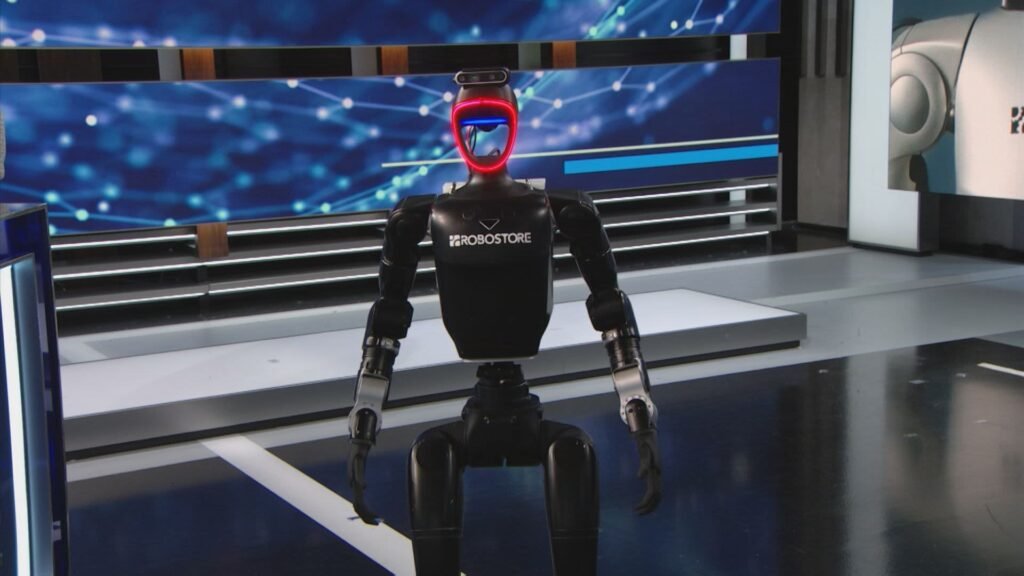
In a significant escalation of tensions between the United States and China, the Chinese Commerce Ministry has issued a strong warning regarding the recent ban imposed by the U.S. Federal Communications Commission (FCC) on humanoid robots. The Ministry expressed that this decision not only undermines technological cooperation but also “severely damages” bilateral relations.
The FCC’s move, which aims to regulate the proliferation of advanced technologies, especially in fields perceived as critical to national security, has been met with sharp criticism from Beijing. The Chinese government argues that the U.S. has continually overlooked its calls for restraint and cooperation, opting instead for an approach that exacerbates existing tensions.
China’s assertions come at a time when both nations are already navigating a complex web of trade disputes, tariffs, and geopolitical rivalries. The ban on humanoid robots is seen as part of a broader strategy by the U.S. to curb China’s technological advancements, particularly in AI and robotics, areas where China has made significant strides in recent years.
Expert Analysis & Impact
Experts in international relations and trade policy suggest that the FCC’s ban could have far-reaching implications, not only for U.S.-China relations but also for global technology markets. Professor Jane Liu, a specialist in Sino-American relations at Harvard University, notes, “This ban could escalate into a tit-for-tat scenario, where both countries restrict each other’s technological advancements, ultimately hindering innovation globally.”
Moreover, analysts warn that the FCC’s decision could provoke China to retaliate through various means, including imposing its own restrictions on U.S. technology firms operating in China. Such measures could further complicate the already fragile economic ties between the two nations, which are critical players in the global economy.
Additionally, the ban could also impact American companies engaged in robotics and AI development that rely on Chinese components or markets. With China being a significant consumer of technology, the potential for lost revenue and market access could create ripple effects across various sectors.
Future Outlook
The future of U.S.-China relations remains uncertain as both countries grapple with their technological ambitions and national security concerns. The Chinese government is likely to respond to the humanoid robot ban with a calculated approach, balancing its need to protect its technological interests while avoiding an outright trade war.
In the coming months, observers will be closely monitoring any developments regarding trade negotiations and diplomatic dialogues. The potential for further sanctions or retaliatory measures looms large, and both nations must navigate this precarious situation with caution.
Furthermore, as technological competition intensifies, it is plausible that the global tech landscape will experience shifts, with companies reevaluating their supply chains and market strategies in light of potential restrictions. The ongoing discourse surrounding tech regulation and security will continue to evolve, influencing not only U.S.-China relations but also the broader international community.
Conclusion
China’s stern warning against the U.S. humanoid robot ban exemplifies the escalating tensions in an already fraught relationship. The FCC’s decision, viewed by Beijing as a hostile act, has the potential to disrupt not only diplomatic relations but also the global tech economy. As both nations move forward, the need for dialogue and cooperation remains paramount to avoid a deeper rift that could have lasting implications for global stability and innovation.
“`
Context Reference: Original Publisher
About The Author
