
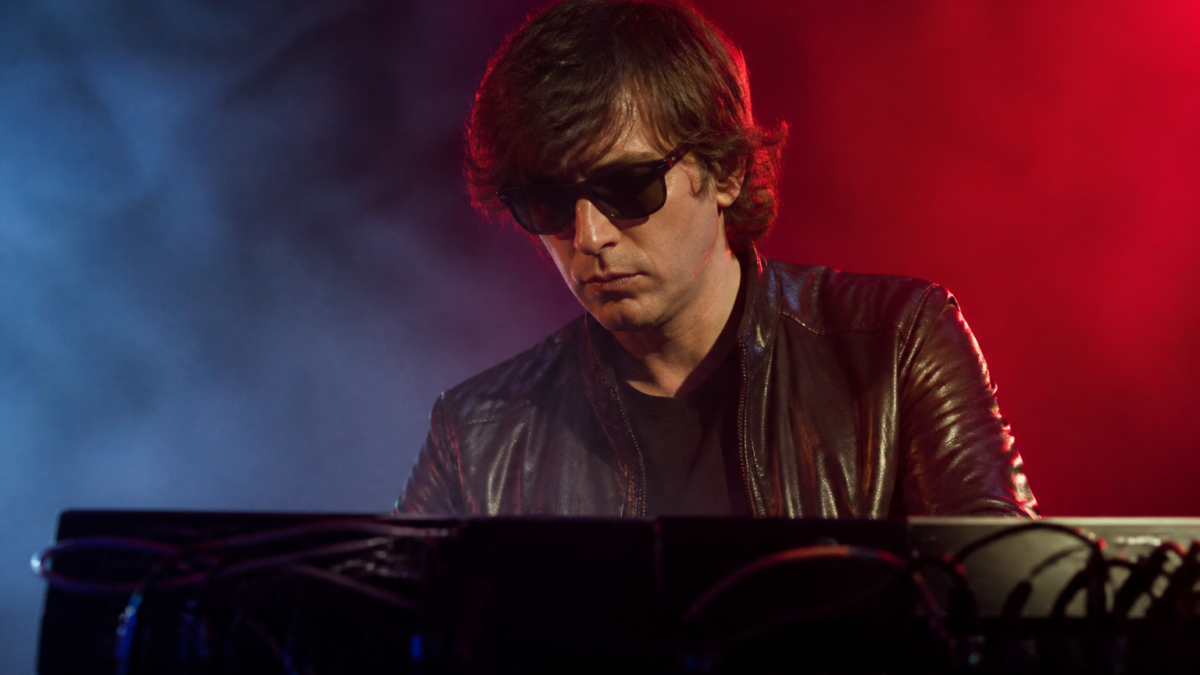
What happened to Kavinsky?
French electronic artist and producer Kavinsky, best known internationally for “Nightcall,” died in Paris at the age of 50, according to reports published on Wednesday, July 29, 2026. His real name was Vincent Belorgey.
The Paris prosecutor’s office confirmed that an investigation had been opened to establish the cause of death. Officials said first responders found no suspicious circumstances at the scene. That means the official cause should not be stated as confirmed unless authorities or the family provide a later update. Some reports mentioned a suspected stroke, but that detail has not been established as a final official finding. ([apnews.com](https://apnews.com/article/498bad677bfc680731cdcf825228b902?utm_source=openai))
Kavinsky was found at his home in Paris on the evening of Tuesday, July 28, 2026. The date is important because the original version of this article incorrectly described July 28, 2023 as a Tuesday. July 28, 2023 was a Friday, and the relevant reported date is July 28, 2026, which was a Tuesday.
Who was Kavinsky?
Kavinsky was the stage name of Vincent Belorgey, a French musician associated with the electronic music movement often called French Touch. He developed a distinctive identity built around cinematic synthesizers, dark dance grooves, video-game imagery, and a fictional character whose story helped shape the atmosphere surrounding his music.
Rather than presenting himself simply as a conventional club DJ, Kavinsky created a larger visual and musical world. His work drew from 1980s action films, arcade games, sports cars, horror imagery, and electronic production. The result was a sound that felt both nostalgic and futuristic.
He became part of a broader French electronic scene that included artists and groups such as Daft Punk, Justice, Cassius, and DJ Mehdi. Although these artists did not all make the same kind of music, they helped bring French-produced electronic music to audiences around the world.
Why “Nightcall” became Kavinsky’s signature song
“Nightcall” is the Kavinsky track most closely linked with his global reputation. The song was released before the film Drive, but it reached a much larger audience after appearing near the beginning of Nicolas Winding Refn’s 2011 film.
Drive, starring Ryan Gosling, used music and visual style to create a restrained, nocturnal mood. “Nightcall” immediately helped establish that tone. Its pulsing bass, spacious synthesizers, and vocals by Lovefoxxx gave the film’s opening sequence an unmistakable atmosphere.
The relationship between the song and the movie became especially strong because “Nightcall” did more than play in the background. It helped define the film’s identity. For many American listeners, the track served as an introduction to Kavinsky and to the retro-inspired electronic style later associated with synthwave and outrun music.
The song’s popularity also demonstrates how film placement can give electronic music a second life. “Nightcall” was not merely remembered as part of a soundtrack; it became part of the cultural image of Drive itself. Its association with nighttime highways, neon lighting, and cinematic tension continued long after the movie’s theatrical release.
Kavinsky’s place in synthwave and electronic music
Kavinsky is frequently mentioned in discussions of synthwave, although the broader electronic scene contains many different styles and influences. His music helped popularize a retro-futuristic sound that drew on familiar elements from 1980s pop culture without simply reproducing the music of that decade.
Several features made his work recognizable:
- Prominent synthesizers: Melodies and textures were often built around analog-style electronic sounds.
- Cinematic arrangements: His tracks frequently felt like scenes from an imagined film rather than conventional dance-floor compositions.
- Strong visual branding: The Kavinsky character, artwork, and automotive imagery gave the music a coherent identity.
- Controlled, dramatic pacing: Many songs favored atmosphere and tension over a crowded or highly aggressive production style.
His influence was not limited to musicians working in synthwave. Producers, filmmakers, video-game creators, fashion designers, and visual artists also embraced the same combination of neon nostalgia and futuristic styling. Kavinsky’s work helped show that electronic music could function as both a soundtrack and a fully developed fictional universe.
His career beyond “Nightcall”
Although “Nightcall” remained his best-known recording, Kavinsky’s catalog included more than one internationally recognized track. His early releases established the character and sound that later became associated with his name, while his album OutRun expanded the fictional world introduced through his singles.
His music often connected individual tracks to a larger narrative. The artist’s persona was influenced by the idea of a driver returning from a fatal crash, a concept that helped explain the recurring references to cars, speed, danger, and supernatural transformation.
Kavinsky also continued releasing music after the success of Drive. His later album Reborn demonstrated that he remained interested in polished, story-driven electronic production rather than treating “Nightcall” as a formula to repeat. The album gave longtime listeners new material while introducing his sound to people who had discovered him through the film.
His work also reached a major public stage during the Paris 2024 Olympic closing ceremony. Kavinsky performed “Nightcall” with Belgian singer Angèle and the French band Phoenix, giving the song another prominent international moment. The performance introduced or reintroduced the track to viewers who may have known it from Drive, streaming playlists, or electronic music culture. ([euronews.com](https://www.euronews.com/culture/2026/07/29/dj-kavinsky-known-for-his-track-nightcall-found-dead-at-his-paris-home?utm_source=openai))
What is known about the reported investigation?
Authorities opened an inquiry to determine the cause of death. At the time of the initial reports, no final cause had been publicly confirmed. This distinction matters because early news coverage can include preliminary information that changes after medical or investigative reviews.
Reports that mention a possible stroke should therefore be treated as unconfirmed unless a later statement from officials, the family, or a clearly identified representative establishes it. There is no need to speculate about private medical information while an investigation remains open.
The most consistently reported facts are that Kavinsky died at 50, was found at his Paris home on July 28, 2026, and was the subject of an official inquiry into the cause of death. Reputable outlets including The Associated Press, the Los Angeles Times, Le Monde, and AFP-linked reporting carried accounts based on information from French authorities or established news organizations. ([apnews.com](https://apnews.com/article/498bad677bfc680731cdcf825228b902?utm_source=openai))
Tributes to Kavinsky
News of Kavinsky’s death prompted tributes from figures in French public life and the international music community. France’s culture minister described him as one of the country’s distinctive musical voices, while President Emmanuel Macron also paid tribute to the artist.
The response reflects the unusual reach of Kavinsky’s music. He was important to French electronic music, but his audience extended well beyond France. Fans encountered “Nightcall” through Drive, the Paris Olympics, video platforms, streaming services, DJ sets, and playlists centered on synthwave or film music.
That broad appeal also explains why his death resonated with people who may not have followed every stage of his career. A single song can become a personal memory, a film reference, or an entry point into an entire genre. For many listeners, “Nightcall” was one of those songs.
Kavinsky’s lasting legacy
Kavinsky’s most important contribution was not simply that he made a successful soundtrack song. He helped demonstrate how music, visual identity, and storytelling could reinforce one another. His records created a recognizable mood, while his stage persona and artwork gave that mood a character and setting.
His influence can be seen in the continued popularity of synth-heavy electronic music, retro-styled film scores, neon visual design, and music built around fictional worlds. Artists working years after the release of “Nightcall” continue to explore similar themes: fast cars, lonely roads, analog textures, and a future imagined through the visual language of the past.
For American audiences, Kavinsky may be remembered most immediately as the artist behind the song that opened Drive. But his career was broader than that association. He was part of a defining generation of French electronic artists, created a distinctive musical persona, and helped bring cinematic synth music into mainstream culture.
Frequently asked questions
What was Kavinsky’s real name?
Kavinsky’s real name was Vincent Belorgey.
How old was Kavinsky when he died?
He was 50 years old. Reports noted that he would have turned 51 on July 31, 2026. ([lemonde.fr](https://www.lemonde.fr/en/obituaries/article/2026/07/29/with-dj-kavinsky-s-death-the-french-touch-movement-loses-one-of-its-leading-figures_6755969_15.html?utm_source=openai))
What is Kavinsky’s most famous song?
His best-known song is “Nightcall,” which became internationally associated with the 2011 film Drive.
Was Kavinsky’s cause of death confirmed?
Not in the initial official reporting. Authorities opened an investigation to establish the cause of death. Reports mentioning a suspected stroke should not be presented as a confirmed medical finding without a later authoritative statement.
Where was Kavinsky found?
He was found at his home in Paris on the evening of Tuesday, July 28, 2026, according to reports citing French authorities.
Bottom line
Kavinsky’s death closes the career of an artist whose music reached far beyond the clubs and electronic scenes where he began. Through “Nightcall,” he gave Drive one of its defining musical moments and helped popularize a sound rooted in cinematic tension, retro synthesizers, and futuristic nostalgia.
While questions about the official cause of death remained under investigation in the first reports, Kavinsky’s artistic impact is clear. His music connected French electronic culture with film audiences around the world, and “Nightcall” is likely to remain one of the most recognizable electronic tracks of its era.







Leave a Reply