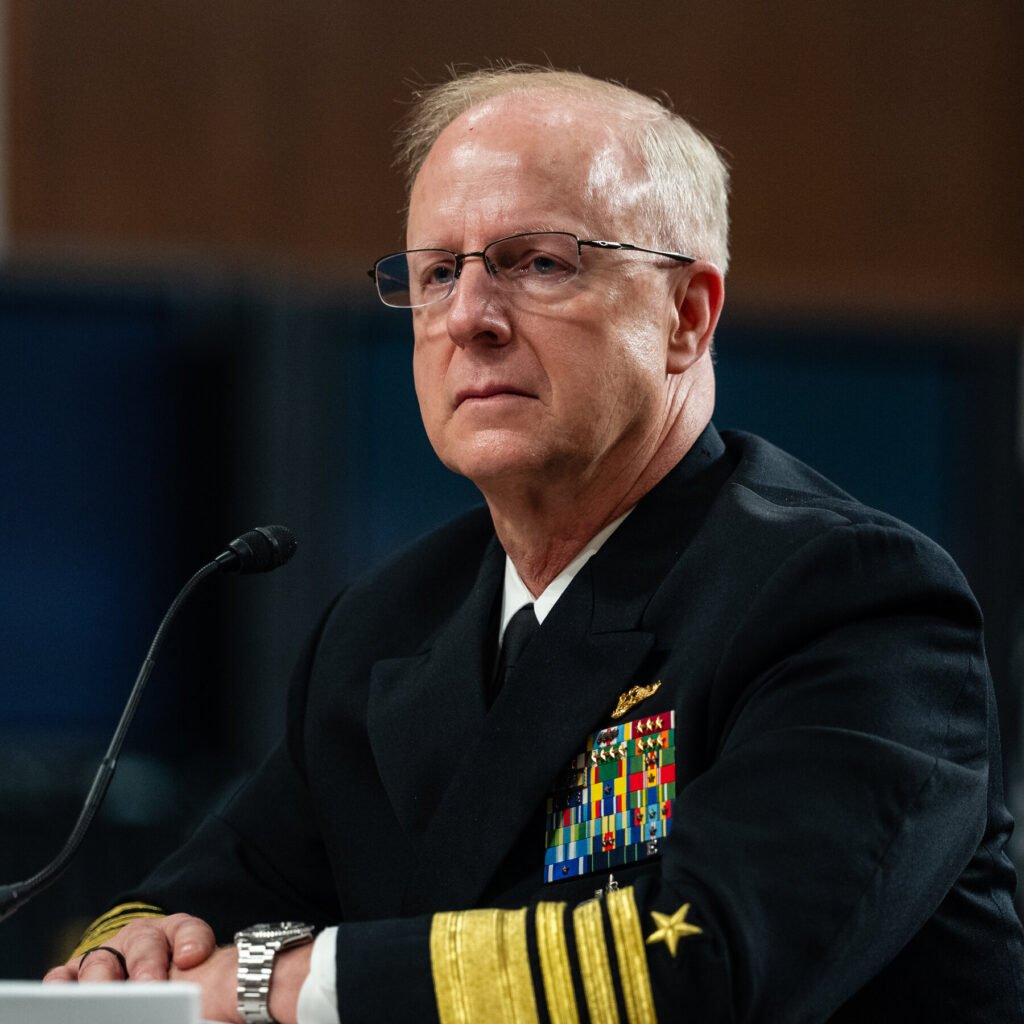
Admiral’s Ascendancy Becomes a Flashpoint in Pentagon’s Cultural Shift
In a significant turn of events within the U.S. military leadership, the appointment of Admiral Daryl Caudle as the new commander of the Navy is igniting discussions about the undercurrents of political influence steering the Pentagon’s direction. Caudle’s rising profile, particularly under the aegis of Defense Secretary Pete Hegseth, has amplified scrutiny regarding anti-diversity initiatives that are perceived to be reshaping the military’s cultural landscape.
A New Commander with Controversial Connections
Adm. Daryl Caudle, who was recently appointed to lead the Navy, brings with him a controversial legacy that has become more conspicuous given the current political climate. Prior to his nomination, Caudle reportedly took steps to align himself with Hegseth’s pronounced criticism of diversity initiatives within the military. His methods of signaling support for Hegseth’s agenda raise important questions about the motivations and implications of such alignment in a critical period for the U.S. armed forces.
Hegseth, known for his vocal opposition to what he characterizes as “woke” policies in defense, is spearheading a broader movement to redefine the ongoing discussions surrounding diversity, equity, and inclusion within military ranks.
Background and Context
The implications of this appointment become pronounced when contextualized within a broader skepticism of diversity programs that have been at the forefront of military reform initiatives during previous administrations. Under recent pressures, Secretary Hegseth has openly advocated for a reevaluation of these initiatives, emphasizing a return to traditional values over identity politics.
- Political Alignment: Caudle’s previous actions indicate a strategic alignment with Hegseth’s perspectives, which could signal a shift in how future policies regarding diversity will be developed and implemented.
- The Military’s Response: The Navy, which has historically prided itself on leadership diversity, now faces questions on how such an appointment might affect recruitment and retention of underrepresented groups.
An Evolving Military Culture
As the Pentagon grapples with ongoing internal and external pressures, the appointment of leaders like Caudle may be indicative of a larger effort to reshape its cultural framework. Many advocates for diversity view this trajectory with concern, citing a potentially harmful regression in efforts to build a more inclusive military.
On the other hand, proponents of Hegseth’s policies argue that the military should prioritize merit over identity, an argument that is gaining traction among certain segments of political and civilian leadership. These contrasting ideologies represent the ongoing clash between traditionalist views and contemporary demands for equitable representation within military ranks.
Implications for Diversity Initiatives
The implications of Caudle’s leadership may extend beyond mere personnel choices, as they threaten longstanding programs designed to bolster recruitment and retention among diverse groups. Critics argue that shifting focus away from diversity could exacerbate existing challenges in attracting talent, particularly as the military seeks to maintain an edge in an increasingly competitive global environment.
During a recent Senate confirmation hearing, Caudle was pressed on his views regarding diversity and inclusion in the Navy. His responses revealed a cautious approach, indicating a willingness to continue existing programs while simultaneously navigating the ideological landscape crafted by Hegseth’s leadership.
Voices of Concern and Hope
Admiral Caudle’s appointment has sparked a robust dialogue within military circles and beyond. Voices advocating for diversity argue that Hegseth’s agenda, if adhered to, could lead to a demoralization of troops from various backgrounds. Indeed, a former officer noted, “If we are to reflect the society we serve, the military must embrace diversity, not abandon it.” Conversely, supporters of the current administration contend that a rigorous focus on meritocracy can ultimately fortify the Navy’s capabilities in both operational readiness and strategic effectiveness.
Final Thoughts
As Adm. Daryl Caudle takes the helm of the Navy, the tension between his political leanings and the enduring push for diversity presents a complex landscape for military leadership. The outcomes of this evolution could reverberate throughout the Department of Defense, impacting not just internal policy, but also how the military is perceived by both the American public and potential recruits.
The alignment between Caudle and Hegseth serves as a litmus test for the prevailing attitudes within military command, as the force must navigate the delicate balance of historical traditions and the modernization imperative of an increasingly diverse society. Moving forward, the critical question remains: will the Navy forge a path that harmonizes national security needs with the inclusive ideals championed by many, or will it concede to a vision that risks sidelining diversity in favor of traditionalism?
Source: Original Source